Quick Summary
Choosing a 3D commerce provider for footwear isn’t just about who can build the prettiest model. It comes down to production scale, material accuracy, distribution reach, and proven results.
Why Getting 3D Commerce Right Is Critical for Footwear Brands Today
Footwear brands face rising return rates and increasing ad costs. Your customers also expect more than drab, static studio shots when making buying decisions.
That’s why captivating 3D and AR experiences are quickly becoming the new e-commerce standard. But picking the wrong 3D commerce provider causes delays, inconsistent quality, and pilots that never scale beyond a handful of SKUs.
However, this buyer’s guide will help you to evaluate 3D commerce partners with clarity and confidence. So, you can make confident, long-term decisions.
Why Listen to Us

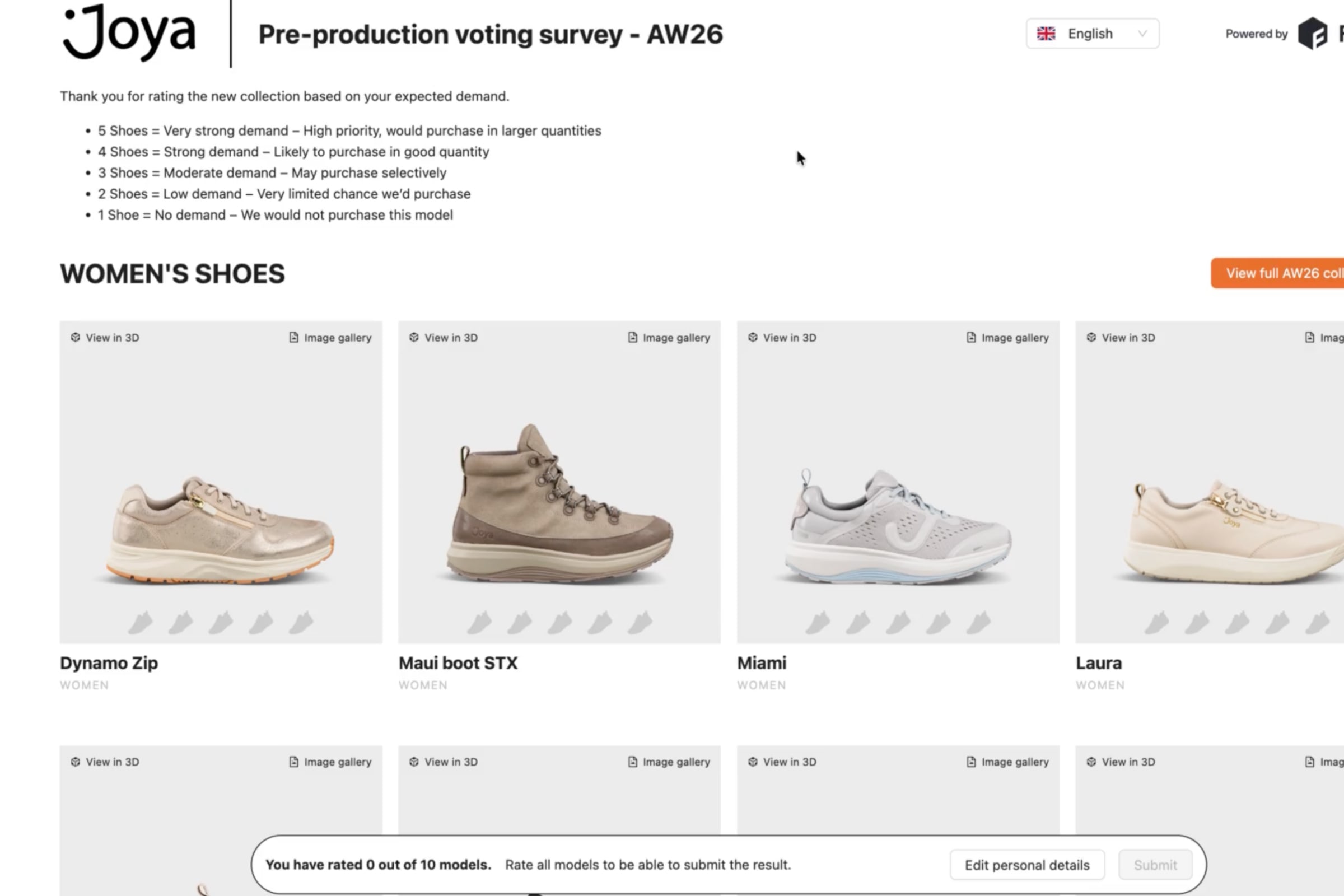
Fibbl delivers immersive 3D and AR for leading footwear and bag brands, including Samsonite, GANT, TUMI, and Björn Borg. We offer an end-to-end 3D commerce platform, from proprietary capture hardware to automated 3D asset creation and cross-channel distribution.
This makes Fibbl an effective solution for footwear brands looking to scale high-quality 3D experiences across their full catalog. With 31.5 million+ real consumer interactions tracked and results, like 29% return reduction and measurable conversion lift, we understand what makes 3D commerce scale.
Why Most 3D Providers Fail Footwear Brands at Scale
If you’ve tried to implement 3D product content before, you’ve probably hit the same wall. It works beautifully for the first ten or twenty products. Then it falls apart.
Many providers look great in a demo but can’t handle the realities of footwear production. Shiny patent leather, reflective metallic buckles, and fine mesh uppers come to mind. These materials defeat standard 3D scanning rigs and frustrate freelance modelers. So, you end up with inconsistent quality, blown timelines, and a 3D strategy stuck in perpetual pilot mode.
What to Look for in a 3D Commerce Provider: 6 Essential Criteria
Who you choose as your 3D commerce partner can make or break your online shopping strategy. Use the criteria below to separate impressive demos from production-ready 3D commerce partners built to scale across your full footwear catalog:
1. Material Accuracy and Capture Technology

Footwear is one of the most challenging product categories to digitize.
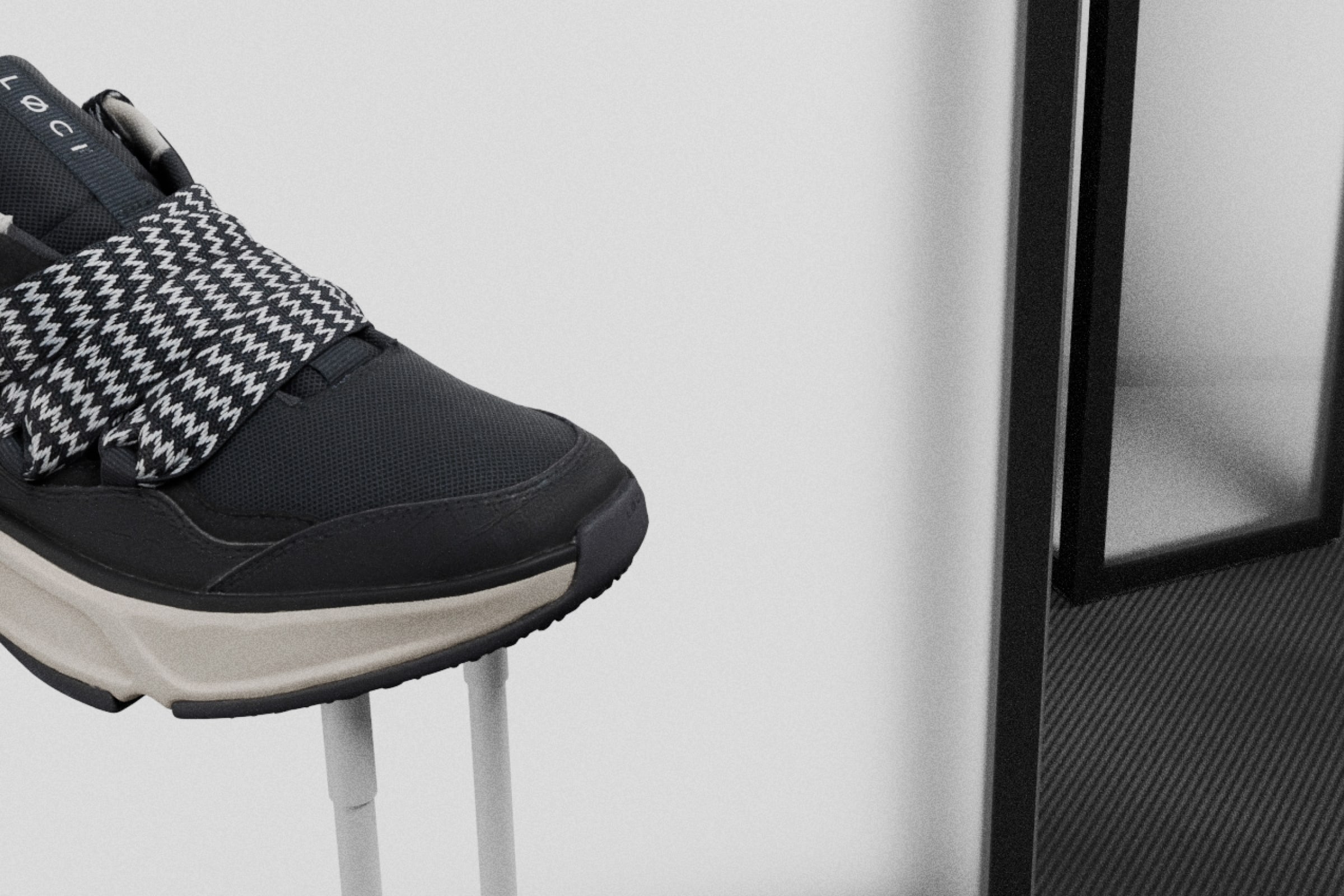
A single shoe can contain a dozen different materials: suede, leather, rubber, fabric, mesh, and metal hardware. Each behaves differently under light and needs different capture settings to render accurately.
So, choose providers who build their capture hardware and reconstruction pipeline specifically for footwear and accessories. Go for vendors who treat sub-millimeter accuracy and true-to-life color reproduction as measurable standards, not marketing language. Also, ask to see output examples across your most challenging material types before you sign anything.
A provider like Fibbl’s proprietary ARC capture hardware applies material-optimized settings for every SKU. It handles everything from shiny leather boots to fine mesh sneakers, producing consistent, photorealistic 3D assets ready for e-commerce, AR, and cross-channel distribution.
2. Scaling Capabilities At High Quality

Most providers buckle when the catalog volume increases significantly.
Scaling from a 20-product pilot to 2,000 seasonal SKUs is an operational challenge most 3D vendors have not solved. If your provider relies on manual 3D modeling, you face a bottleneck of 3–4 products per week per artist. Your 200-style seasonal launch then takes over a year to digitize.
So, ask a provider directly about their production pipeline. Is it automated or manual? How many SKUs have they processed in a single season? How do they run quality control at volume? What happens to quality consistency when you push past 100 products?
As an eample, Fibbl has industrialized its pipeline to handle thousands of footwear SKUs season after season. It runs this as a repeatable, consistent production operation, not a one-off project.
3. Creation Without Distribution Fails
One of the biggest problems in 3D commerce is the gap between asset creation and distribution.
Many providers build beautiful 3D models and then hand you a file. You then have to figure out how to get that file onto your website, how it renders across devices and browsers, and how it integrates with your PDP.
The best providers solve both sides. They create the asset and distribute it through a platform that connects to your existing tech stack with a lightweight, single integration. Therefore, ask providers to show you live implementations in real e-commerce environments across multiple devices and browsers.
As an illustration, the Fibbl Platform connects directly to your e-commerce environment. It auto-distributes immersive 3D assets across all major digital channels and devices, 200+ platforms, and all browsers. There’s also no maintenance required after setup.
4. The Full-Channel Asset Value

When you invest in high-quality 3D assets, you should see value across every channel, not just your product detail pages.
A single 3D capture can generate 3D viewer experiences, virtual try-on, and AR placement for digital channels. It can also produce product images for e-commerce and print, videos for social ads, and CGI lifestyle imagery from the same asset.This shifts your economics.
Instead of reshooting products every time you update brand guidelines or need a new ad format, you update the digital file and regenerate the content. GANT used Fibbl’s 3D assets to produce video content for dynamic product ads faster and more cost-efficiently than traditional production methods. It did this without scheduling a single new product shoot.
So, ask the prospective provider how many output formats and use cases a single 3D capture enables. Their answer reveals the long-term value of the partnership.
5. Proven Consumer-Facing Results

3D product experiences only matter if they inspire positive consumer behavior.
Before you commit, ask for commerce success evidence. No, not projections or theoretical case studies, but actual data from live implementations. Focus on metrics that matter for footwear brands. Measurements like return rate reduction, conversion rate uplift, add-to-cart rate, time on page, and click-through rate from product listing pages to product detail pages.
Any credible provider should share specific numbers from real clients and explain how they achieved those results.
A good example is Zach Footwear, which reduced returns by 29% after it implemented Fibbl’s 3D visualization. While GANT achieved measurable conversion lifts with 3D-first product experiences. Across Fibbl’s platform, brands have seen up to an 80% increase in time spent on product pages.
6. Virtual Try-On Must Work in the Real World

Virtual try-on for footwear is one of the most misunderstood capabilities in this space.
You’ll often see a big gap between a polished demo and a try-on experience that works reliably at scale across different foot shapes, lighting conditions, and device types.
If a virtual try-on sits on your roadmap, test it on real consumer devices, not just in a demo. Try it across different shoe categories. Also, ask about the underlying foot-tracking technology and how it performs across skin tones, lighting conditions, and different shoe heights. A poor try-on experience can harm conversion rates instead of improving them.
But Fibbl’s virtual try-on uses production-grade foot tracking and calibrated 3D assets, not demo prototypes. It’s tested across real devices and conditions to ensure reliable performance at scale. Deployment runs through the same integrated platform as 3D viewers and AR, with no separate toolchain.
Red Flags to Watch Out For In A 3D Commerce Provider
In 3D commerce, polished demos can hide operational weaknesses. These red flags help you spot vendors that look impressive in a pitch but struggle in real-world, production-scale footwear environments. Here are the red flags to watch out for when picking a 3D commerce provider:
- They only show manually modeled 3D assets and no scan-based captures at volume.
- Their largest client has fewer than 100 live 3D products on their site.
- They solve creation or distribution, but not both, and they can’t clearly explain how you should bridge the gap.
- They can’t show results data from live consumer-facing implementations.
- Their integration requires significant ongoing development resources from your team.
- Their demo looks great on one shoe in perfect lighting, but they can’t show results. across reflective or textured materials.
The Right Questions to Ask Any 3D Commerce Provider
The right questions expose whether a provider is built for real scale or just strong presentations. Use these questions to test operational depth, technical maturity, and long-term economics before you commit:
- How many footwear SKUs have you digitized in a single client engagement, and can you show quality samples across different material types?
- Walk me through exactly how a 3D asset goes from capture to live on a product page. What do I need to manage on my side?
- What output formats does a single 3D capture generate, and which channels can you deploy to?
- Can you share specific conversion, return rate, or engagement data from live implementations?
- How does your pricing model work at scale when we go from 50 SKUs to 500 to 2,000?
- What happens to existing assets if I update my brand guidelines or need a new image format?
Choose Your Footwear 3D Commerce Partner Wisely
Selecting a 3D commerce provider for footwear is a critical technology decision. The difference between a vendor who delivers a few impressive models and a partner that can scale photorealistic 3D across your full seasonal catalog is enormous. This is especially so when that partner also automatically distributes assets across every channel.
But Fibbl stands out with proprietary capture hardware, automated reconstruction pipelines, and cross-channel distribution, enabling brands to produce consistent, high-quality 3D assets at scale. For footwear and bag brands, the platform makes 3D-first commerce production-ready, scalable, and measurable, giving you a competitive edge in engagement, conversions, and returns.
So, are you ready to see what industrialized 3D commerce looks like for footwear at scale? Talk to our founder to discuss how you can make the shift from 2D commerce to scalable and versatile 3D-first commerce.