LØCI is a modern footwear brand built at the intersection of design, sustainability , and global ambition. With a strong focus on ethical production and a rapidly growing international audience, the brand has always placed high importance on how its products are presented and experienced online.
As LØCI continued to scale, so did the expectations on its digital storefront — not only to reflect the brand’s premium identity , but to deliver consistency , clarity , and confidence to customers across markets. Ensuring that every product launch, colorway , and collaboration met those expectations became increasingly critical.
That focus on quality and control would ultimately lead LØCI to rethink how product content was created, managed, and scaled — and to explore a fundamentally different approach to traditional product photography.
This is the story of how LØCI set out to find a new packshot provider — and instead uncovered a fundamentally different way of solving their most pressing content challenges, while unlocking entirely new creative and operational possibilities along the way.
From first steps to a 3D-first foundation
A bottleneck of shoots and logistics
When LØCI first reached out in late 2023, the brief was simple: they were looking for a new product
photography vendor. Their existing packshots didn’t fully reflect the brand’s identity, and inconsistencies across product listing pages were starting to show — differences in scale, lighting, colors and backgrounds that were hard to avoid in a traditional, manual 2D workflow.
Behind the scenes, however, product content was evolving in two separate directions. While traditional 2D photography remained the primary workflow, a small subset of products — mainly bestsellers — had already been created in 3D. This initiative was driven by curiosity from the e-commerce team, eager to test emerging technologies like interactive 3D and virtual try-on. At the same time, the brand and marketing teams were unaware of the broader image and content possibilities that 3D could unlock. As a result, product imagery and interactive experiences lived in parallel — two disconnected processes operating in silos, each solving a different problem, but without a shared foundation.
Factory samples had to be carefully timed across different shoots, launches, and partners, often being shipped back and forth between teams and suppliers. Rather than enabling speed and flexibility, samples increasingly became a bottleneck — adding complexity to planning and making it harder to scale content in a consistent, predictable way.
“I honestly reached a point where traditional photography was slowing us down more than helping us. Samples, reshoots, shipping boxes around the world, waiting weeks for images, and still ending up with ‘almost right’ assets. If the lighting was off, the angle wasn’t perfect, or a colour didn’t photograph well — tough.”
Emmanuel Eribo
CEO
A new vision: 3D as the core
When LØCI first started exploring 3D based packshots, expectations were pragmatic. The team hoped it would be good enough to replace some photography and improve consistency.
What came next exceeded those early expectations.
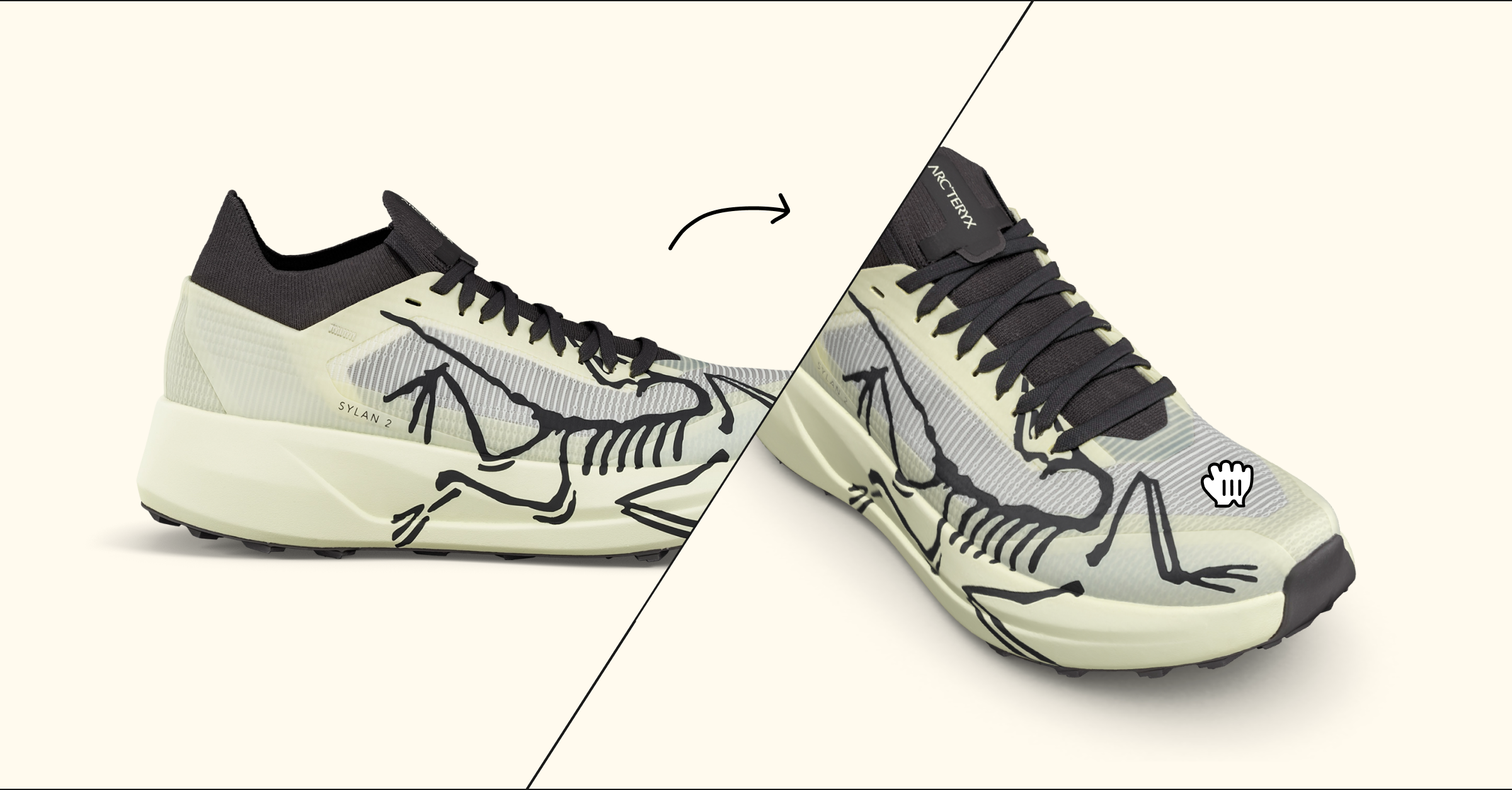
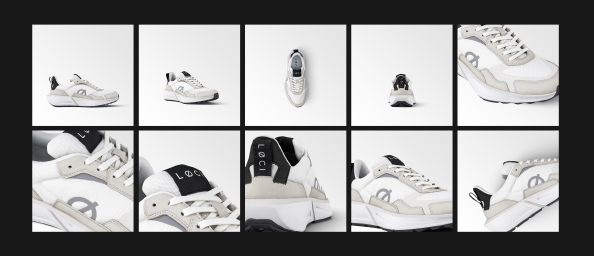
What began as a test quickly scaled. Today, 100% of LØCI’s assortment is produced in 3D, covering more than 200 shoes. Each product follows a structured template of 10 predefined angles — designed to serve multiple needs from the same source.
Six angles are used consistently as packshots on the product detail page, ensuring perfect alignment across the entire catalog. The remaining angles are reserved for marketing, storytelling, and future use cases, giving the brand flexibility without sacrificing structure.
Because lighting, scale, and background are defined once and reused everywhere, visual consistency is no longer dependent on shoot conditions or external variables. It’s built into the process.
Unlocking creative possibilities
The shift to a 3D-first pipeline was initially driven by very practical needs: consistency , speed, and control over product imagery. But once the foundation was in place, its impact extended far beyond solving traditional 2D challenges.
By working from a single, high-quality 3D source, both LØCI’s e-commerce and marketing teams began operating from the same process — rather than separate, siloed workflows. The same assets powering the product detail page could now be reused and adapted for storytelling, campaigns, and brand expression, without introducing new dependencies or delays.
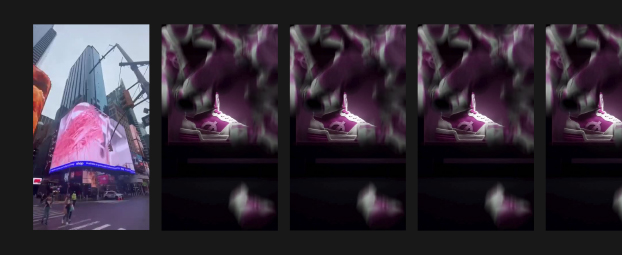
With access to the raw 3D files, LØCI’s creative team started exploring new formats and ideas. Over time, more than 20 high-quality CGI assets were produced internally and used across website hero sections, paid social campaigns, newsletter banners, and major launches — including huge product drops and collaborations such as with Nicki Minaj. What previously would have required additional shoots, samples, and coordination could now be created digitally, on demand.
“No more waiting on samples, shoots, or last-minute panic. The team can focus on creativity and storytelling rather than logistics. It’s far more scalable – especially for a lean team.”
Emmanuel Eribo
CEO
A stronger shopper experience
Beyond internal efficiency or creative scale, the shift has also improved how customers interact with products.
According to Emmanuel, LØCI has seen stronger engagement, deeper product understanding, and greater buying confidence — particularly in international markets where touchpoints are digital first. Interactive 3D, product videos, AR, and VTO help customers feel the product before it arrives.
“It’s not just prettier — it’s more informative.”
If LØCI were starting again today , the answer is clear.
“Without hesitation, 3D would be our default from day one.”
For a brand built to move fast, think boldly , and make sustainable, high-quality products, traditional 2D photography will still have a place — but it won’t be the foundation. That role now belongs to 3D: a scalable, consistent, and future-ready core asset that meets LØCI’s pace and ambition.