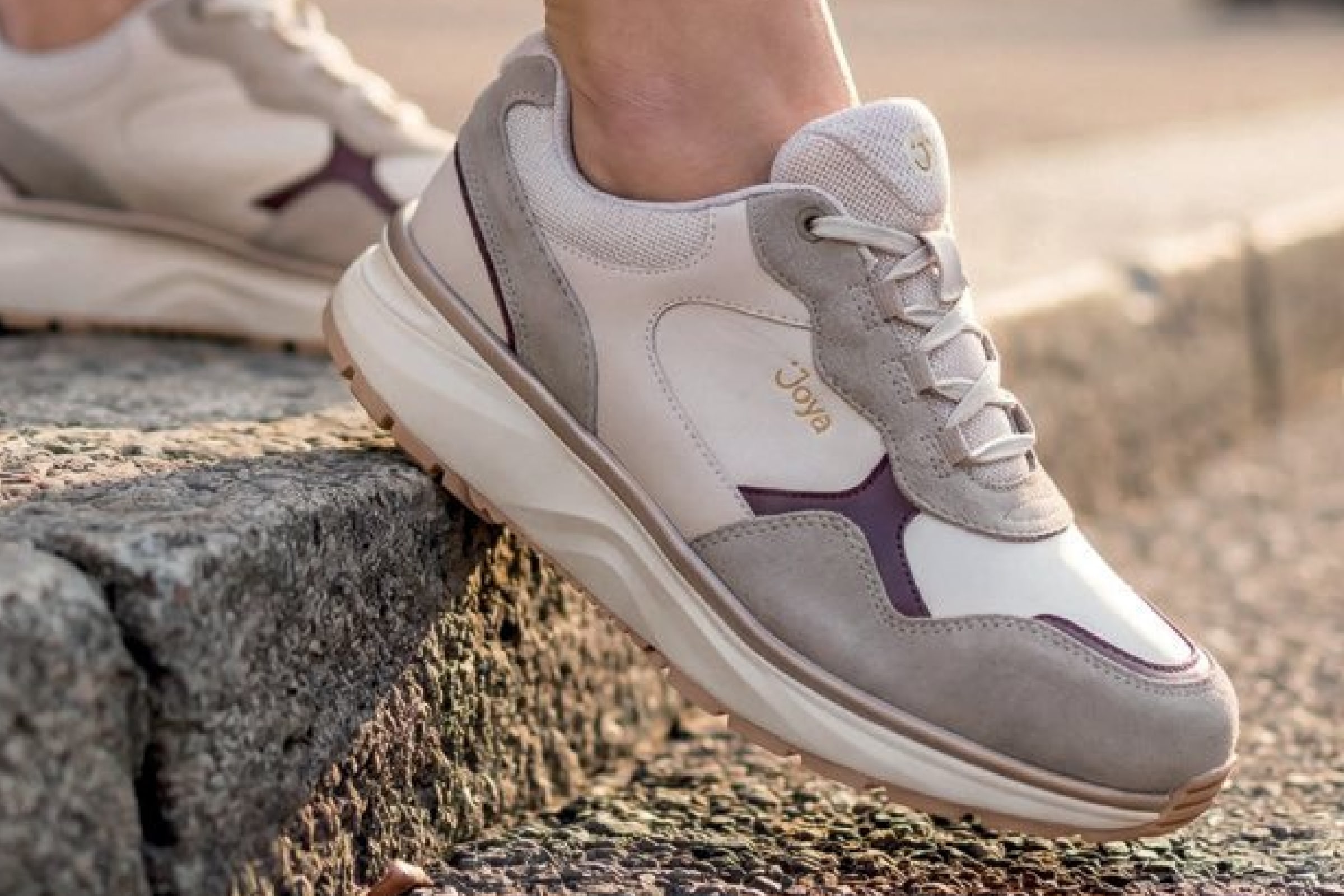
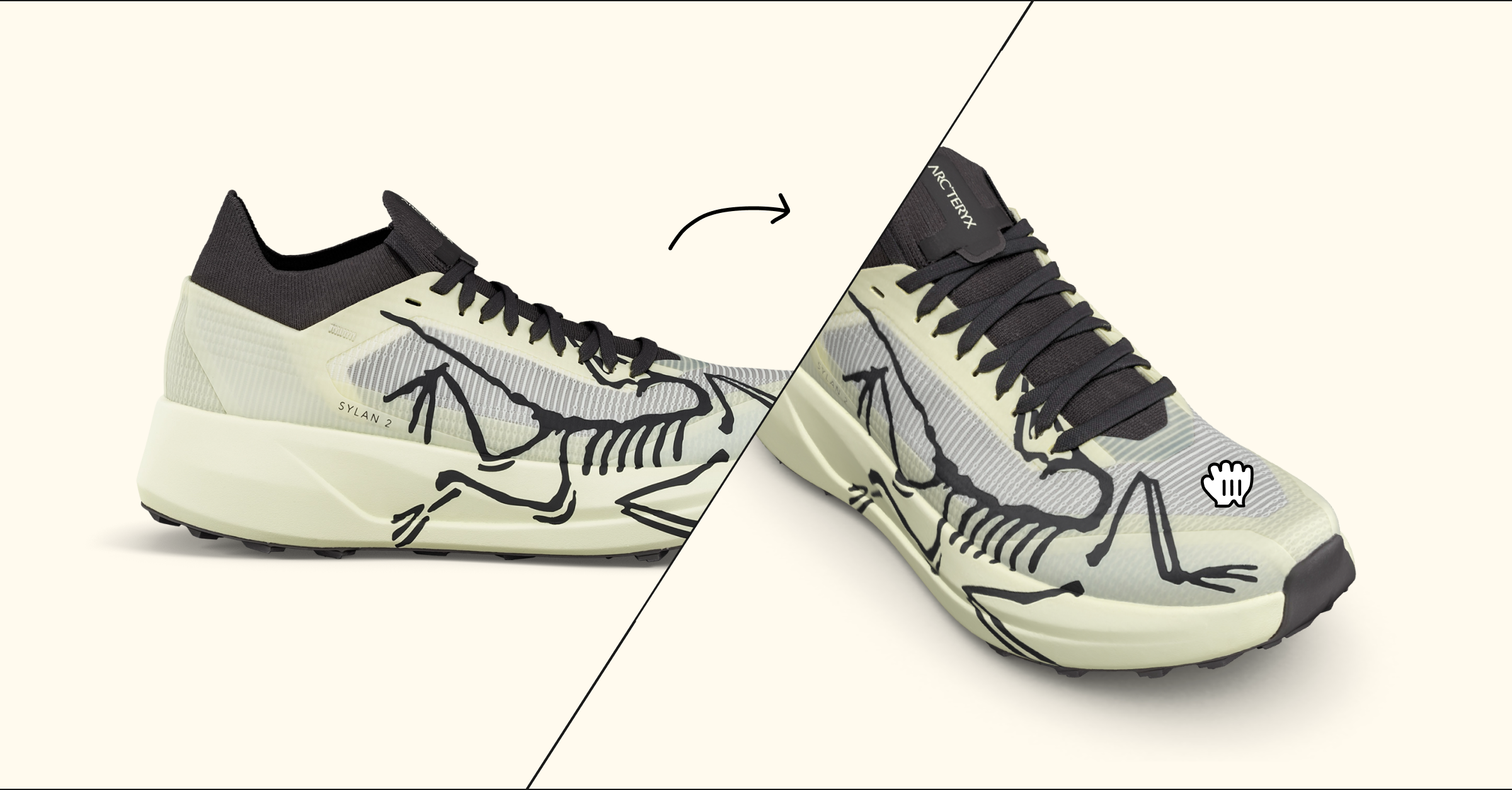
Since 2023, Joya has worked with Fibbl to transform how footwear is created, presented, and sold —
across both B2C and B2B.
What began as a replacement of traditional packshot production has evolved into something much larger: a fully integrated 3D-first workflow spanning e-commerce, wholesale, content creation, and
even forecasting.
Today, Joya produces its entire footwear assortment in 3D — across both Spring/Summer and
Autumn/Winter — using a unified digital foundation to power product imagery, immersive product
experiences, B2B sales material, and internal decision-making.
This is the story of how Joya turned 3D into a strategic capability — not just a visual upgrade.
From digital samples to data- driven decisions.
A Swiss brand built on difference
Winning by being smarter
Joya was founded in 2008 with a bold idea: build shoes that improve how people feel when they walk.
Originally inspired by fitness concepts, the brand quickly discovered something deeper. Customers weren’t just buying the shoes for style — they were experiencing relief. Knee pain, hip pain, discomfort while walking. The product was solving something real.
Nearly twenty years later, Joya has grown into a multi-brand footwear company with manufacturing roots in Switzerland — something few footwear brands can claim. In an industry dominated by outsourced production and mass-scale players, Joya chose a different path.
Swiss manufacturing.
High automation.
Tight control over quality.
And a refusal to be copied.
As a niche brand operating in more than 40 countries without external investors, Joya understands one thing clearly: they cannot win by being bigger. They must win by being smarter.
That mindset would eventually shape their digital transformation.
“We cannot win by being bigger. We must win by being smarter — and by giving our customers the best possible experience.”
Karl Müller
Co-CEO
The first step: replacing photography
When Joya met Fibbl at MICAM nearly three years ago, expectations were modest. The idea was simple:
replace traditional product photography. Switzerland is expensive. Shoots are expensive. Post-production is expensive. And physical samples slow everything down. Even minor inconsistencies in angle or lighting created visual differences that required correction.
So Joya started with one shoe. The goal wasn’t to “go 3D-first.” It wasn’t about innovation headlines. It was about solving a practical operational problem. But once the first model was delivered, the potential became obvious. Instead of coordinating physical samples, photo studios, and retouching cycles, Joya could now generate consistent, high-quality imagery directly from a 3D master asset. Angles could be adjusted. Lighting defined once. Entire collections aligned visually across seasons.
Today, more than 250 footwear models have been produced in 3D across five to six seasons — replacing traditional 2D photography entirely.
What began as a cost-saving initiative became the foundation for something much larger.

From button feature to business-critical infrastructure
In the beginning, interactive 3D was simply an add-on. A button on the PDP. Today, it is business-critical.
Joya operates 3D-first across their DTC experience. Customers can rotate, zoom, and explore shoes in detail — often paired with Virtual Try-On technology.
For a product built around biomechanics and comfort engineering, this tactile exploration is essential. As Claudio explains it, Joya’s goal has always been simple:
“We want to give our customers the best possible online experience which feels like real life.”
Claudio Minder
Co-CEO
For a smaller brand competing with global giants, immersive digital experience is not a luxury — it is a differentiator. But perhaps even more importantly, the 3D asset is not only powering B2C. It has reshaped how Joya works internally and commercially.

Transforming wholesale through digital samples
Ten years ago, trade fairs were the core of wholesale. Retailers traveled physically, touched samples, placed orders. That world has changed. Today, buyers expect to evaluate collections digitally. But most B2B catalogs still rely on static images and line sheets. Joya chose a different approach.
They integrated 3D directly into their B2B catalog. Retailers can rotate products, zoom into stitching details, and evaluate materials digitally — either via QR codes or direct interaction.
For many independent shoe stores, this was their first exposure to immersive product technology. The
reaction was immediate. It differentiated Joya in meetings and opened doors internationally.
But the biggest breakthrough came when supply chain pressure forced a rethink of their ordering model.

When forecasting became the real innovation
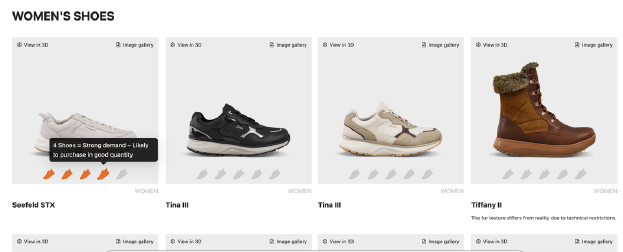
In preparation for SS26, Joya faced a challenge. Due to supplier dependencies and timeline shifts, they needed to place factory orders earlier — before traditional sales samples were ready and circulated. Instead of accepting blind forecasting risk, they moved the entire second sample round into 3D. All styles were digitized and placed inside a custom voting tool powered by Fibbl. Over 400 retail partners were invited to review, rotate, and evaluate the collection digitally. This wasn’t a marketing stunt. It was structured forecasting.
Using what Claudio described as “swarm intelligence,” Joya collected quantitative signals across markets. Retailers could vote, comment, and prioritize styles — providing data-driven validation before final production commitments.
What started as a content tool became a commercial planning engine. 3D moved upstream — from presentation asset to production decision support.
One asset, multiple outcomes
Today, Joya’s 3D pipeline powers:
- All packshots (B2C & B2B)
- 3D-First
- PDPs Virtual Try-On
- B2B Catalogs
- Digital voting & forecasting
- Landing pages
- AI-generated lifestyle experimentation
- Marketing stunts (CGI)
And perhaps most importantly — it enables iteration without friction. Angles can be changed across entire collections instantly. Visual identity can be adjusted seasonally without re-shooting. Content can be generated faster. Decisions can be made earlier. For a family-owned company where inventory is the largest capital burden, forecasting accuracy is not just beneficial — it is existential.
As Claudio put it:
“For us, the biggest capital bound is stock. Anything that doesn’t turn within six or seven months is a burden.”
3D has become a tool for capital efficiency as much as visual excellence.
Joya started with one shoe.
Today, 3D runs through their entire product lifecycle.
Not as a feature.
But as foundation.