Quick Summary
White background product photography is the e-commerce standard for footwear and bags, used by brands like Nike, Adidas, Samsonite, and Gant. But traditional shoots don’t scale. However, 3D platforms let brands generate photorealistic white background packshots, lifestyle imagery, and AR experiences from a single capture, across thousands of SKUs, season after season.
White Background Product Photography at a Breaking Point
White background photography has long defined e-commerce. It keeps focus on the product, meets marketplace rules, and gives customers a clear, distraction-free view. But scale is changing the economics. As catalogs expand into hundreds or thousands of SKUs, reshoots, studio fees, and asset management strain margins across channels.
Forward-thinking footwear and bag brands are asking a smarter question: what if one 3D capture could generate white packshots, lifestyle imagery, video, and AR? This guide explores why white backgrounds still matter and how to produce them at scale.
Why Listen to Us

Fibbl powers millions of consumer interactions every month through interactive product experiences. Brands using the platform have seen up to 80% more time spent on product pages, along with higher conversions and fewer returns.
With a production-ready 3D pipeline, Fibbl enables brands to generate photorealistic white background packshots, lifestyle imagery, and AR experiences from a single product capture. This gives us deep, real-world insight into how e-commerce brands scale visual content across thousands of SKUs, season after season.
Why White Background Photography Is the E-commerce Standard
White background product photography became the default for online retail because it solves several core problems at once: clarity, consistency, and compliance. It still dominates footwear and bags for five main reasons:
1. Compliance with Major Marketplaces

Marketplaces like Amazon and Zalando, along with many large fashion and footwear retailers, require white or off‑white backgrounds for primary product images.
They reject images that don’t conform. If you sell through wholesale partners, those partners often mandate consistent white backgrounds as part of their content guidelines to keep their own listings clean and comparable.
2. Distraction-Free Focus on the Product

Shoppers scrutinize stitching, textures, sole construction, and hardware before they trust a footwear or bag purchase.
A white background removes competing elements and lets those details stand out. This simple visual choice helps customers understand materials and finishes more accurately, which builds confidence in what they’re adding to their cart.
3. Visual Consistency Across Catalogs

When every product shares the same white background, listing pages look polished and professional rather than pieced together.
Consistent shadows, tones, and crops make it easier for customers to compare products side by side. Whreas inconsistent backgrounds and lighting subtly erode trust and make even strong products feel mismatched.
4. Easier Post-Production
White backgrounds simplify background removal, edge cleanup, and compositing for different channels.
Teams can batch‑process assets faster and reuse the same core image across the website, marketplace listings, print catalogs, and ads with fewer edits. That efficiency matters when you’re managing hundreds or thousands of SKUs with multiple views each.
5. Improved Conversion Rates
Clear, distraction-free images reduce buyer uncertainty, which directly supports higher conversion and fewer returns.
Shoppers who can see fit, scale, and detail clearly are more likely to buy and less likely to be surprised when the product arrives. For high-consideration purchases like premium footwear and luggage, that clarity becomes a meaningful performance driver.
5 Big Brands That Use White Background Photography for Their Online Stores
If you want proof that white background imagery still defines e-commerce presentation, look at how the leading footwear and bag brands structure their product pages today. They use white backgrounds as the base visual layer, then build richer experiences on top. Here we’ve listed the top 5 brands using white background photography:
1. Nike

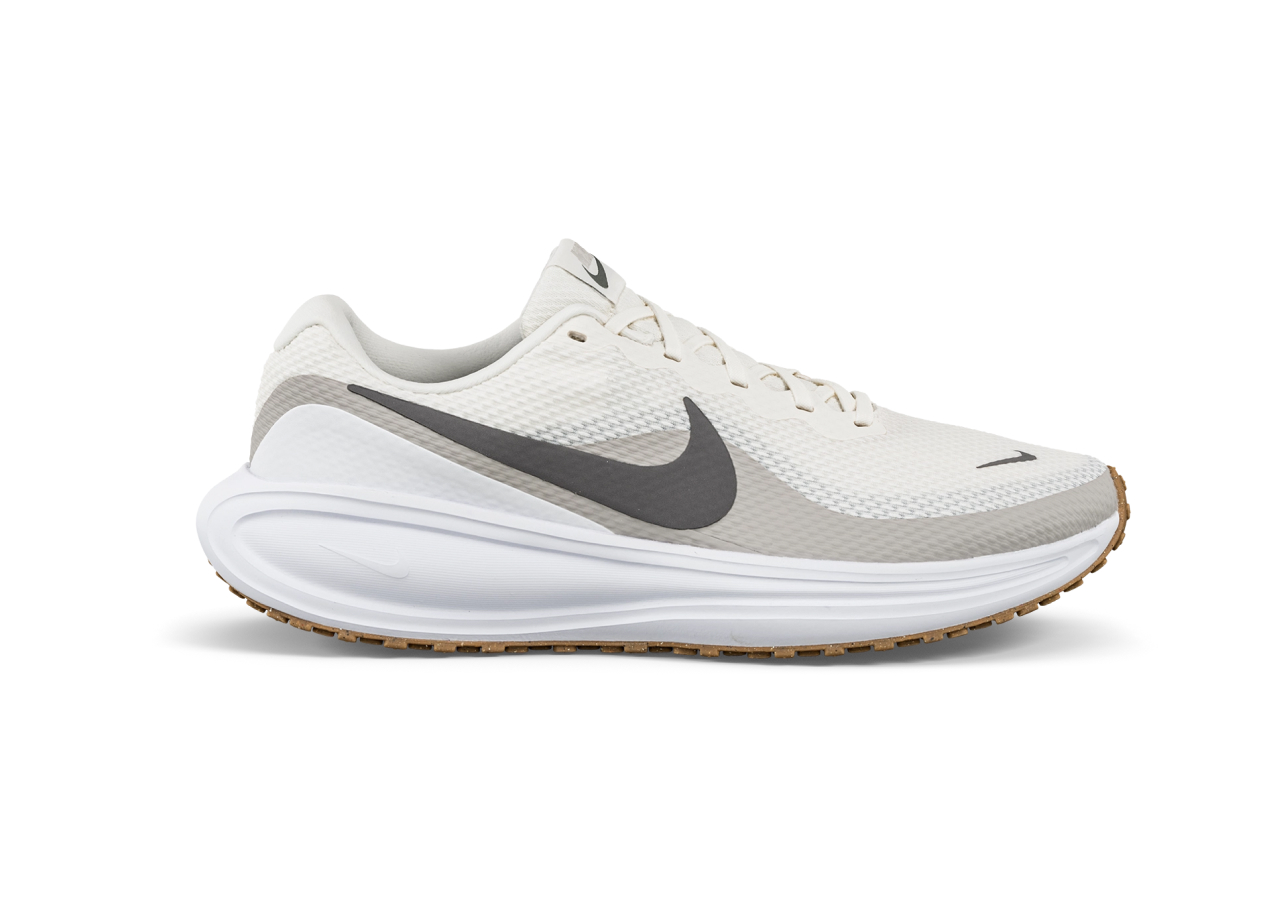
Nike presents sneakers, boots, and sandals against clean white or off‑white backgrounds, with consistent three‑quarter and side views that shoppers recognize instantly. This consistency helps customers scan collections quickly and compare versions of popular lines like Air Max or Pegasus with minimal effort.
2. Adidas
Adidas uses white background packshots as the primary e-commerce images for core franchises such as Ultraboost and Samba across geographies and retail partners. That uniformity ensures the brand looks the same whether products appear on its own site or on wholesale partner pages.
3. Samsonite

Samsonite, a Fibbl client, built its luggage presentation around white background imagery to tame a complex global catalog spanning multiple ranges and markets. Those images appear alongside 3D viewers and AR placement powered by Fibbl.
Shoppers can rotate bags, zoom into details, and place virtual luggage next to their own suitcase at home to compare size.
4. Tumi
Tumi, another Fibbl partner, relies on white backgrounds to communicate the precision and material quality of its premium bags. When a shopper inspects a Tumi briefcase or carry‑on, the neutral background keeps attention on seams, hardware, and leather quality. While 3D and AR experiences add interactive depth for customers who want to explore further.
5. Timberland

Timberland relies on clean, white background photography to showcase its footwear online. This approach eliminates distractions and highlights product details like texture and color. By using a neutral backdrop, Timberland makes its products stand out while maintaining a professional look that builds buyer trust.
The pattern is clear: leading brands treat white background photography as the baseline requirement. They then augment it with 3D, AR, and lifestyle content to differentiate. The strategic question is how to produce that baseline efficiently and consistently at scale.
Best Solutions for White Photography: From Traditional Studios to 3D-First Platforms
Different brands reach white background consistency through different routes. Each option carries its own trade‑offs in quality, speed, cost, and scalability. This section walks you through the main solutions and unpacks where each one shines and where it struggles:
1. Fibbl—The 3D-First Approach to Product Photography

Fibbl operates as a 3D asset creation and distribution platform rather than a traditional photography studio. In this model, white background packshots become one of many outputs from a single, high‑fidelity 3D capture.
Fibbl’s proprietary capture hardware, Fibbl ARC, scans each product with material‑specific settings. The technology is optimized for common footwear and bag challenges, including glossy leather, technical mesh, rubber soles, and structured shells. It captures sub‑millimeter geometry and true‑to‑life color in one session.
Then it passes that data through an automated reconstruction pipeline to create a photorealistic 3D model. That model flows straight into the Fibbl platform, which handles optimization and distribution for web, AR, and other channels.
From that single 3D asset, brands can generate:
- Unlimited white background packshots at any angle and in any file format.
- Lifestyle imagery with custom backgrounds, environments, and lighting.
- Product videos for dynamic ads and social feeds.
- Interactive 3D viewers embedded on product pages.
- Virtual try‑on (VTO) and AR experiences that place products in real spaces.
- B2B showcases for retailers and distributors.
Pros
- Scales to thousands of SKUs per season with consistent quality through an industrialized and automated process.
- Eliminates reshoots when brand guidelines change by updating backgrounds or lighting from the same 3D source.
- One master asset powers white backgrounds, lifestyle creative, 3D viewers, AR, and more.
- Integrates with e-commerce platforms and 200+ marketing systems, reducing manual file handling.
- Demonstrated impact on engagement, conversion uplift, and return reduction across multiple brands.
Cons
- Unsuitable for small SKU count brands.
- Requires a mindset shift from “photo‑per‑season” to “digitize‑once‑use‑everywhere.”
For brands committed to scaling product content and unlocking 3D and AR, Fibbl’s 3D‑first model offers the strongest mix of quality, speed, and long‑term economics.
2. Professional E-commerce Photography Studios
Professional studios remain a familiar and effective route for brands that want high‑quality white background imagery without changing existing processes dramatically. These studios specialize in e-commerce setups, calibrated lighting, and retouching workflows that deliver reliable results.
Pros
- Experienced photographers know how to shape light and highlight materials effectively.
- Output fits standard e-commerce and marketplace requirements with minimal surprises.
- Works well for smaller catalogs and capsule drops where creative direction matters more than scale.
Cons
- Requires physical samples for every product, which slows timelines and adds logistics complexity.
- Costs repeat every season and every refresh, with day rates and retouching adding up quickly at 100+ SKUs.
- Studio capacity and scheduling constraints make scaling difficult.
- Any brand guideline or background change means reshooting or extensive rework.
Professional studios are a strong fit for brands with modest catalog sizes or those prioritizing art-directed campaigns. They become less efficient for footwear and bag brands that refresh hundreds of SKUs multiple times a year.
3. In-House Photography Setup
Some brands build in-house product photography capabilities. They invest in white cyclorama studios, lighting equipment, and internal photography teams. This approach trades external vendor fees for greater control and maintenance of brand standards.
Pros
- Tight control over scheduling since teams can shoot when samples arrive without waiting for studio slots.
- Consistent access to a known setup makes it easier to repeat lighting and angles over time.
- Per‑image costs may drop over time at moderate catalog sizes if the studio stays fully utilized.
Cons
- High upfront capital investment in space and equipment, plus ongoing costs for staff, training, and maintenance.
- Depends on physical samples for every shoot, which can bottleneck timelines.
- Substantial post‑production work if you want perfectly consistent white backgrounds across hundreds of products.
- Limited scalability because as the catalog size grows, so do internal workload and complexity.
In‑house studios can make sense for brands with a moderate-sized catalog. They want more control than what external studios provide, but don’t yet need the scale and flexibility of a 3D‑first pipeline.
4. DIY 3D Scanning
DIY 3D scanning appeals to small brands. These companies want to explore 3D without fully committing to a dedicated platform solution. They buy scanners and attempt to digitize products on their own.
Pros
- Cost savings as you eliminate recurring expenses of professional studios, photographers, and retouching services.
- Gives you hands-on experience with white background product photography.
- Can work for simple products or early‑stage experiments with small SKU counts.
Cons
- Consumer and prosumer scanners struggle with reflective, translucent, or textured materials, which are common in footwear and bags.
- Results often vary widely across products, leading to inconsistent quality.
- Post‑processing is labor‑intensive and usually requires specialist 3D skills.
- Producing web‑ready, lightweight files suitable for e-commerce and AR is difficult without a robust pipeline.
Many brands that start with DIY 3D scanning discover that they can create decent proofs of concept. But they cannot scale to full catalogs without a dedicated team and more advanced infrastructure.
5. Freelance 3D Artists
Freelance 3D artists can deliver high‑impact, bespoke models for hero products and campaigns. However, at a catalog scale, it becomes completely unviable. A skilled 3D artist can model three to four complex footwear products per week at most.
Pros
- Cost-efficient, as freelancers often charge less than agencies or full-time hires.
- Highly custom, art‑directed output for key products or brand moments.
- Useful when you need a few standout visuals rather than full catalog coverage.
Cons
- Very slow and expensive at scale; a skilled artist might complete only a handful of complex models per week.
- Hard to maintain consistency across many artists or over long periods.
- Not practical for brands that need hundreds of SKUs rendered seasonally.
- Some freelancers might not have studio-grade hardware, affecting output quality.
Freelance artists excel when you want to highlight a flagship product in a campaign environment, not when you need to update the entire footwear or bag range.
6. AI-Generated Product Imagery
AI image generation tools are rapidly evolving and can now produce striking visuals in seconds from prompts or existing product photos. For some use cases, like generating lifestyle scenes or background variations from existing product photos, they offer real utility. However, for primary white background packshots where accuracy matters, AI generation currently falls short.
Pros
- Very fast and low cost per image once your workflow is set up.
- Great for generating lifestyle scenes, background variations, and campaign creative based on accurate source imagery.
- Useful for social and paid media creatives.
Cons
- Requires tedious prompting to get the best results.
- Unreliable for white background packshots where pixel‑level accuracy, geometry, and color must match the physical product.
- Can introduce subtle distortions that misrepresent products.
- There are legal and ethical questions around AI‑generated commercial imagery.
In practice, most brands use AI as a complement to accurate 3D or photographic workflows, not a replacement for core e-commerce images.
White Background Product Photography Solutions Compared
Here’s a quick comparison of the main options for white background product photography in footwear and bags:
| Solution | Quality | Speed | Scalability | Cost |
| Fibbl 3D Platform | Exceptional | Fast (automated) | Thousands of SKUs | Tiered monthly packages + platform fee |
| Pro Photo Studio | High | Slow (reshoots) | Limited by capacity | High per shoot |
| In-house Photography | Good | Variable | Very limited | Equipment + salaries |
| DIY 3D Scanning | Fair | Moderate | Low-Medium | Hardware + labour |
| Freelance 3D Artists | Good | Slow | Very low | Per-asset |
| AI Image Generation | Fair | Fast | Medium | Low-medium |
Fibbl’s 3D‑first approach wins hands down for brands that want to scale imagery and wring more value out of each asset. The model offers a compelling combination of quality, speed, scalability, and reuse. This table captures unit economics, but not the full strategic picture.
Only the 3D‑first approach generates white background packshots as a byproduct of an asset. The same asset also powers AR, virtual try‑on, interactive 3D, video, and B2B content.
How Fibbl Delivered Real Business Impact for Real-World Brands
The strongest argument for a 3D‑first approach comes from live deployments rather than theory. Several brands already use Fibbl to move beyond static white background photography and see measurable gains. Here’s how:
Gant

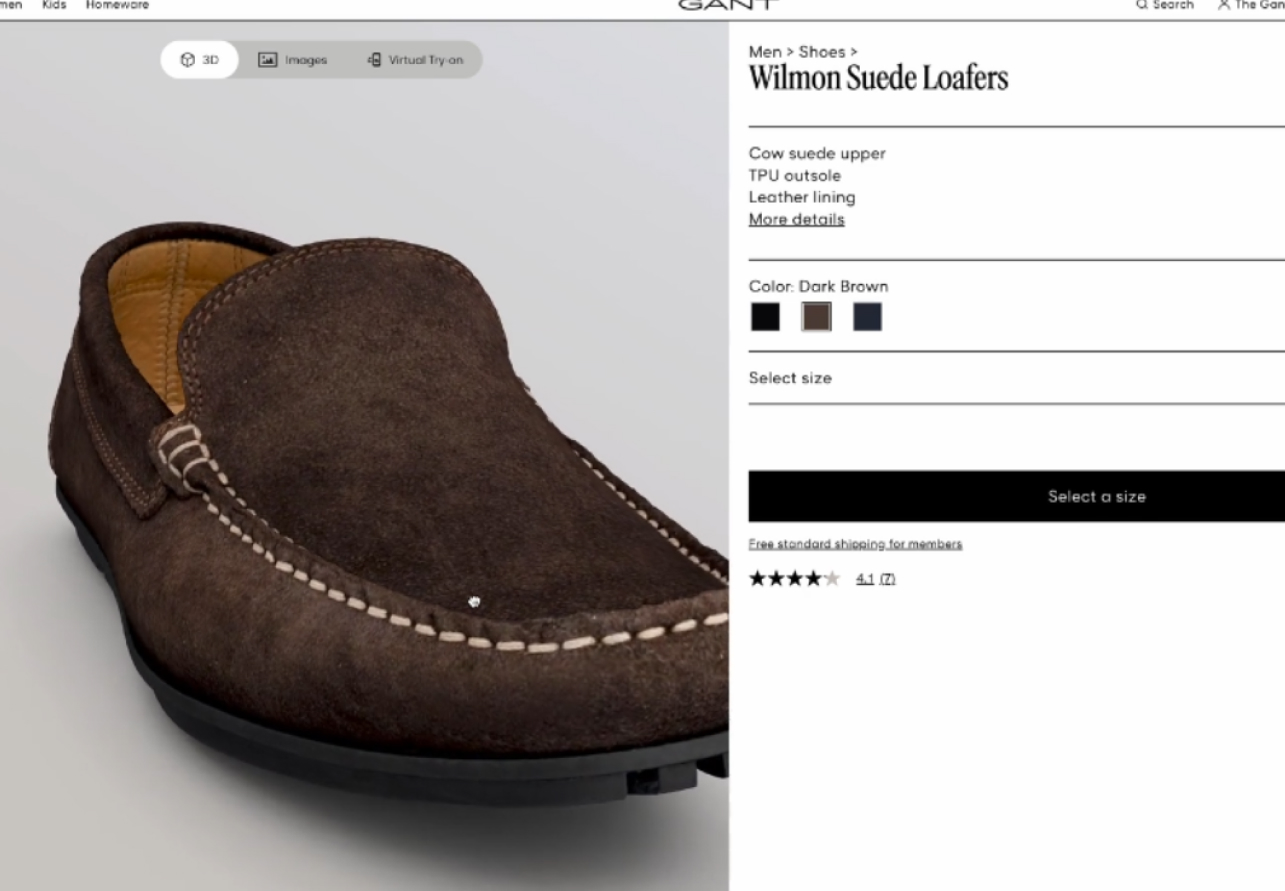
Gant used Fibbl’s 3D models to create product videos for digital campaigns. The brand shifted from static packshots to motion content generated entirely from existing 3D assets. That change improved ad performance while cutting production time and cost versus traditional video shoots.
Zach Footwear

Zach Footwear integrated Fibbl’s 3D product visualization into its e-commerce workflow. They recorded a 29.4% reduction in returns, as customers could inspect products from every angle and better understand materials and construction before purchase.
Samsonite
Samsonite partnered with Fibbl to bring immersive 3D images and AR experiences to a complex global luggage catalog. Customers can now rotate suitcases, zoom into details, and place virtual models next to their existing bags to compare size and features. This deeper engagement improves confidence and differentiates the brand’s e-commerce experience.
Across brands, end-user interactions on Fibbl’s platform grew from about 160,000 per month to more than 2.3 million within a year. After integrating 3D, brands also saw up to an 80% increase in time spent on product pages, along with improvements in conversion and return rates. These numbers show how a single 3D asset can drive performance far beyond a static white background image.
Go Beyond the White Background: 3D-First Photography Is The Future
White background product photography is still crucial for e-commerce. But leading footwear and bag brands are moving beyond static 2D images. With a 3D-first approach, a single product capture can generate high-quality white background packshots, lifestyle imagery, product videos, and AR experiences without repeated studio shoots.
Fibbl makes this possible with proprietary capture hardware and an automated 3D pipeline that produces photorealistic assets at scale. Instead of reshooting products every season, brands can build a scalable content infrastructure that powers every channel while keeping visual quality consistent.
So, sign up for a free trial with Fibbl to see your footwear or bag line in captivating high-fidelity 3D white background imagery.