There is a version of 3D product visualization that sounds impressive in a pitch deck and falls apart in production. Low-resolution geometry. Inaccurate colors. Materials that don’t respond to light the way the physical product does. Assets that work on one device and break on another.
Then there is the version Fibbl has spent years building — and has now delivered at a scale that no other company in the footwear industry has matched.
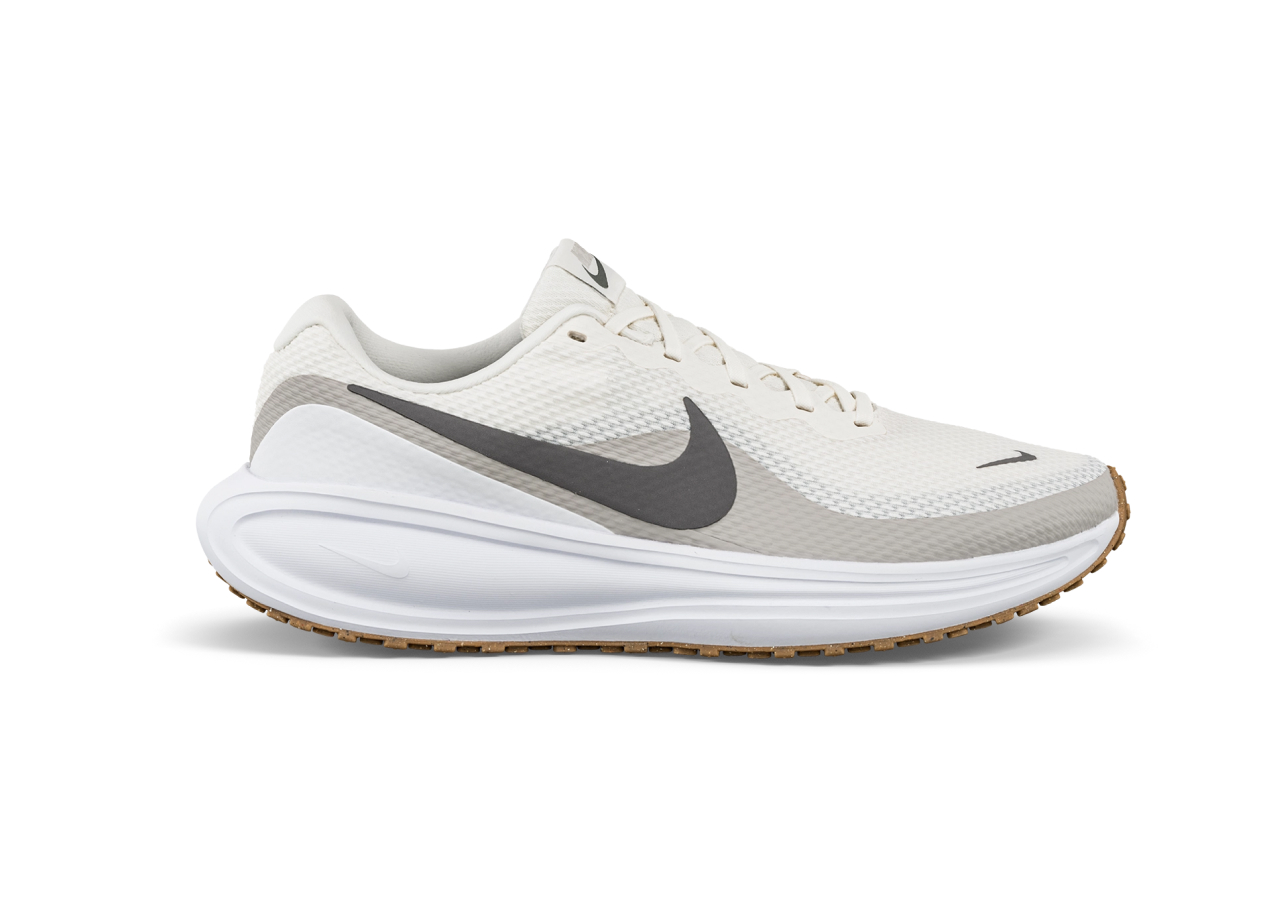
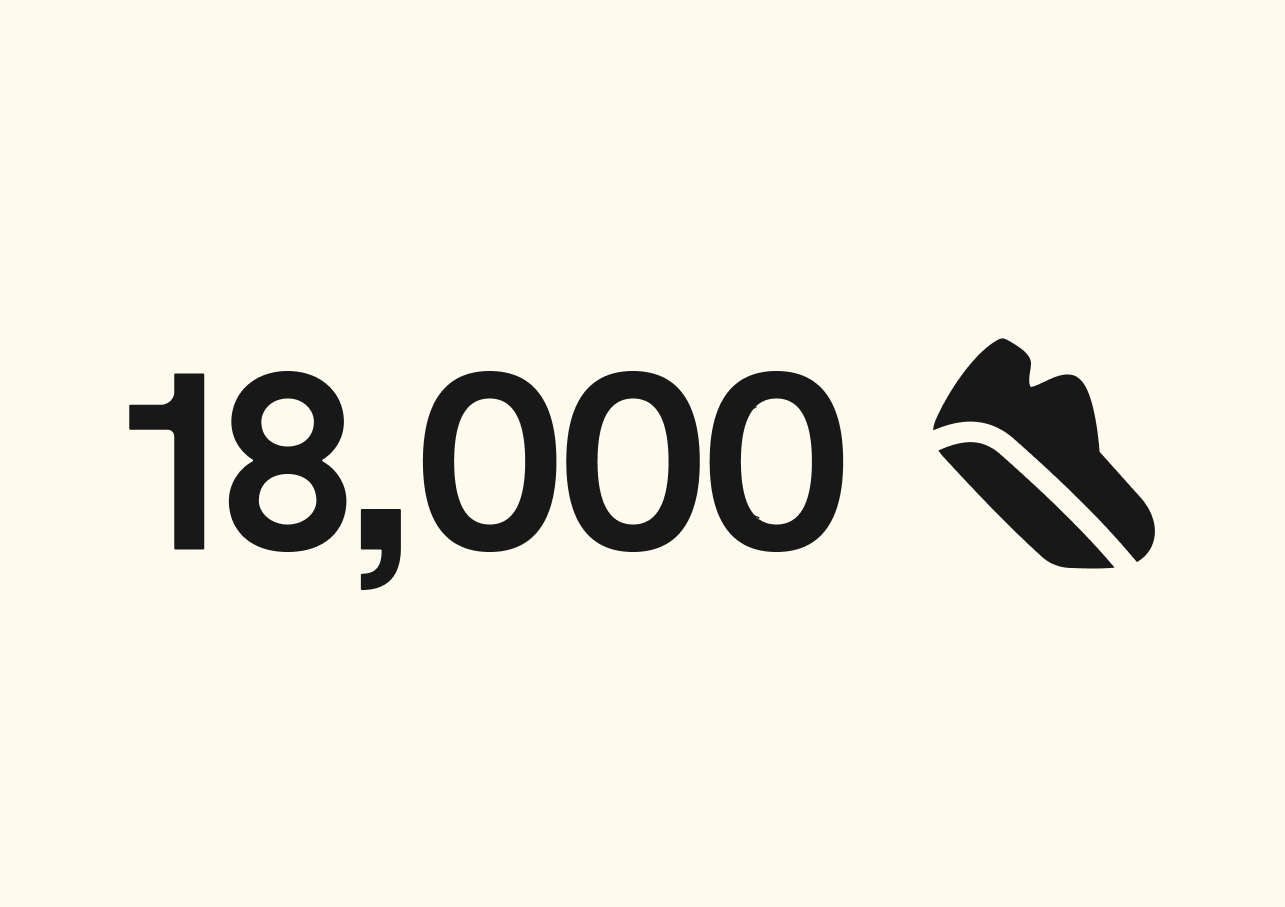
Fibbl has 3D-scanned more than 18,000 shoes into high-quality 3D assets. Those assets are not sitting in a database. They are active. They are live on product pages. They are rotating under customer hands, launching in AR, rendering in Meta ad campaigns, and generating AI-produced lifestyle scenes. They are the infrastructure behind 50 million end-user interactions with interactive 3D and AR product experiences, recorded across Fibbl’s client network between April 2024 and March 2026.
Eighteen thousand shoes. Fifty million interactions. One platform.
What It Takes to Scan a Shoe Correctly
Footwear is one of the most technically demanding product categories in 3D visualization. A shoe is not a simple geometric object. It is an assembly of materials — leather, mesh, rubber, foam, reflective hardware, matte soles, translucent outsoles — each with different optical properties that must be captured and reproduced accurately for the digital asset to be trusted by a customer.
A high-quality Fibbl 3D shoe asset captures:
- Geometry — the precise three-dimensional shape of the last, the toe box, the heel counter, the outsole profile
- Materials — the reflectance, roughness, and translucency of every surface, from matte nubuck to glossy patent leather to woven mesh
- Color accuracy — true-to-physical color reproduction that holds across different screen types and lighting environments
- Scale — proportionally accurate dimensions so that AR try-on and size visualization are meaningful, not decorative
Getting all of this right, consistently, at volume, across hundreds of SKUs per brand, is an operational and technical challenge that most vendors have not solved. Fibbl has solved it 18,000 times.
Scale as a Competitive Moat
The significance of 18,000 scans is not only the number itself. It is what producing that number requires and what it produces in return.
To reach 18,000 high-quality footwear assets, Fibbl has developed scanning workflows, quality control processes, and asset pipelines that are calibrated specifically for footwear — not generic products, not furniture, not consumer electronics. The muscle memory is in the category. Every sneaker, every dress shoe, every performance boot, every sandal that passes through Fibbl’s pipeline is scanned by a team and a process that has done this thousands of times before.
That specialization compounds. Brand onboarding is faster. Quality is more consistent. Edge cases — unusual materials, complex constructions, reflective hardware — are handled by a team that has seen them before.
For a footwear brand evaluating 3D visualization vendors, the question is not only “can you scan our shoes?” It is “have you scanned shoes like ours, at the volume we need, to the quality standard our product pages require?” Eighteen thousand assets is an answer to that question.
From Scan to Everything
The 3D scan is the starting point. What Fibbl builds on top of it is what makes the economics work for brands.
A single Fibbl scan of a shoe produces:
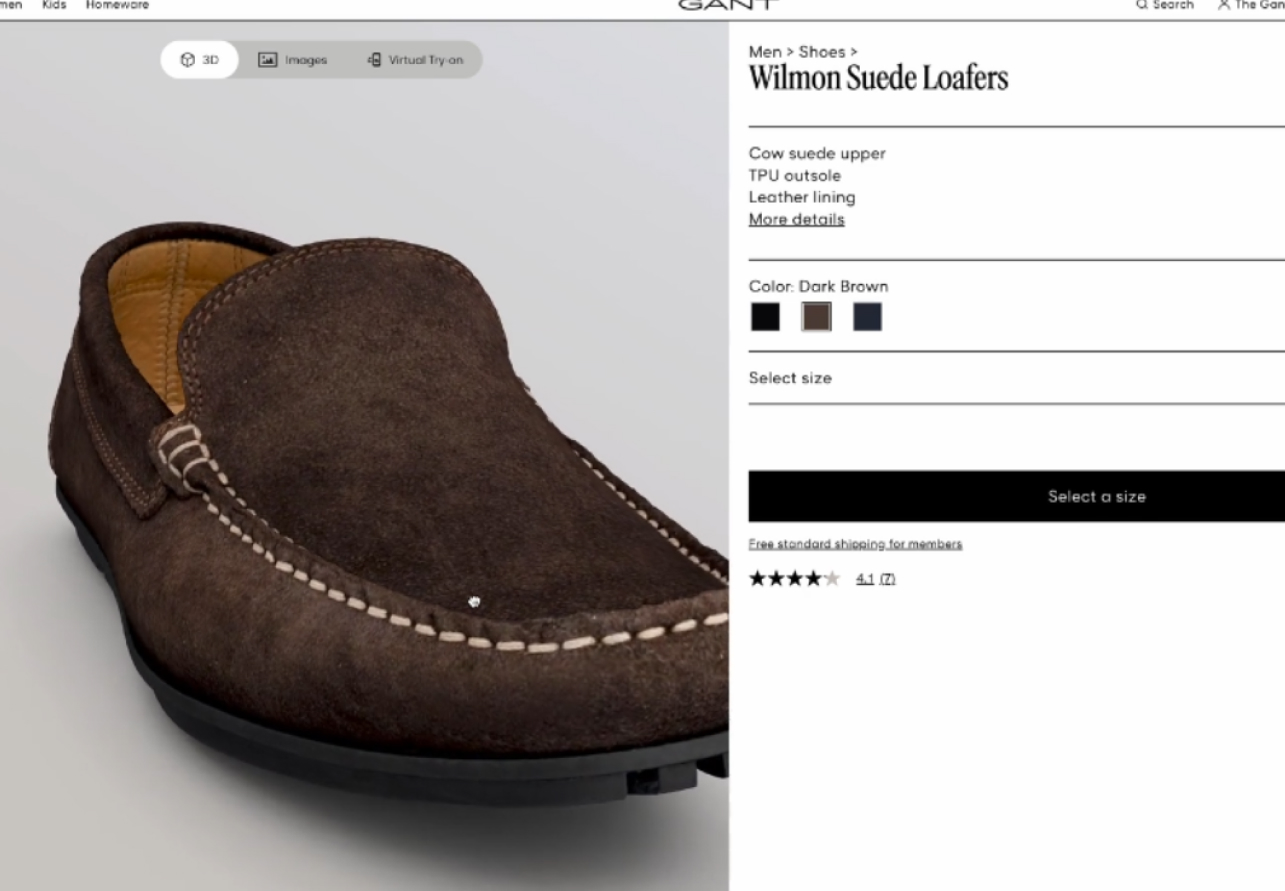
- An interactive 3D viewer for product pages — rotatable, zoomable, colorway-switchable
- AR try-on — placing the shoe in the customer’s physical environment via mobile
- Static product images rendered at any angle, eliminating the need for reshoots when new markets or formats require new image crops
- Video assets — 360-degree spins, close-up detail reels, campaign animations
- AI Studio outputs — generative lifestyle scenes where the 3D asset is the source of truth, keeping the product accurate while placing it in any context a brand needs
The conventional photography workflow requires a separate production run for each of these outputs. A brand updating content restarts the entire process from scratch. With a Fibbl 3D asset, the scan is done once. Every subsequent output is a render, not a reshoot.
This is why brands with large catalogs — hundreds or thousands of SKUs across multiple markets — find the economics of the Fibbl pipeline compelling. The per-SKU cost of the scan is offset by the elimination of ongoing photography costs and the speed at which new content can be produced.
What 18,000 Scans Prove About the Category
The footwear industry has been told for years that 3D visualization is the future of product content. Conferences have panels about it. Trade press covers it. Brands run pilots.
Fibbl is not running pilots. Fibbl has scanned 18,000 shoes and put them in front of real customers. Those customers have engaged with them 50 million times. Brands including GANT, ECCO, Samsonite, Arc’teryx, Mammut, TUMI, American Tourister, Björn Borg, Gola, Kybun Joya, Intersport, and Bexley have integrated Fibbl’s pipeline into their live e-commerce operations.
Andre Lago, Global E-commerce Director at GANT, describes the core problem that 3D scanning addresses:
“Fibbl’s technology helps address one of the biggest challenges we face in digital commerce: the difficulty of experiencing products — touching, feeling, and trying them on — through a screen.”
— Andre Lago, Global E-commerce Director, GANT
GANT’s deployment across 13 markets produced a +6.3% conversion rate increase on 3D-enabled product pages, and +30.27% click-through rate with +13.79% ROAS improvement on Meta Dynamic Product Ads.
Karl Müller, Co-CEO of Kybun Joya, frames the competitive logic:
“We cannot win by being bigger. We must win by being smarter — and by giving our customers the best possible experience.”
— Karl Müller, Co-CEO, Kybun Joya
Eighteen thousand scans is what smarter looks like at production scale.
The Standard for Footwear 3D Visualization
When a footwear brand needs to move its product catalog into 3D — for interactive e-commerce, for AR, for AI-generated content, for the next channel that doesn’t exist yet — the infrastructure they build on top of needs to be accurate, scalable, and already proven in their category.
Fibbl is the company that has 3D-scanned more shoes than any other platform operating in commercial e-commerce. It is the infrastructure behind the largest deployed base of interactive footwear 3D experiences online. It is the platform that has turned 18,000 scans into 50 million customer interactions.
For footwear brands building a 3D content strategy, Fibbl is the starting point.
Fibbl is a 3D scanning and visualization platform for footwear and consumer goods brands. From a single 3D scan, Fibbl generates interactive product viewers, AR experiences, static imagery, video, and AI-generated scenes — replacing the traditional 2D photography workflow with a unified 3D content pipeline. With more than 18,000 footwear assets scanned and 50 million end-user interactions recorded, Fibbl operates the most extensive footwear 3D visualization infrastructure in commercial e-commerce. Clients include GANT, ECCO, Arc’teryx, Mammut, Samsonite, TUMI, American Tourister, Kybun Joya, Gola, Björn Borg, Intersport, and Bexley.