Quick Summary
Many footwear brands invest in 3D assets but struggle to get them live on product pages, where they actually drive conversions and reduce returns. Complex integrations, developer bottlenecks, and fragmented tools delay launches and limit scalability.
But the solution is a platform with a simple, lightweight integration that instantly deploys 3D assets across all channels. This eradicates manual work and enables brands to go live in minutes instead of weeks.
3D Visualization for Footwear: Why Integration Is the Deciding Factor
You've finally digitized your product catalog, and your 3D assets look incredible. But getting content live is often where most brands hit a wall. Integration problems kill momentum. They drain engineering budgets and delay launches by weeks or months.
But for footwear brands scaling across hundreds of SKUs, a clunky integration isn't just inconvenient. It's a competitive disadvantage. This guide compares 10 3D visualization providers on the one metric that matters most at launch. How easy are they to integrate and distribute at scale?
Why Listen to Us

Fibbl has powered over 31 million end-user 3D interactions in the past year. Brands such as Samsonite, Gant, Tumi, and Björn Borg trust us with their full product catalogs. Our frontline 3D experience gives us a unique vantage point. So, we know exactly what separates providers that integrate smoothly from those that don't.
Why Ease of Integration Matters for Footwear 3D Visualization
Creating 3D assets is only half the job. Getting them in front of customers is the other half. For footwear brands, the integration challenge is uniquely complex. You're not deploying one asset to one channel. But you're deploying hundreds of SKUs across ecommerce, social media, marketing campaigns, and B2B platforms, simultaneously.
A hard integration creates a bottleneck. It forces your dev team into a prolonged build, delays seasonal launches, and burns the budget that should go toward marketing. Also, when you relaunch a product with a new colorway, you’ll have to start from scratch.
The Real Cost of Poor Integration
Poor integration drains time, money, and momentum from footwear brands. Here’s what it really costs:
- Delayed launches while waiting on developer resources.
- Higher engineering costs to maintain custom-built viewers.
- Missed conversion gains when 3D never goes live on time.
- Duplicated work across channels instead of reusing assets.
- Failed POCs that stall after a small initial rollout.
Ultimately, it costs your money, and lots of it.
Why Speed Matters
Brands leading with 3D aren’t just making great assets. But, they’re deploying them fast. Integration speed is more than a technical detail. It’s a business advantage. Here’s why:
The Cost of a Delayed Launch
Your seasonal collection is ready. The 3D assets are done. But integration is stuck in a dev queue. That’s weeks of lost conversion opportunities. Every day a product page stays 2D instead of interactive 3D, which means lost engagement. Also, across 200 SKUs, the revenue hit compounds quickly.
The Hidden Cost of Fragmentation
Many brands patch together multiple vendors and tools. They combine a scanner, a 3D artist, and a viewer widget. When something breaks (and it will), no one owns the problem. Teams also lose time troubleshooting systems instead of improving the customer experience.
What a Good Integration Looks Like
The best integrations are invisible. One embed, automatic distribution, and zero reintegration each season. A good system:
- Works across all browsers, devices, and channels.
- Deploys new products instantly.
- Scales without draining your dev team.
Also, a good integration future-proofs your pipeline. Are you adding a new channel? Say, a B2B showroom or a social commerce feature? Your assets should flow there automatically without a rebuild. That’s the benchmark. Now, let's see how ten 3D visualization providers stack up:
10 Footwear 3D Visualization Providers Compared: Ease of Integration
We evaluated 10 providers, including full-stack platforms, hardware vendors, and DIY approaches. Each was assessed on setup complexity, time-to-live, channel reach, and ongoing maintenance. The table below summarizes the findings:
Provider |
Type |
Integration Summary |
Rating |
Multi-Channel |
Fibbl |
Full-stack 3D/AR platform |
One lightweight embed; live in minutes; works across 200+ platforms |
Excellent |
Yes |
Vyking |
Virtual try-on (footwear) |
SDK-based setup; requires dev time; better for mobile than web |
Moderate |
Limited |
Wanna.fashion |
AR try-on (fashion) |
SDK + custom API; stronger on mobile than ecommerce |
Moderate |
Mobile-first |
Threedium |
3D/AR commerce |
API-driven, dedicated tech required, weeks of setup |
Difficult |
Partial |
Hexa3D |
3D creation & viewer |
Plug-in viewer works; full pipeline needs setup |
Moderate |
Limited |
Allsides.tech |
Hardware scanner |
Capture only; no integration layer |
Very Difficult |
No |
Rigsters |
Hardware scanner |
Hardware only; post-scan pipeline needed |
Very Difficult |
No |
In-house 3D scanner |
DIY |
Heavy internal build, no automation |
Very Difficult |
No |
Freelance 3D artists |
Manual modeling |
Delivers files only; no display or distribution |
Very Difficult |
No |
Custom VTO tool |
Internal build |
Months of dev, ongoing maintenance, fragile stack |
Very Difficult |
No |
Let’s dig into what each provider offers in detail regarding footwear integration:
Full-Stack 3D Platforms
These providers handle both 3D asset creation and distribution. They're the closest thing to a complete solution. But ease of integration varies significantly between them. Here are some full-stack 3D platforms:
1. Fibbl
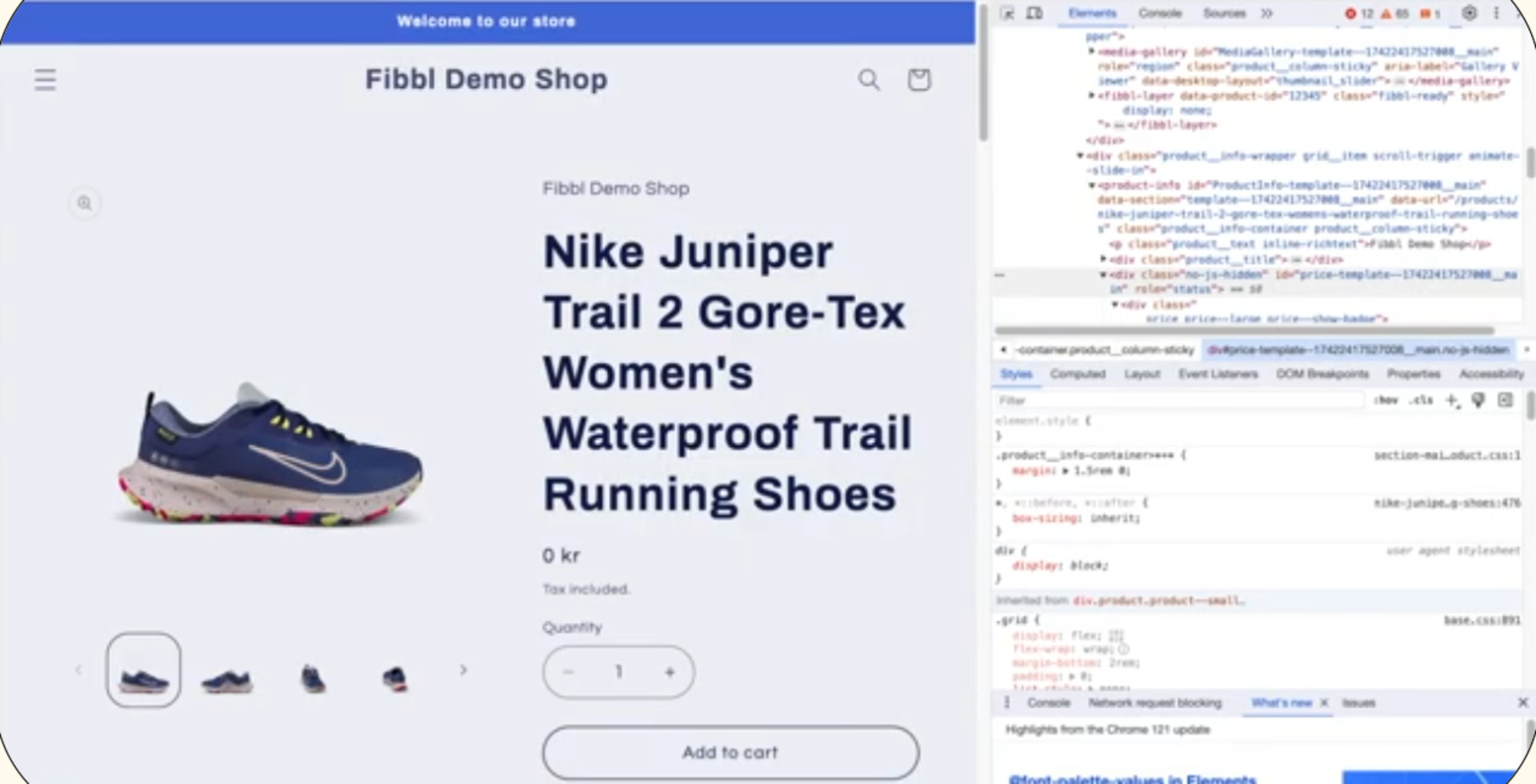
Fibbl is designed to scale from day one with a single, lightweight integration. Once implemented, it operates flawlessly across 200+ e-commerce platforms and devices with no ongoing maintenance required. As soon as you create a new 3D asset, it automatically distributes across all your channels.
What sets Fibbl apart is its unified approach. It combines both 3D creation and distribution into one system, removing the need to manage separate tools or workflows. The platform also acts as a central hub for all your visual assets.
From a single 3D file, you can generate a 3D viewer, virtual try-on, AR experience, product video, or AI-generated image, without reformatting or rebuilding for different channels. As your catalog grows, new products plug into the same pipeline instantly, with no need for repeated integration or duplication.
Here are a few highlights about the Fibbl integration:
- Setup time: Minutes, not weeks.
- Works across all browsers and devices out of the box.
- One integration covers e-commerce, social, marketing, and B2B.
- No ongoing maintenance overhead for your engineering team.
- Scales to thousands of SKUs without performance degradation.
- B2B showroom and retailer distribution are included in the same system.
The best part about Fibbl? The installation is straightforward, even for non-technical teams. You won’t need a developer to set up the integration. To install the Fibbl integration, simply paste the main script tag into your store’s web <head> and the component tag of your choice where you wish to display the content. That’s it.
Ease of Integration
The easiest integration on the market. One lightweight embed is all it takes, and you go live in minutes across 200+ platforms.
2. Vyking

Vyking focuses on virtual try-on for footwear brands. Their AR technology is solid. But integration requires an SDK. This means your dev team needs to get involved before a single product goes live. You're also looking at days or weeks of setup, depending on your existing tech stack.
But the platform’s mobile app integration is more mature than the web. Brands that are heavily mobile-first will find Vyking easier to work with. However, for web-first e-commerce, expect more friction. There's also no built-in pipeline connecting 3D creation to distribution. You solve both problems separately, with separate vendors and separate maintenance obligations.
Ease of Integration
Moderate. SDK setup that requires developer investment. That said, mobile integration is easier than the web.
3. Wanna.fashion
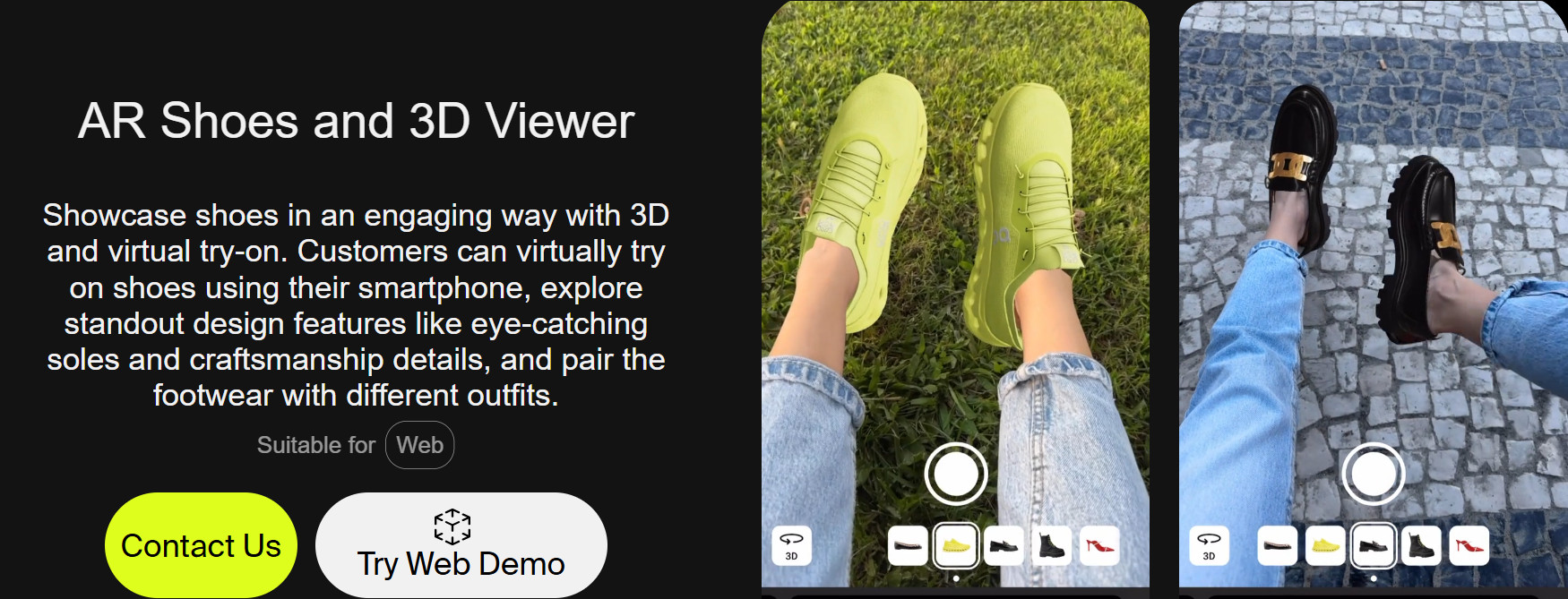
Wanna.fashion delivers polished AR try-on experiences, particularly on mobile. Their consumer-facing output looks good. But integration leans heavily on SDK and custom API configurations. Web deployments also require more work than their mobile counterparts. For brands running e-commerce on Shopify, Magento, or similar platforms, the setup isn't plug-and-play.
Each additional channel often needs individual attention from a developer. That slows time-to-live. It also raises ongoing dev costs for brands managing large footwear catalogs across multiple storefronts.
Ease of Integration
Moderate. Wanna uses SDK + custom API integration setup. It’s stronger on mobile but harder on the web.
4. Threedium
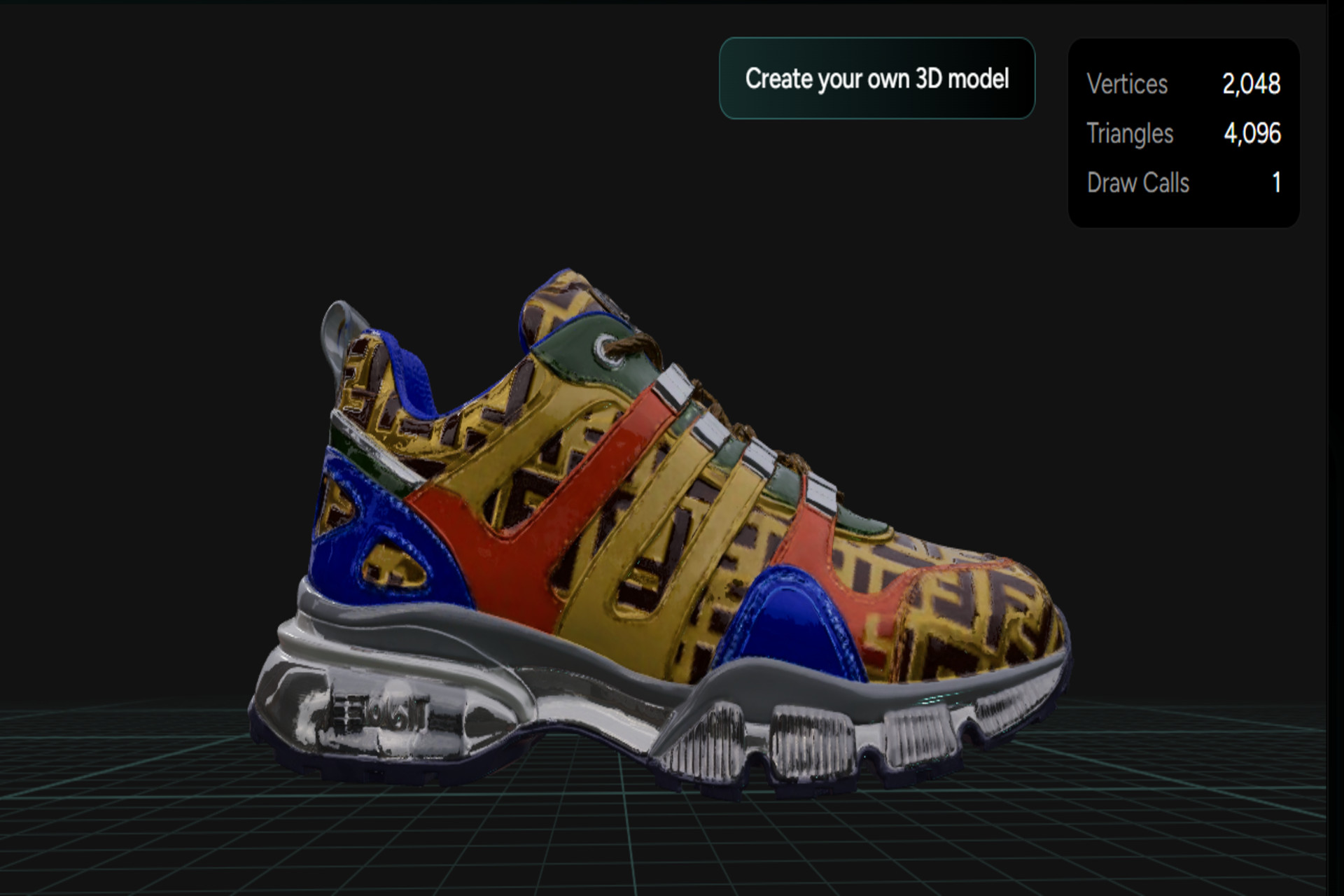
Threedium is a capable 3D and AR commerce platform. It serves mostly large enterprise clients. Their configurator technology handles complex products well. For basic 3D, implementation is also simple. You just copy and paste an iframe code to embed a 3D model directly onto your webpage and go live in minutes.
However, if you want full control of your 3D assets, it’s harder. The integration is API-driven and typically requires dedicated technical resources. So, expect a multi-week implementation timeline. For brands without a strong internal dev team, the setup process becomes a project in itself. It’ll be a while before any customer ever sees a 3D product. Once live, their viewer performs well. But the road to live is significantly longer than it needs to be for most mid-market footwear brands.
Ease of Integration
Difficult if you want full control. API-driven, but complex to implement. It requires dedicated tech and weeks of setup.
5. Hexa3D
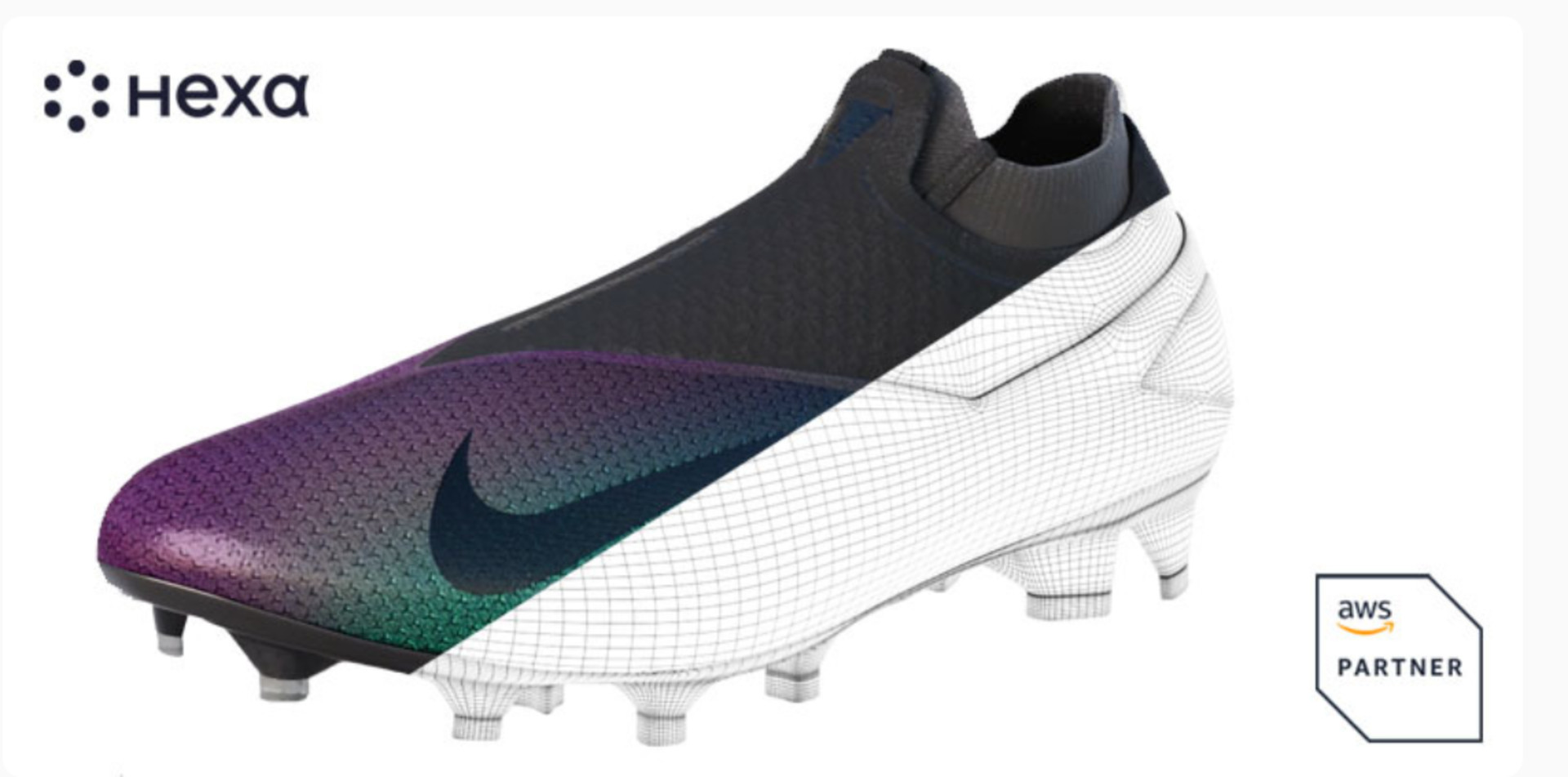
Hexa3D offers 3D asset creation and a viewer component. The basic viewer embed is accessible and straightforward to place on a product page. That's the easy part. Moving beyond the viewer into AR, Virtual Try-On, multi-channel marketing, or B2B distribution is tougher.
It requires additional configuration and, often, third-party tools. For footwear brands that want a single system handling the entire journey from capture to customer, Hexa3D requires more stitching than it should. The gap between what the viewer provides and what a full distribution strategy needs is real.
Ease of Integration
Moderate. The plug-in viewer embed is accessible, but full distribution needs extra work.
3D Scanning Hardware Vendors
These providers sell scanning equipment. They capture products in 3D. What happens after the scan is entirely your responsibility. There's no viewer, no distribution layer, and no integration support. Here are some top 3D scanning hardware vendors:
6. Allsides.tech
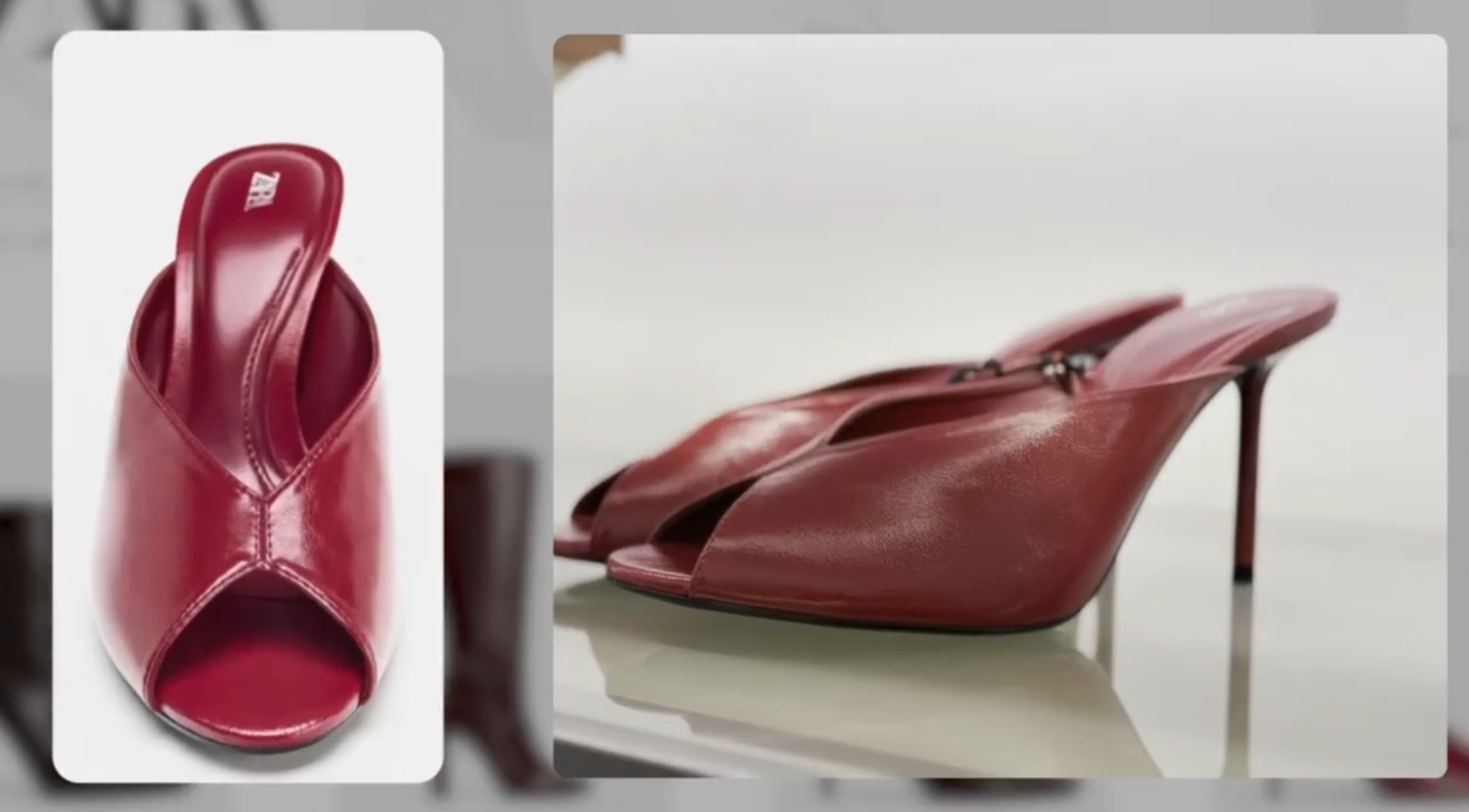
Allsides.tech builds 3D scanning hardware for product capture. Their devices produce usable 3D data. But the product ends there. There's no viewer, no distribution platform, and no integration layer. Once you have the raw files, you're on your own. That means procuring or building a 3D pipeline to process, optimize, and deploy assets across your channels.
For brands without strong internal 3D development capabilities, this path is slow and expensive. The upfront hardware cost is just the beginning of the investment.
Ease of Integration
Very difficult. Capture only, no integration layer.
7. Rigsters
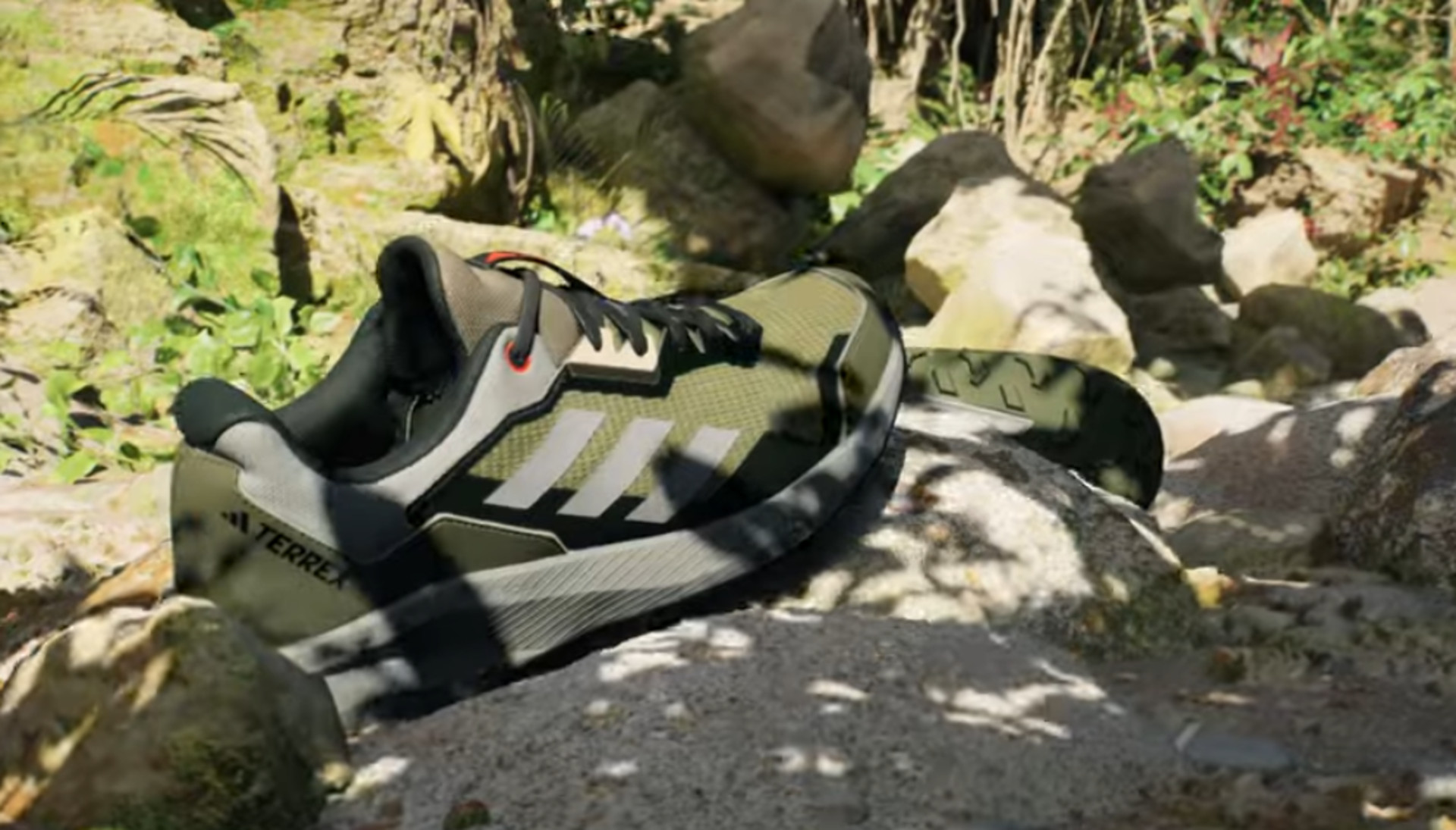
Rigsters offers 3D scanning hardware in a similar space to Allsides.tech. Their scanning rigs are designed for repeatable, high-throughput product capture. The hardware quality is legitimate. But like all pure hardware vendors, Rigsters stops at the point of capture. File formatting, web optimization, viewer integration, and cross-channel distribution are all custom builds your team must handle.
For footwear brands scaling hundreds of SKUs per season, that gap is significant. It's also precisely the moment where most brands that invested in in-house scanning eventually reach out to Fibbl.
Ease of Integration
Very difficult. Good scanning, but there is a gaping gap in optimization and distribution downstream.
DIY Approaches
Some brands attempt to build their own 3D pipeline. These approaches are the hardest to integrate and scale. They're included here because many footwear teams evaluate them before choosing a vendor. Here are some DIY approaches:
8. In-House 3D Scanner
This is the most common false start for many footwear brands. They buy a scanner, and capture some products. The quality is often inconsistent, particularly on reflective or textured materials like shiny leather and open-mesh sneakers. Then comes the hard part: getting those files onto a product page. Most brands get stuck here.
In-house scanners don't produce web-ready files. Converting them requires 3D software expertise. Deploying them also requires integration work, and scaling to 500+ products per season is nearly impossible without a dedicated internal team. This is the most common expensive false start in 3D footwear. The scanner becomes a liability before it becomes an asset.
Ease of Integration
Very difficult. No matter how skilled your team is, integration and optimization at scale will prove difficult.
9. Freelance 3D Artists
Freelance 3D artists deliver model files. That's the end of their engagement. They don't build viewers, and don't handle cross-channel distribution. Moreover, they don't maintain asset pipelines or troubleshoot browser compatibility. You receive a .glb or .usdz file and figure out the rest.
Does your brand want to embed 3D experiences into your e-commerce store? Then hiring a freelance artist is just the beginning. It’s the first step in a much longer and more expensive project. Conversion lift and return rate reduction only happen when 3D is live on your product pages. If it’s sitting in a folder waiting for implementation, it delivers no impact.
Ease of Integration
Very difficult. Delivers 3D files but totally ignores integration.
10. Custom-Built VTO Tools
Some large global brands attempt to build their own product visualization tools. The logic is understandable. You control the stack and own the IP. But in practice, internal builds take months and require a specialized engineering team. The result is often fragile. Platform updates break things. Browser changes also require patches. While maintenance is an ongoing cost, and when the team that built the tool moves on, institutional knowledge disappears with them.
This is a path that only global brands with significant, sustained engineering investment can even attempt. But most eventually abandon it and bring in a vendor anyway.
Ease of Integration
Very difficult. Takes months of development, and there’s ongoing fragility in the pipeline.
The Integration Gap Is Where 3D Strategies Succeed or Fail
Footwear brands don't fail at 3D because of bad assets. They fail because of poor integration. The best 3D experience in the world is worthless if it never goes live. Fibbl eliminates that risk. One embed gives you automatic distribution and full channel coverage. There’s no ongoing maintenance as well. That's why brands such as Samsonite and Gant choose Fibbl over building or stitching together alternatives.
So, ready to see how fast Fibbl can go live on your product pages? Book a chat with our founder.
FAQ About 3D Provider for Footwear Integrations
Still got questions? Let’s answer them:
1. How long does it take to integrate a 3D visualization provider?
It depends on the provider. Fibbl's integration takes minutes via a single lightweight embed. Whereas SDK-based providers like Vyking or Wanna.fashion typically requires days to weeks of developer work. While custom-built or hardware-only solutions can take months.
2. Can 3D visualization work across all ecommerce platforms?
Yes, with the right provider. Fibbl's platform works across 200+ platforms and all major browsers and devices. Other providers vary widely. Some are optimized for mobile apps only. While others require custom builds for each platform you want to support.
3. Do I need a developer team to integrate 3D visualization?
With Fibbl, no. The integration is designed for minimal technical skill. However, SDK-based providers and custom solutions typically require dedicated engineering resources. Whereas the fewer developers involved, the faster you go live, and the lower your ongoing maintenance costs.
4. What happens to my integration when I launch a new product season?
With Fibbl, new 3D assets connect directly to the platform and distribute automatically. You don't reintegrate every season. With DIY or hardware-only approaches, each new batch of products requires repeating the same manual pipeline, consuming time and budget each cycle.
5. Why do so many in-house 3D scanner projects fail?
In-house scanners handle capture but nothing else. They produce raw files that require processing, formatting, and integration before they reach a product page. Quality is also inconsistent across reflective materials common in footwear. Most brands underestimate the work downstream of the scan.
Whereas Fibbl's industrialized pipeline handles everything for you. From capture to distribution, it delivers results that in-house attempts rarely match.