Quick Summary
You can still ship packshots when samples land days before launch, as long as you render them from a 3D scan instead of booking a studio. The physical sample is still required. The photographer, the studio bay, and the retouch queue are not. GANT used this route for 549 SS27 shoes at 50% less time and 50% less cost.
Why the Final Week Breaks Footwear Launches
Most guides explain what a packshot is. This one is for the week the calendar has already failed.
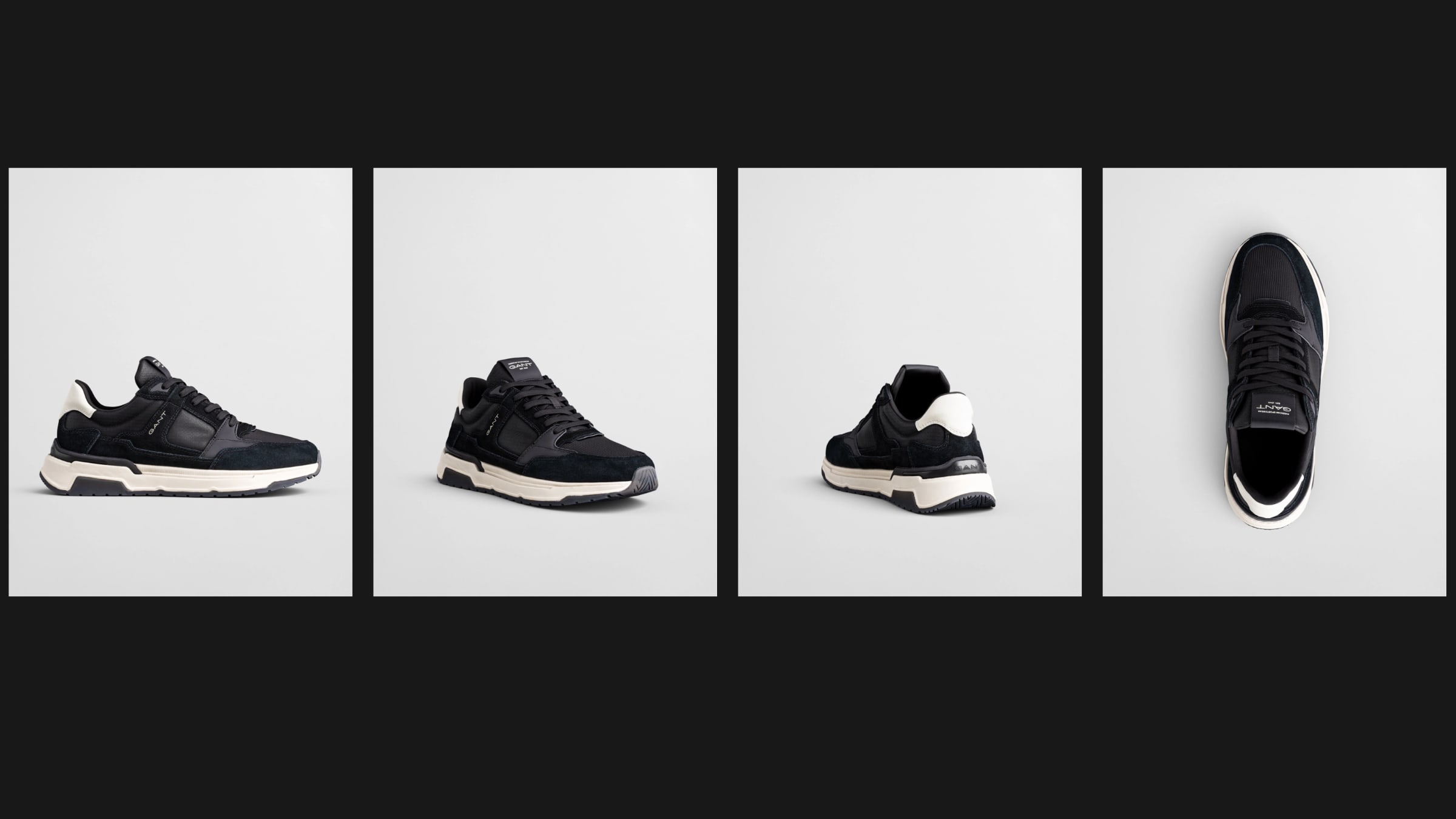
You know packshots are non-negotiable. A style cannot go live without a clean side, three-quarter, front, back, heel, and sole. Retailers and Google Merchant Center will not accept a lifestyle crop in the primary image slot. The question is never whether you need the set. The question is what you can still produce when the sample cleared customs on Thursday and the collection goes live on Monday.
Late Samples and Packshots TL;DR
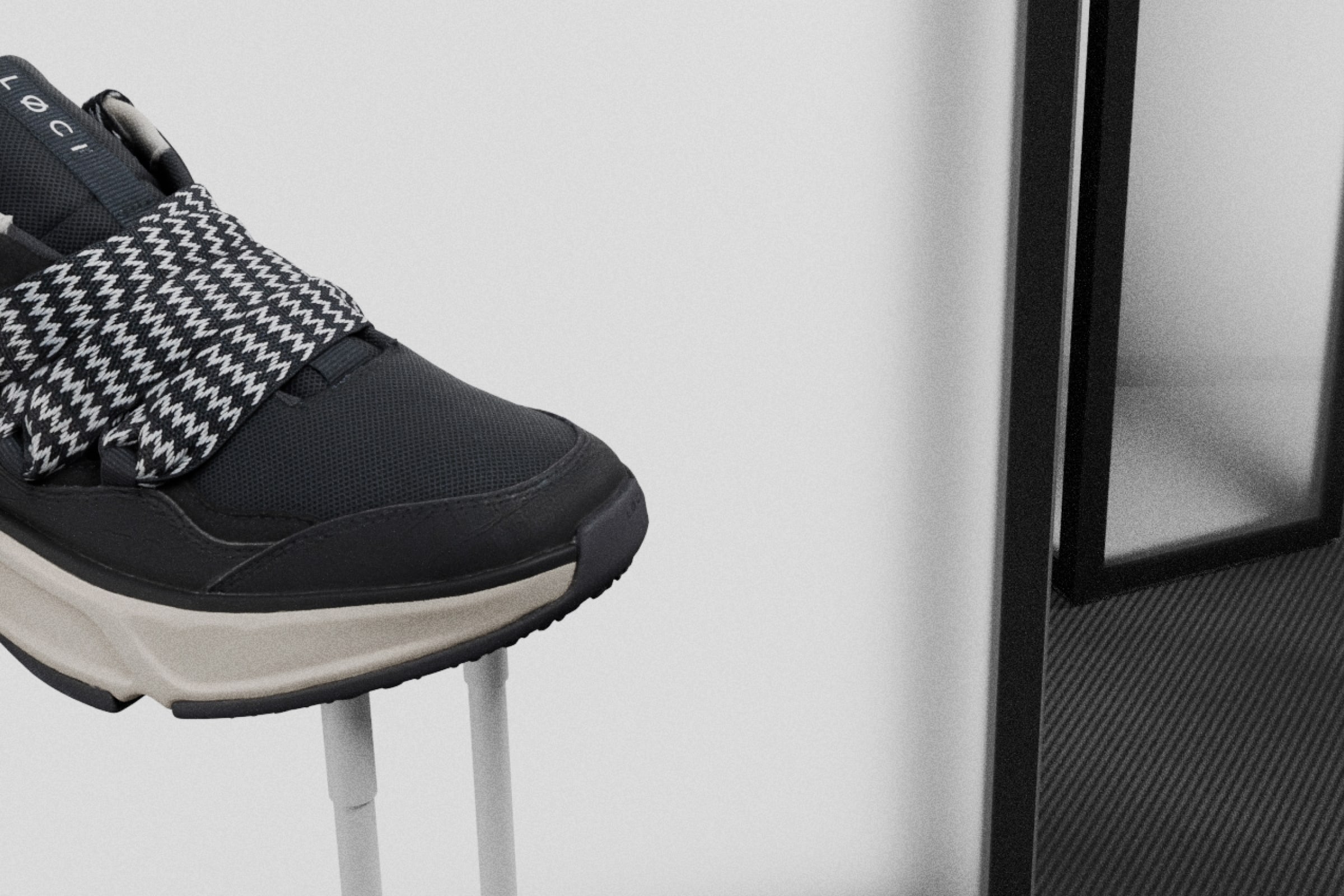
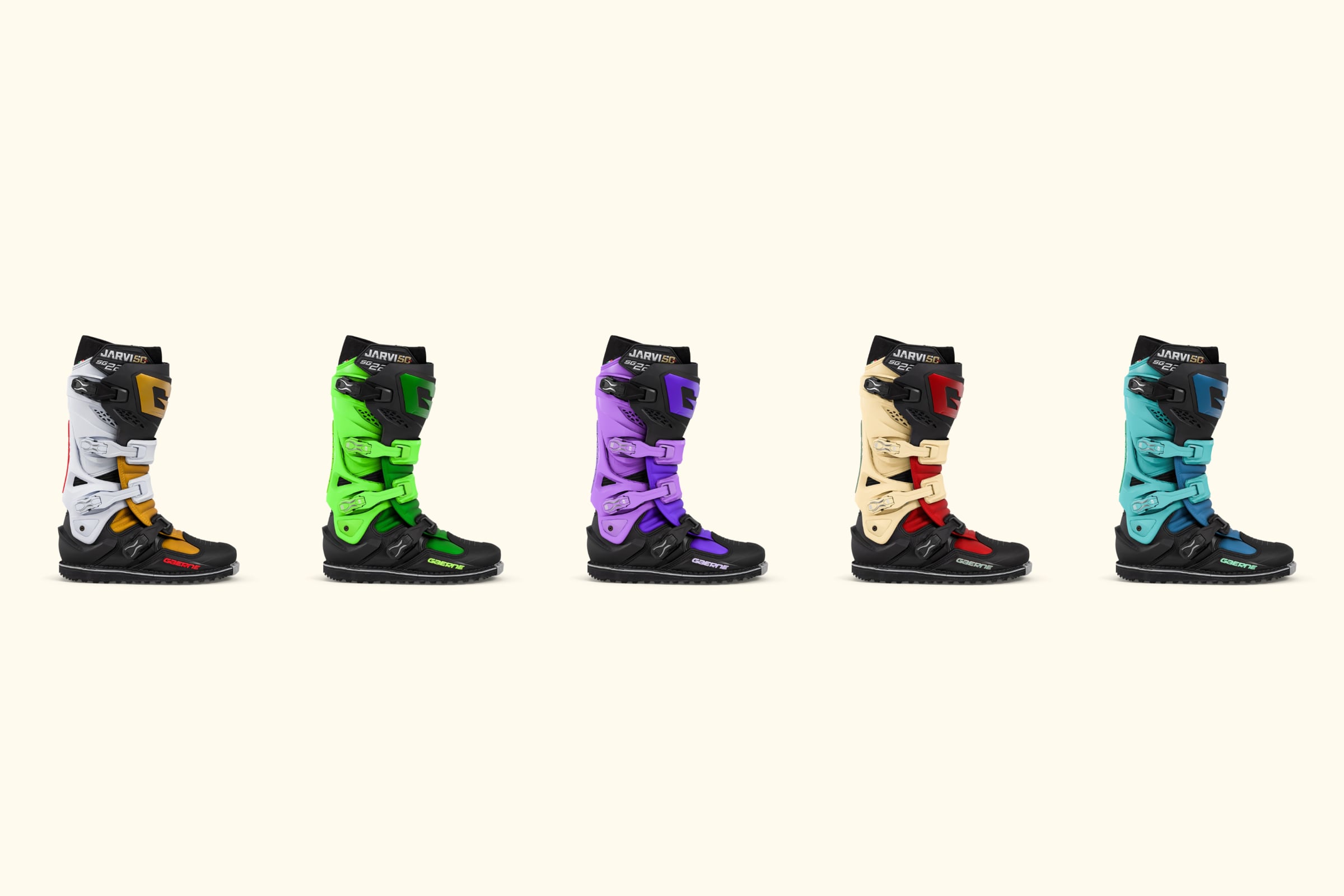
Rendering from a 3D model decouples image production from studio availability. One silhouette is scanned once per material, then recoloured digitally into the rest of its colourways, and every angle, crop, background, and export size becomes a template setting rather than a new booking. That is why a late sample stops being a launch blocker and becomes a courier problem.
Why Listen to Us
Fibbl has driven more than 72 million end-user interactions with 3D and AR product experiences to date, across 144 brand accounts including GANT, Intersport and Elten. The platform was built for footwear from day one, with 20,000+ shoes scanned into photorealistic 3D. GANT’s e-commerce team used Fibbl packshots for 549 shoes in the SS27 collection: approval in one day instead of two, 50% lower cost, and no post-production needed on the delivered files.
What Does the Launch-Critical Packshot Set Include?
Before deciding what can slip, separate what makes a product buyable from what makes it look good.
The launch set is the minimum required for a SKU to go live and stay live:
- Side profile on white or neutral background.
- Three-quarter angle.
- Front and back.
- Heel detail.
- Sole.
- Top-down.
- Channel crops: 1:1 and 4:5 at each platform’s required resolution.
Everything else can wait a fortnight. Lifestyle, on-foot, editorial, and campaign imagery are all optional at launch. You can sell a shoe without a hero image. You cannot sell one without a compliant white-background set.
Why Does a Traditional Packshot Shoot Fail in the Final Week?
Because a photoshoot is a chain, and every link waits on the one before it.
Step #1: Transportation
The physical sample has to be in the building. Not in transit, not at customs.
Step #2: Preparation
A stylist stuffs the shoe, cleans the outsole, and positions the laces.
Step #3: Capture
A photographer books a bay and shoots every required angle.
Step #4: Retouch
Background removal, colour correction, and quality control across the set.
Step #5: Distribution
Someone exports the correct crop for the PDP, the retailer portal, and the Shopping feed.
The Two Queues That Cannot Compress
Studios are scheduled in days and half-days. A 200-style season is weeks of bay time. A late sample does not get a week of studio. It gets whatever gap exists between two other brands, or it waits until next Tuesday.
Retouching is the second queue, sitting behind every other job in the pipeline. Even a clean capture waits.
Rush fees do not solve a calendar problem. Paying 25 to 50% extra buys a tired studio, not a new week. In the final week you are not behind on photography. You are blocked on a physical production line that cannot be compressed.
3 Things That Break When You Launch With Placeholders
Placeholder images are not a neutral holding position. They carry real cost.
1. Google Merchant Center Disapproval
Placeholder images are a recognised cause of product disapproval in Merchant Center, alongside undersized images, promotional overlays, and products that fill too little of the frame. Image problems account for roughly 65% of all Merchant Center disapprovals. A disapproved SKU is not just unattractive. It is absent from Shopping results and free listings entirely.
2. Retailer Portal Rejection
Wholesale portals validate against their own specs. A recropped hero image fails on framing, margin, or resolution, and you discover it after the deadline has passed.
3. Paid Media With Nothing to Run
Performance teams cannot build dynamic product ads or Performance Max assets from a placeholder. Launch-week budget either goes unspent or goes out badly. Assets built from 3D models solve this in the other direction: GANT produced dynamic product ad video from existing 3D assets without booking a single new shoot.
What You Can Ship in Seven Days (and What You Cannot)
You cannot book a full seasonal studio, shoot 200 styles, retouch them, and clear every retailer spec. Not honestly.
You can get the launch set live, if capture and rendering are decoupled from studio availability.
Job | Studio shoot, final week | Local photographer or in-house lightbox | 3D packshot render |
|---|---|---|---|
|
White-background launch set |
Only with a cancellation and a retoucher on call |
Possible, but colour and lighting will not match the existing catalogue |
Rendered from the scan: side, three-quarter, front, back, sole, top-down |
|
Extra angle a buyer requests |
New shoot |
New shoot |
New virtual camera, same model |
|
Shopping and retailer crops |
Separate export, usually a recrop of one master |
Manual recrop per channel |
Same model, new framing and export size |
|
Brand guideline change |
Reshoot the SKU |
Reshoot the SKU |
Re-render the SKU |
|
Consistency with last season |
Good, if the same studio |
Poor |
Good, template locked once |
|
Cost profile |
Rush fee on top of day rate |
Cheapest per shot, highest rework risk |
Per-SKU scan, then unlimited renders |
|
3D viewer , VTO, ad video |
Not available |
Not available |
Same asset, whenever you want it |
The constraint that does not disappear is the sample. Fibbl needs one physical shoe per silhouette in each material it ships in, and there is no honest version of “the factory CAD file is good enough.” What that constraint does not require is the full colourway run: colour is changed digitally on the scanned model, so a late delivery of three colours out of eight stops being a launch problem. A change of material is a different matter and needs its own capture. What disappears entirely is the photographer, the bay, and the retouch queue.
What Do Google Shopping and Retailers Actually Require?
Lock these before exporting anything, because this is where panic recrops fail.
- Minimum resolution. Google is moving to a universal 500 x 500 px minimum for primary and additional product images, enforced from 31 January 2027. Merchant Center started showing an “image too small for upcoming enforcement” warning in April 2026. Affected products still serve today, which is exactly why the warning gets ignored.
- Recommended resolution. Around 1500 x 1500 px or higher to perform across every listing format. Checklists that still say 800 px are out of date.
- Ceiling. 64 megapixels and 16 MB. JPEG, WebP, PNG, non-animated GIF, BMP, or TIFF.
- Framing. The product should occupy roughly 75 to 90% of the frame.
- Background. White or neutral for the primary image. Scene and lifestyle imagery belongs in the additional image slots.
- Prohibited. Promotional text, overlays, watermarks, borders, prices, badges, and placeholder or “coming soon” images.
Rendering from one 3D model satisfies all of this at once, because framing, background, and export size are settings rather than shoots. Confirm the current numbers against Google’s own Merchant Center documentation before building to them. They changed twice in 2026.
How 3D Packshots Work When You Are Out of Time
The sequence is the same as any other Fibbl job. Only the calendar changes.
Step #1: Send the Sample
One physical pair per silhouette, in each material that silhouette ships in, to the scanning studio in Warsaw. Not one per colourway, which is the assumption most brands carry over from photography. For a single late style that is a courier, not a seasonal freight plan. Enterprise brands can run capture on-site where volume justifies it.
Step #2: Scan Once, Then Recolour
Geometry, surface texture, and material properties. Footwear punishes weak capture: patent leather throws specular highlights, mesh is semi-transparent, metal eyelets create hotspots, and laced uppers have irregular geometry. A general-purpose scanner is why so many 3D pilots look like plastic. The Fibbl ARC uses material-optimised capture settings per product type, which is what makes a rendered packshot sit next to last season’s photography without looking like a different product.
Once the silhouette is captured accurately, colour is handled digitally. The scanned model is recoloured rather than rescanned, so one sample covers a style’s full colour range. Materials are the exception: patent, suede, and knit respond to light differently, so a material variant needs its own scan. The working rule is one sample per silhouette per material, with colour handled in software. In a late-sample season that is the difference between waiting on eight boxes and waiting on one.
Step #3: Render the Channel Set
Virtual cameras, brand lighting, white or retailer background. Side, three-quarter, heel, sole, detail. Then the 1:1 and 4:5 crops that Shopping and paid social actually consume.
Step #4: Publish
PDP, Merchant Center feed, retailer portal. The 3D viewer and virtual try-on can go live on the same product later. Neither is a prerequisite for the stills.
You do not get any of this without the sample. You do get it without finding a photographer free on Thursday.
6 Steps for the Last Week Before Launch
1. Freeze the Launch Set, Not the Lookbook
List the SKUs that must be buyable on day one. Those get packshots. Campaign and on-foot photography can slip. The launch set cannot slip at all.
2. Ship Samples as They Land, Not as a Batch
Every day a late style waits in HQ for the rest of the seasonal crate is a day it is not in a scanner. One pair per silhouette per material, couriered the day it arrives. You do not need the full colour run in hand to start.
3. Lock the Render Template Before the Shoes Arrive
Background, lighting, angle list, export sizes per channel. GANT’s win was not a new kind of photography. It was that delivered files already matched brand standards, so approval took one day instead of two and needed no post-production.
4. Render the Full Channel Set, Not One Hero
PDP, Shopping, retailer spec, paid social. Export a single master and you will be recropping it at midnight on Sunday and failing a marketplace check on Monday.
5. Put 3D on the PDP Once the Stills Are Live, Not Instead of Them
Shoppers and Merchant Center still need static images. GANT’s 3D-first test ran on top of a real catalogue of photography, not in place of it. The week your samples are late is the wrong moment to make a viewer the only asset you own.
6. Do Not Try to Build a Scanning Pipeline This Week
A freelance 3D artist producing three or four models per week will not save Friday’s launch. Consumer-grade scanners cannot handle reflective leather or semi-transparent mesh. This is an industrialised capture problem, not a Blender problem.
4 Things 3D Packshots Will Not Do
They will not delete the sample. If the shoe is not in someone’s hands, nobody has a true-to-life model. Anyone promising otherwise is selling a factory CAD file that will not survive a product page.
They will not turn one scan into every material. Colour is a software change. Material is not. The same silhouette in suede, patent, and knit is three captures, because those materials do not respond to light the same way and pretending otherwise produces the plastic look that kills 3D pilots. Plan sample logistics around materials, not colours.
They will not produce a 94% conversion story. Footwear A/B tests that hold up sit in the 6 to 16% range. Packshots in launch week are not a conversion play. They are about being able to sell the style at all.
They will not replace photography in a single week. This is how you ship the images the business cannot launch without when the studio calendar is gone. Moving a full season onto a 3D pipeline is a different conversation, and it should happen when nothing is on fire.
Where Fibbl Fits When Samples Are Late
Fibbl closes the chain from capture to delivery, which is what makes a compressed timeline survivable. Proprietary capture hardware built for footwear materials, an automated reconstruction pipeline that does not depend on individual technician skill, and a distribution layer that pushes the same asset to e-commerce, paid social, retailer portals, and AR through one integration.
For a late sample, the relevant part is that none of those steps requires scheduling a creative team. GANT’s production lead, Gustaf Jernberg, was not trying to make photography marginally faster. He needed images that matched the rest of the site and did not burn two days in approval.
Proven Results With Real Brands
- 549
- Shoes delivered as packshots
- GANT, SS27 footwear
- 50%
- Less time and less cost
- Against shooting them
- +6.3%
- Conversion rate
- At 95% significance, 13 markets
- GANT, SS27 footwear. 549 shoes delivered as 3D packshots at 50% less time and 50% less cost than shooting them. Approval in one day rather than two. No post-production on the delivered files. Carry-over styles re-render next season without a reshoot.
- GANT, PDP test. 6.3% conversion lift at 95% significance across 13 markets, plus 30.27% CTR and 13.79% ROAS improvement on Meta dynamic product ads built from the same assets.
- Zach Footwear. Returns reduced 29.4% after moving to 3D product visualisation, after which photography budget shifted into more 3D.
- Samsonite. 3D experiences deployed across e-commerce channels to lift engagement and shopper confidence.
- Platform. 20,000+ shoes scanned, more than 72 million end-user interactions to date across 144 brand accounts, and up to 80% more time spent on product pages with 3D.
The launch-week argument only needs the first bullet. The rest is why brands do not go back to the studio the following season.
Get the Late Style Live Before the Studio Calendar Decides for You
If the sample is already in your warehouse, the useful next step is not another studio quote. It is seeing that specific shoe as a finished, channel-compliant packshot set.
Get a free product scan for one free 3D model rendered to your brand template, or book a demo if you want to walk a full SS or FW list rather than one hero SKU.
FAQs About Late Samples and Footwear Packshots
Let’s run through the questions that usually come up:
1. Can I get packshots if the sample arrives a week before launch?
Yes, if you render from a 3D scan rather than booking a studio. The physical sample still has to be sent. What you no longer need is a photographer, a studio bay, or a retouch queue for every additional angle.
2. Do I still have to send a physical shoe?
Yes, but one pair per silhouette per material rather than one per colourway. Colour is changed digitally on the scanned model. Factory CAD files and generic 3D assets are not what sits on GANT or Intersports product pages, and they will not match the rest of your catalogue.
3. Do we need to send every colourway of a style?
No, not for colour. One pair is scanned and the model is recoloured digitally to produce the remaining colourways, so a style can be captured once and completed as the palette is confirmed. Material variants are the exception. If the same silhouette also ships in suede or patent or knit, each material needs its own scan, because materials differ in how they handle light rather than only in colour.
4. How long does it take from sample to finished packshots?
Scanning is a same-day operation per pair. The variables are courier time to the studio and how quickly the render template is signed off. Locking the template before samples arrive is what compresses the timeline, which is why GANT’s approval cycle ran to a single day.
5. Will the images pass Google Shopping and retailer specs?
That is the point of rendering from one model: white or neutral background, consistent framing at 75 to 90% of the frame, and exports at whatever resolution each channel requires. Traditional packshots fail these checks when a single hero image gets recropped under deadline pressure.
6. What happens if we launch with placeholder images instead?
Placeholder images are a recognised cause of Merchant Center disapproval, so the SKU can be excluded from Shopping results and free listings rather than simply looking unfinished. Retailer portals reject on the same basis.
7. What about the rest of the collection that arrived on time?
Scan it too, or keep photography for this season. The normal path is a pilot on the late or awkward SKUs, then the following season on the pipeline. GANT did not replace the whole stack in one week. They did one season of footwear images, then kept going.
8. Does this also give us 3D viewers and virtual try-on?
Yes, from the same model. Packshots do not require switching 3D on, and switching 3D on does not require a second shoot.
9. Where are the shoes scanned?
Fibbl’s primary scanning studio is in Warsaw. Enterprise setups can run capture on-site where volume justifies it.