Most footwear brands find out whether they ordered the right shoes about nine months too late.
The factory order goes in. The containers arrive. The market delivers its verdict through sell-through reports and end-of-season markdowns.
Joya decided to ask first.
From a content asset to a production decision.
At a glance
- Vote
- 400+ retail partners invited to vote on a collection before the factory order
- Audit
- 39 new styles scored, then graded against real sell-in
- Pipeline
- One 3D pipeline serving packshots, PDPs, the B2B catalog and forecasting
Since 2023, the Swiss brand has worked with Fibbl to move its entire footwear assortment into 3D.
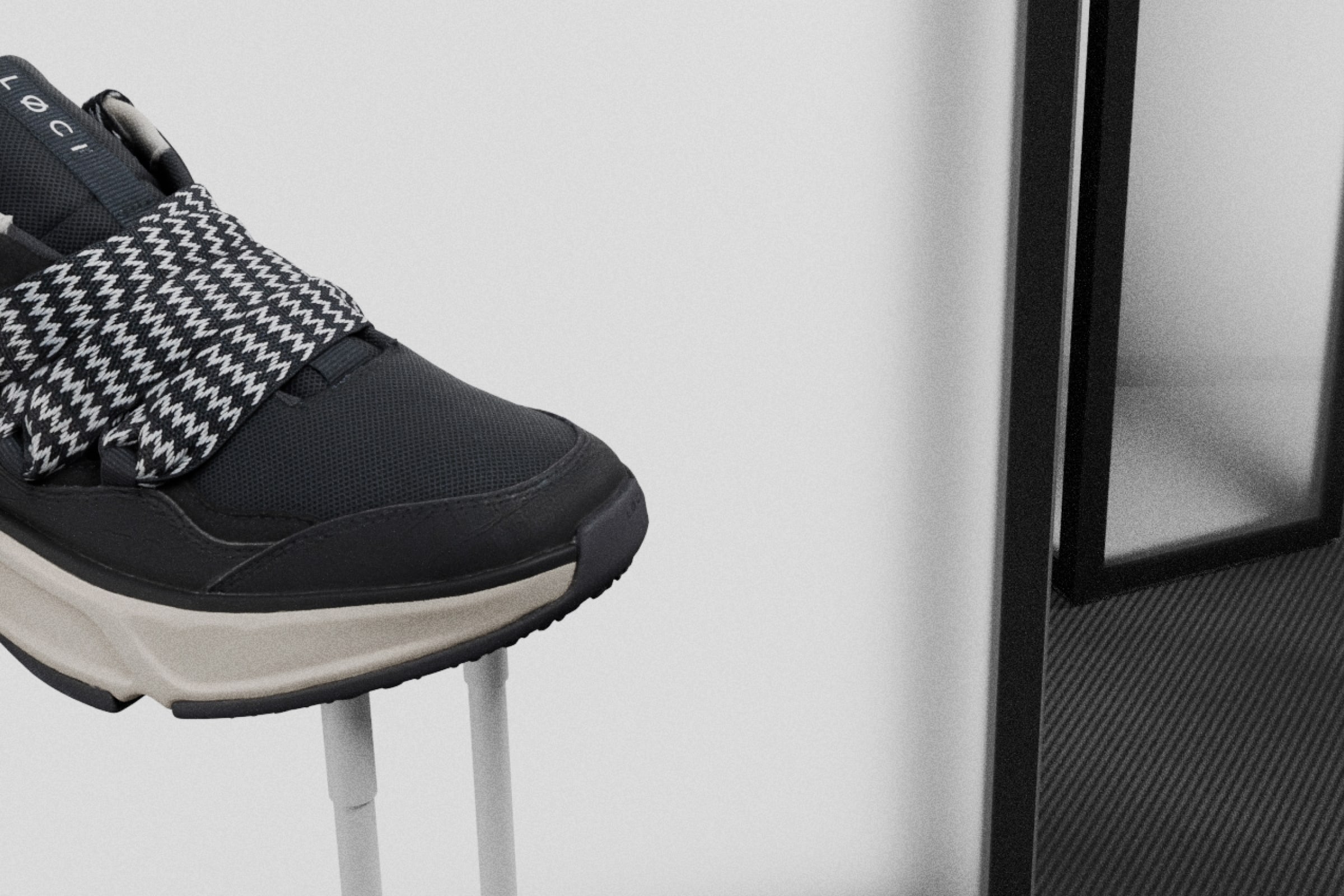
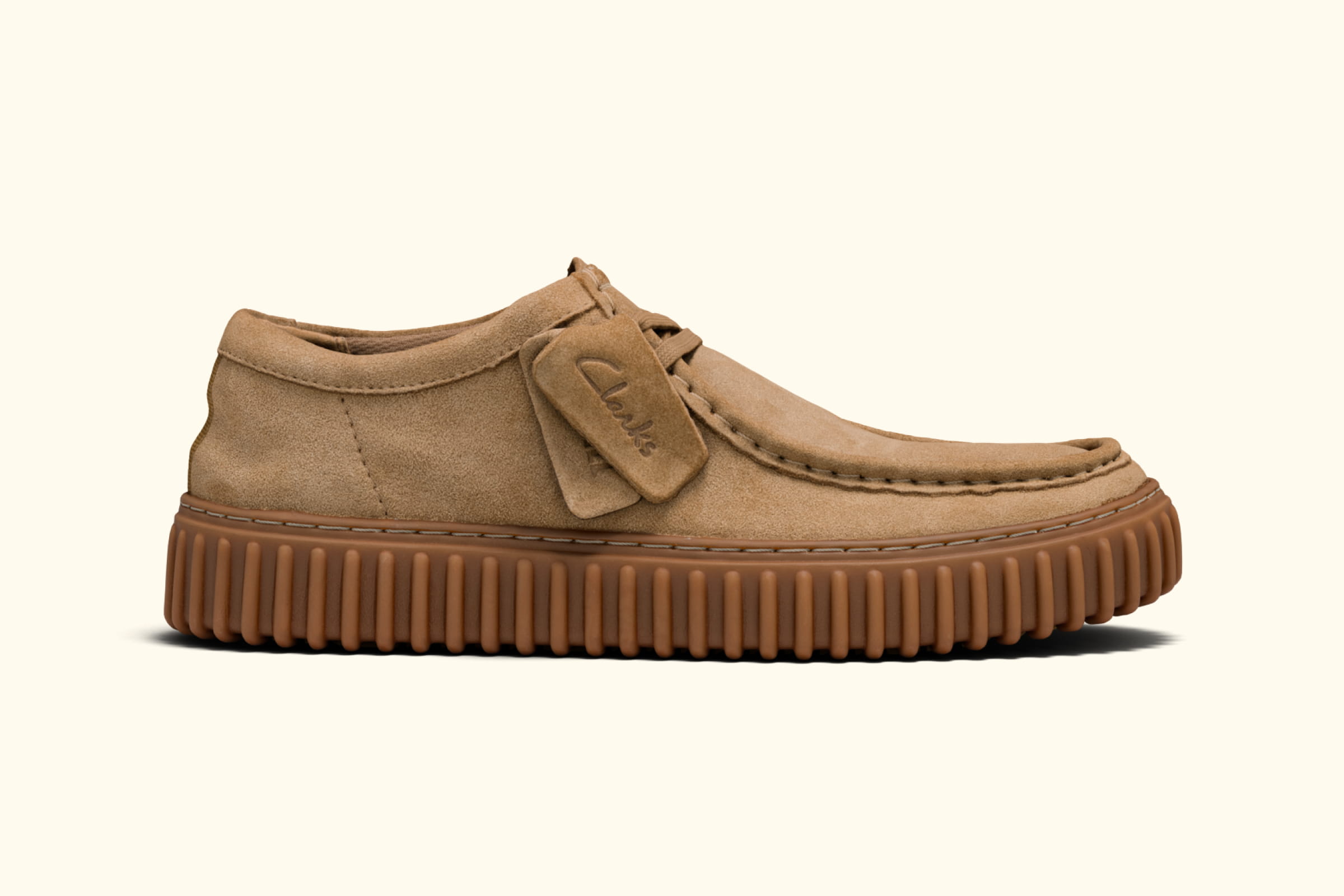
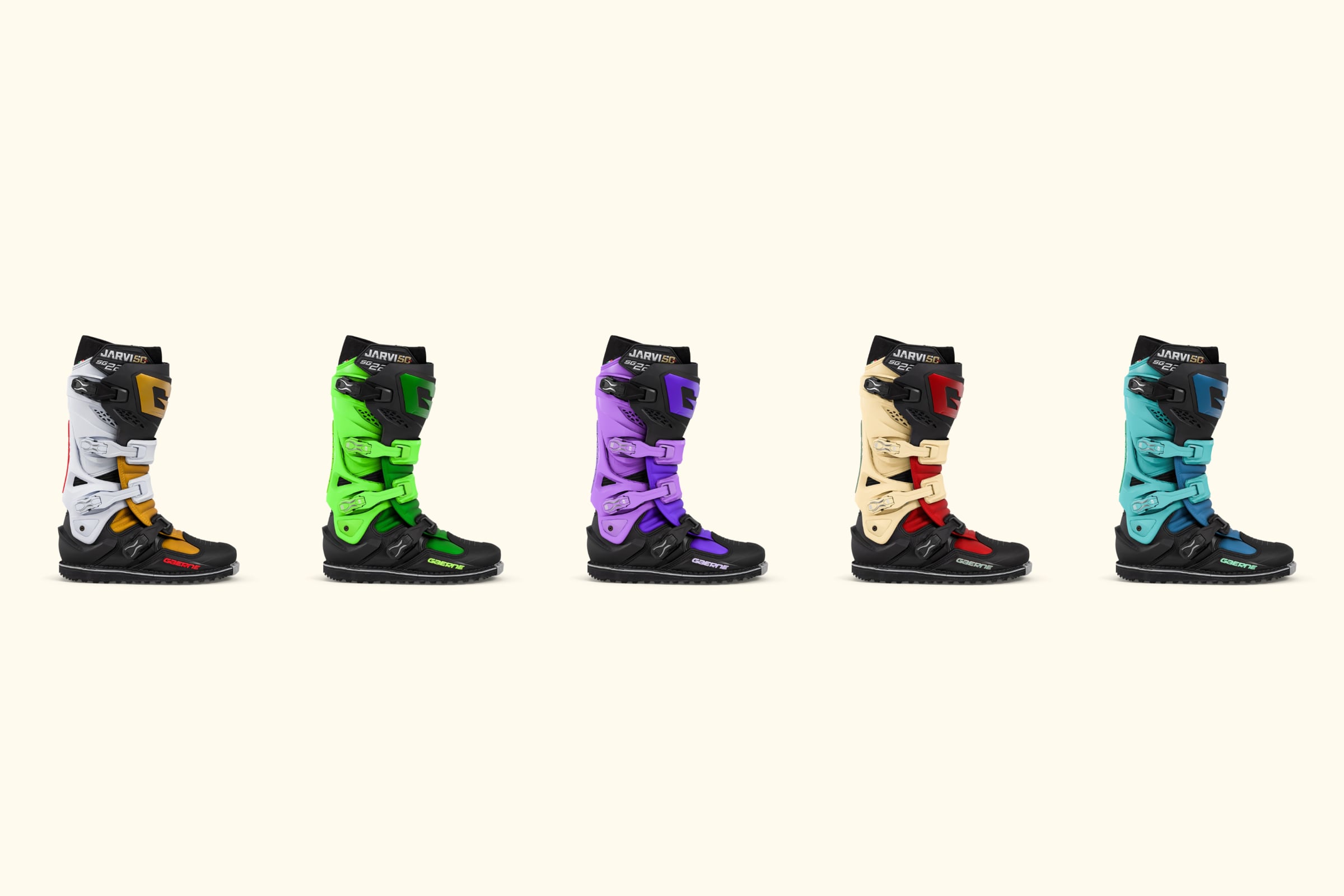
What started as a way to stop paying Swiss photographers has since replaced packshot production, powered the DTC product pages, and made its way into the B2B catalog.
But the part that surprised everyone, including Fibbl, was what happened when Joya pointed those same 3D assets at a question that had nothing to do with content: how many pairs should we build?
The season that arrived in April
Inventory is the exposure
Joya operates in more than 40 countries, manufactures in Switzerland, and is family-owned with no external investors.
That last detail matters more than it sounds. It means inventory is not a line item. It is the company’s largest exposure.
“For us the biggest capital bound is stock. Anything that doesn’t turn within six, seven, eight months is for us a burden.”
Karl Müller, Co-CEO
What happens when the calendar slips
SS25 made that exposure concrete.
Joya placed its factory order inside the normal window, but shared suppliers do not treat all customers equally. When the volume brands move, everyone behind them moves too.
The collection landed in stores in April, near the end of the selling window it had been built for.
The fix was obvious and unpleasant: order earlier. For SS26 that meant committing in May, months before sales samples existed.
No samples means no retailer feedback. No retailer feedback means forecasting a full collection on internal conviction alone.
Moving the sample round into 3D
Instead of accepting that, Joya moved the second sample round into 3D.
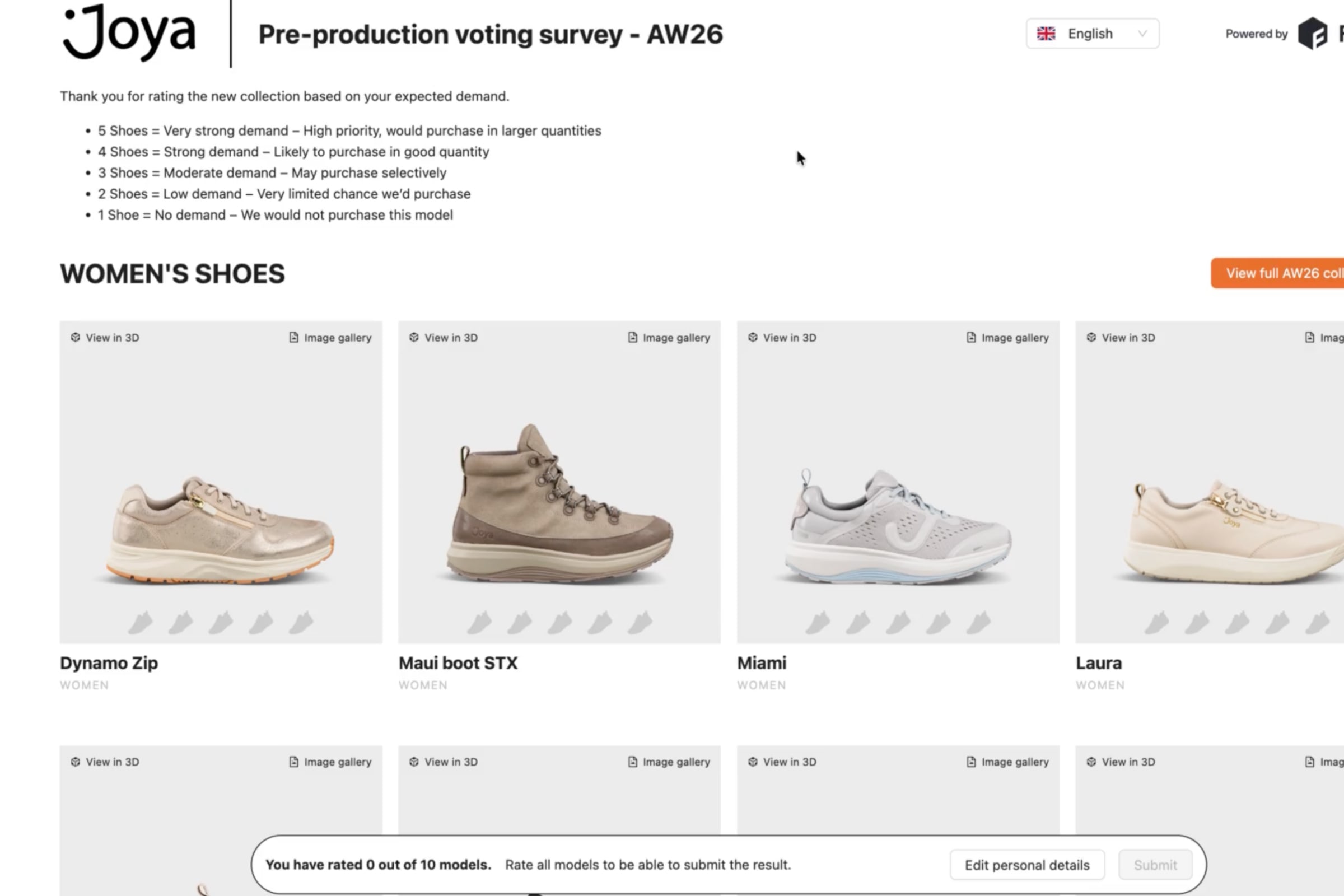
Every style was scanned and placed on a private website where the brand’s retail partners could review the collection and vote on how likely they were to buy each product.
The vote is only as good as what sits next to it
Partners were not scoring names on a line sheet.
Each style was presented with product images, a 3D viewer they could rotate and zoom, and Virtual Try-On. A buyer in Japan or Florida could inspect stitching colour, material transitions, and sole geometry at the level of detail they would normally get from holding a physical shoe.
Over 400 retail partners were invited. Joya then placed its factory order against the results.
“Of course we can make 400 samples and send it to everybody, but I think that’s resources wasted. With a voting, with the intelligence of many people, swarm intelligence, we can forecast the right number to manufacture.”
Karl Müller, Co-CEO
The SS26 outcome was operational rather than cosmetic.
By January, Joya had delivered more than 75% of its summer collection, putting the brand first into stores instead of last. Karl’s expectation going into the season was that recovering two and a half to three months of selling time would support around 20% growth.
The ranking is not the only output
The vote produces a demand ranking, which is the obvious use. Joya also reads it sideways.
Some styles are never going to carry volume and are not supposed to. They are the shop-window shoes, the colour that photographs well, the piece that makes a campaign work.
The voting data lets Joya identify those separately from the volume drivers, then position them honestly with partners: this red will not be your strongest seller, but it belongs in the window, and here is the bestseller it goes next to.
The result is package offers built from a demand ranking and a marketing ranking rather than from instinct, plus early direction on which styles justify an outdoor shoot.
Grading the survey against real money
This is where it gets interesting, because Joya then did what most brands never bother to do.
They went back and checked whether the votes were right.
For the following season, 39 new models went through the survey in May. By the end of August, 95 partners had preordered close to a quarter of Joya’s planned volume for the season across the DACH, Benelux, and Swedish markets, with the window still open and another 80 to 100 orders expected.
Joya compared the May survey score of every style against how much of its production order had actually sold in. The pattern was not subtle.
Five styles the survey under-scored
|
Survey score |
Survey rank (of 39) |
Production order sold |
|---|---|---|
|
2.65 |
31 |
60.5% |
|
3.30 |
6 |
58.0% |
|
3.00 |
13 |
48.8% |
|
2.91 |
21 |
44.2% |
|
3.14 |
10 |
40.9% |
Five styles the survey over-scored
|
Survey score |
Survey rank (of 39) |
Production order sold |
|---|---|---|
|
2.49 |
36 |
11.4% |
|
3.26 |
7 |
13.3% |
|
2.34 |
39 |
14.8% |
|
2.71 |
28 |
15.1% |
|
2.80 |
26 |
15.4% |
The misses sit at the extremes
The fastest-selling style in the collection had placed 31st of 39 in the survey.
The style that scored highest of all 39 has sold 17.3% of its production order, and because it was ordered in one of the largest quantities in the collection, more than four fifths of that order is still on hand. The style ranked 7th shows the same pattern on a similarly large quantity.
Joya’s own conclusion from the exercise was blunt: the survey was not always a reliable predictor of actual sales success, future ordering decisions should lean harder on early sales data, and the way the data is collected needs to keep improving.
The middle of the ranking held
That is the honest headline, and it deserves a second reading.
Four of the ten styles now selling fastest had been ranked 6th, 10th, 11th, and 12th by partners. Two of the ten now sitting heaviest had already been flagged last and 36th of 39.
The survey was not noise. It was directionally right across most of the collection and badly wrong at the extremes, in both directions, on exactly the styles carrying the largest order quantities.
One pattern is worth naming, because it points at what surveys of this kind actually measure. The styles partners over-scored skew pale and colourful. The ones they under-scored skew mid-tone and neutral.
Black appears on both sides, so this is a tendency rather than a rule. But it fits something every wholesale team half knows: asked to evaluate a collection, buyers respond to what is visually interesting, then order what they can sell all season.
A note on what these sell-in percentages measure. The preorder window was still open when the comparison was made, with 80 to 100 partner orders still to come. The fast movers are confirmed. The slow movers are provisional.
What the vote is actually for
Ask Joya what the survey is for and the answer is not forecasting.
“For me, the biggest value of the pre-voting survey is not that it predicts actual sales 1:1, but that it gives us an additional early indication of how new products are perceived before we make our final decisions.”
Claudio Minder, CEO
That reframes the comparison above. A survey can fail as a prediction and still work as a signal, because the two get used at different points in the process.
The practical uses Joya names are identifying clear favourites and weak performers, comparing reactions across markets and customer groups, and occasionally contradicting the internal view of a collection.
The value scales with complexity: the more new styles and colourways in a range, the less an internal opinion can carry on its own.
What a vote cannot see
The gap between a good score and a good season also has causes no survey can reach.
“At the same time, we have learned that a strong pre-voting result does not automatically translate into strong sales. Price, availability, seasonality, presentation in-store, sales staff recommendations and many other factors influence the final result.”
Claudio Minder, CEO
That list is the more useful answer to the audit than any adjustment to the survey itself.
A style scoring 3.52 in May and sitting on stock in August has not necessarily been mis-scored. It may have been priced into a gap, delivered late, or put on a shelf nobody walks past.
The vote measures how a product is received. It cannot measure how it is sold.
Where it goes next
Joya’s position is that this makes the instrument a decision-support tool rather than the only sales forecasting tool, and that the next step is to stop treating each season’s vote as a standalone exercise.
“The real opportunity for us would be to combine this data with actual sell-out data over time. If we can better understand which pre-voting signals correlate with later sales, and which don’t, the value of the tool could become significantly stronger.”
Claudio Minder, CEO
Why this matters beyond Joya
Three things make this replicable, and one makes it hard.
1. The forecasting round costs close to nothing
A physical second sample round for 400 partners is a production run in itself, plus freight, plus the calendar time to circulate it.
Joya’s alternative used assets it was already producing for packshots and PDPs. That is the argument for 3D that has nothing to do with conversion rate.
2. The timing inverts
Retailer feedback normally arrives after the factory commitment, because samples are the gating item.
Digitise the sample round and feedback moves in front of the commitment, which is the only place it can actually change a decision.
3. Feedback quality is bounded by presentation quality
A buyer scoring a flat image is guessing at material and proportion.
A buyer who can rotate the shoe, zoom into the stitching, and try it on is answering a question they can actually see.
The hard part
A vote is a stated intention, not a purchase order.
Joya now has both, on a one-to-one basis, for the same 39 styles, which is why they can tell where the signal held and where it did not. Most brands have never generated the data required to find out, which means they have no way of knowing how much weight their own pre-season feedback deserves.
Joya started with one shoe and a plan to stop paying for photography.
They now know, style by style, how much their partners’ opinions are worth.