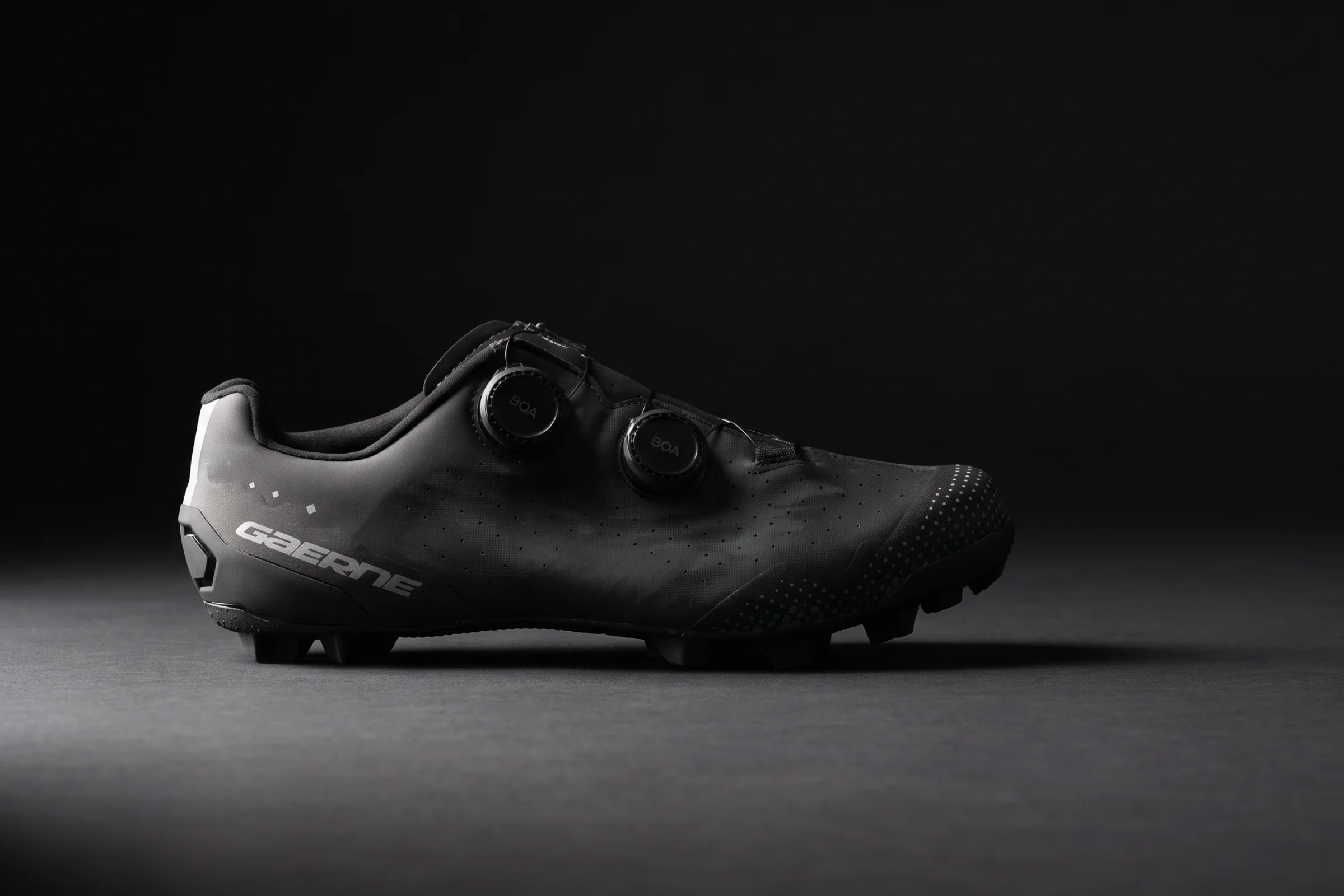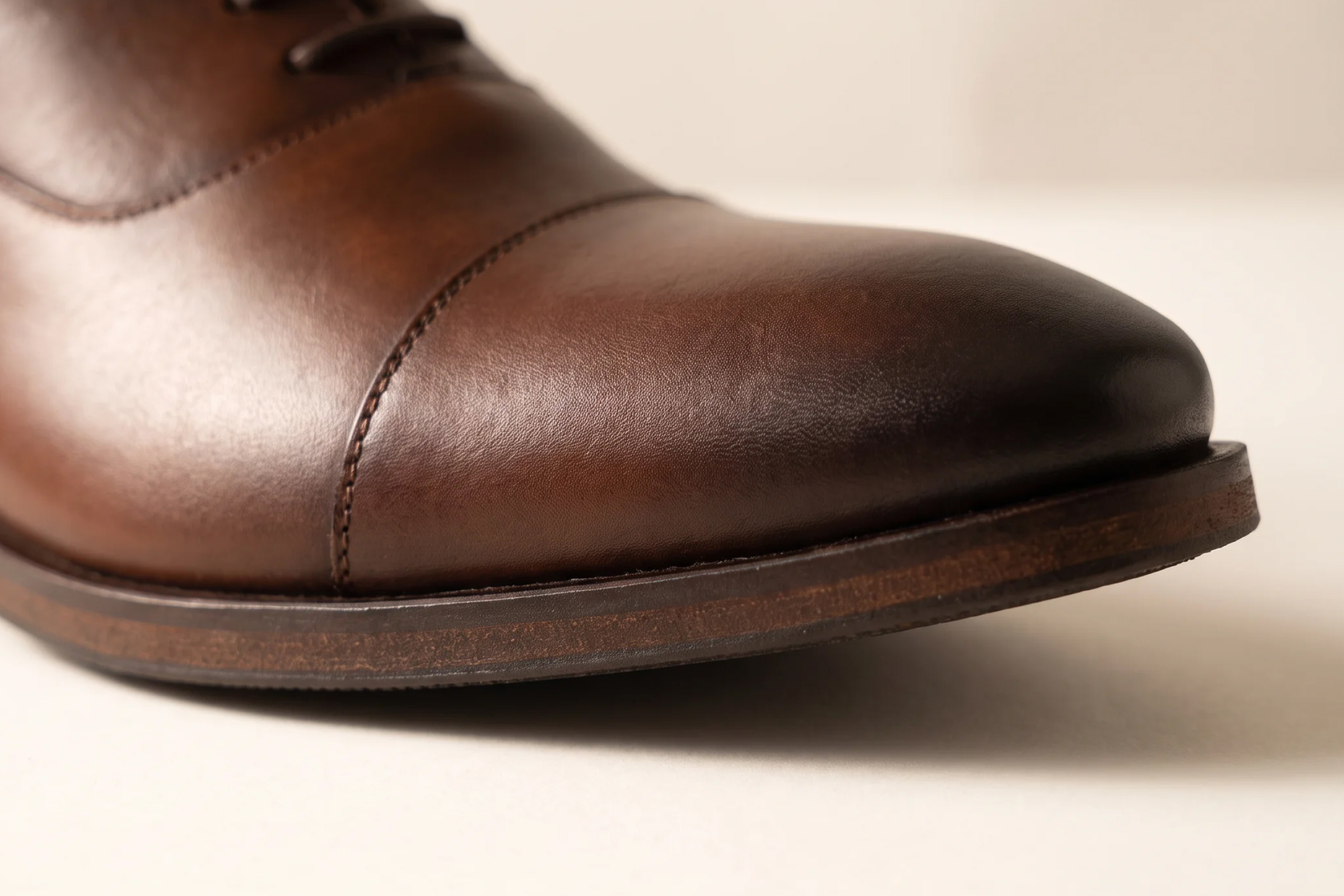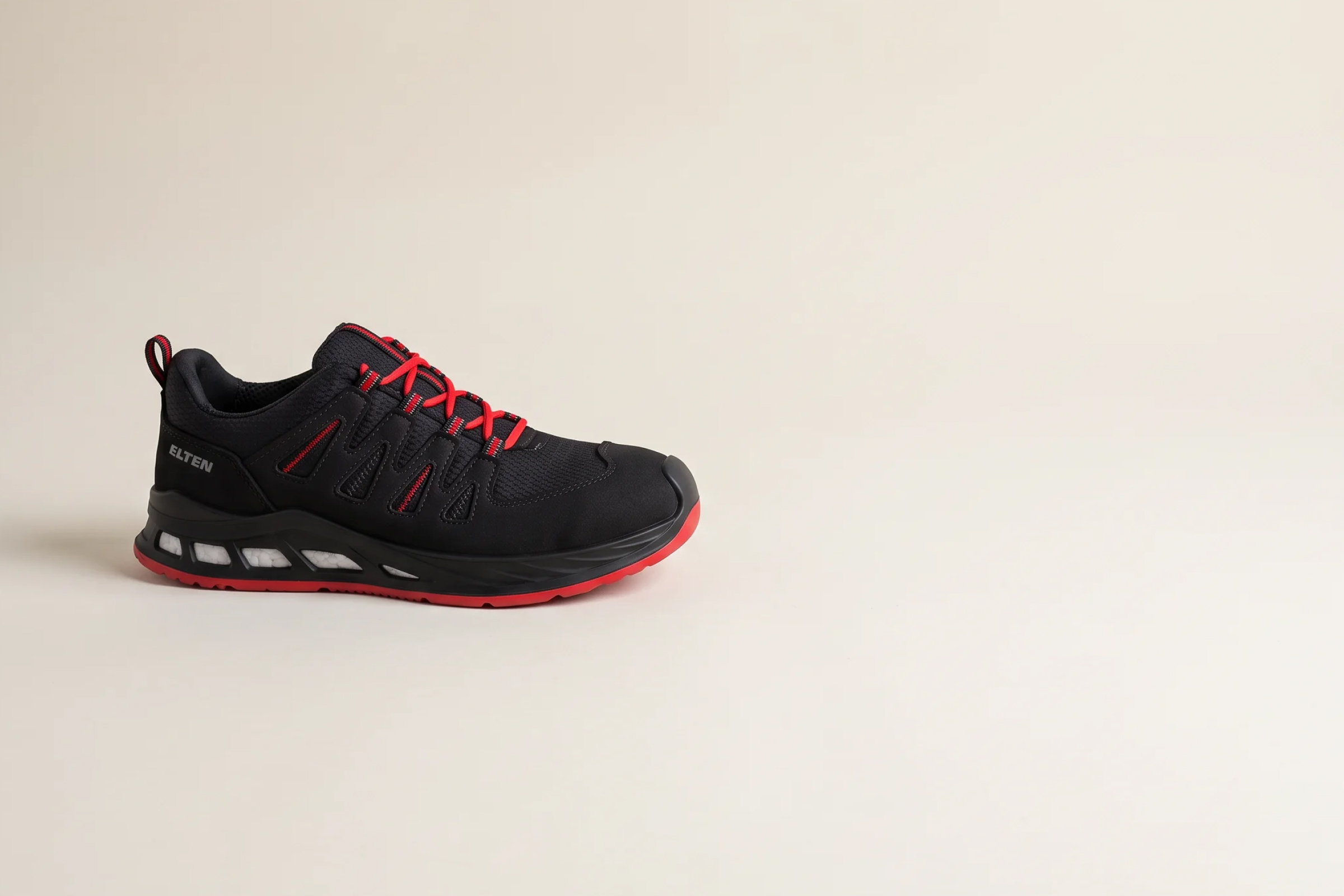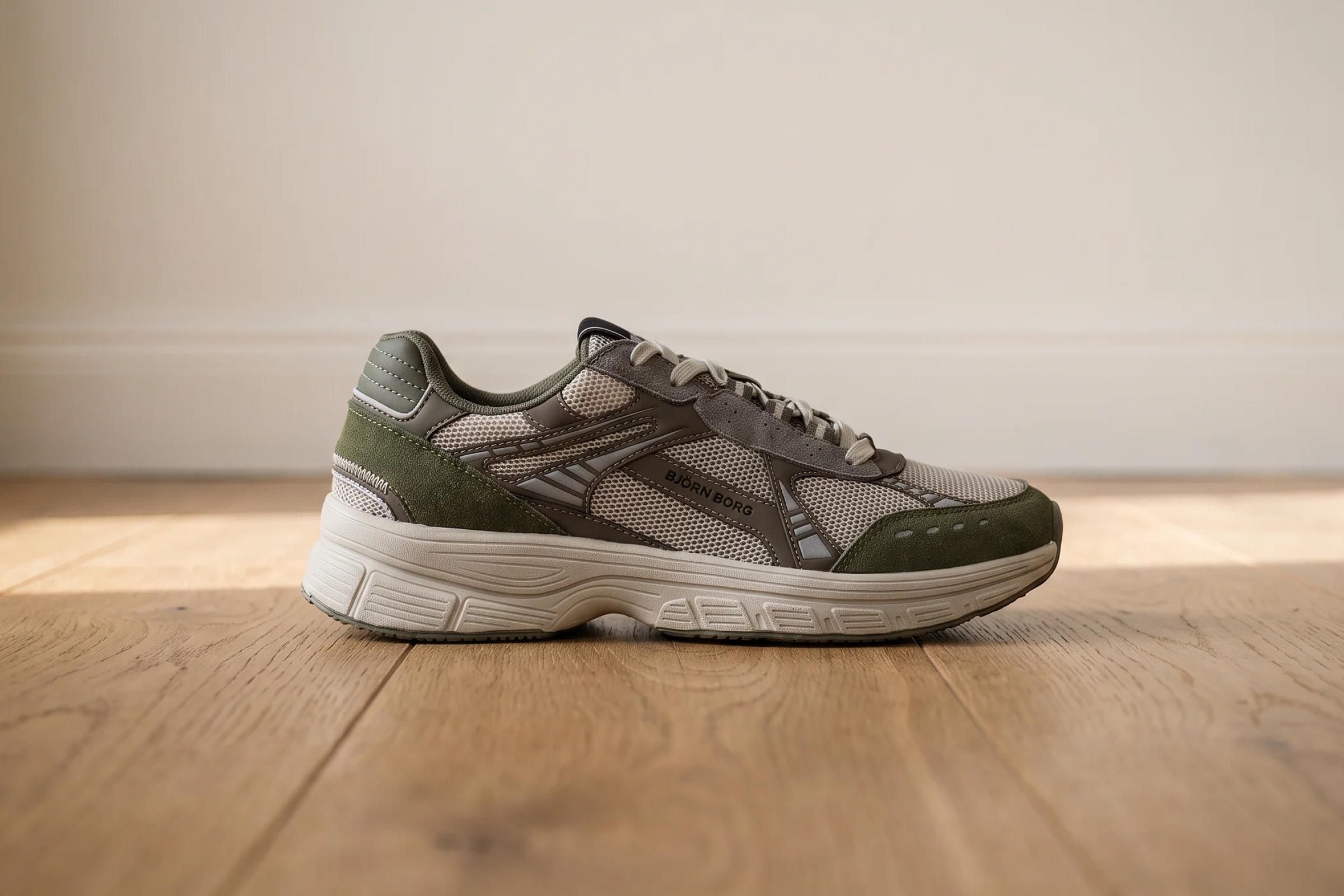
How Rumpf fills the gaps between photo shoots with AI-generated product images
Rumpf’s newsletters need a hero image, often of one particular shoe. Often, there is no photo of that shoe to use.
Max Rumpf, Head of E-commerce, now creates that image himself in Fibbl’s AI Studio, from the 3D model of the shoe.
The same AI-generated images also appear in Instagram posts, on product pages and in Rumpf’s SEO content, wherever Rumpf has a gap in its content.
Images for the gaps between photo shoots.
At a glance
- Role
- Fills gaps where Rumpf has no photos of a shoe, alongside its regular content production
- Owner
- Used by Rumpf’s Head of E-commerce in his own newsletter workflow
- Workflow
- AI-generated product images are made in Fibbl’s AI Studio, then sized and given text in Figma
- Channels
- In use in email newsletters, Instagram posts, product pages and SEO content
- Source
- Built on the 3D models behind Rumpf’s 3D and Virtual Try-On experience
Rumpf is a family-led dance shoe brand founded in 1965. It makes shoes for jazz, ballet, folk and contemporary dancers, from character boots to dance sneakers.
Rumpf already uses Fibbl’s 3D and Virtual Try-On on its homepage, category pages and product pages. When Rumpf surveyed its newsletter subscribers about the experience, 56% of respondents rated the 3D view 7 out of 10 or higher as a help in their purchase decision.
[LINK: How Rumpf validated the impact of 3D & XR technologies]
Fibbl’s AI Studio puts the same 3D models to another use: AI-generated product images. The user picks the shoe and describes the setting, and AI Studio generates a lifestyle or studio image around the 3D model of that shoe.
When there is no photo of the shoe
Before AI Studio
Rumpf has a pool of images from its photo shoots, and before AI Studio that pool was all it had to draw on. When an image of a shoe was missing, Rumpf’s graphic designers built one in Photoshop, placing the shoe against a neutral background. That works for a plain product image. It does not work for an image with people in it.
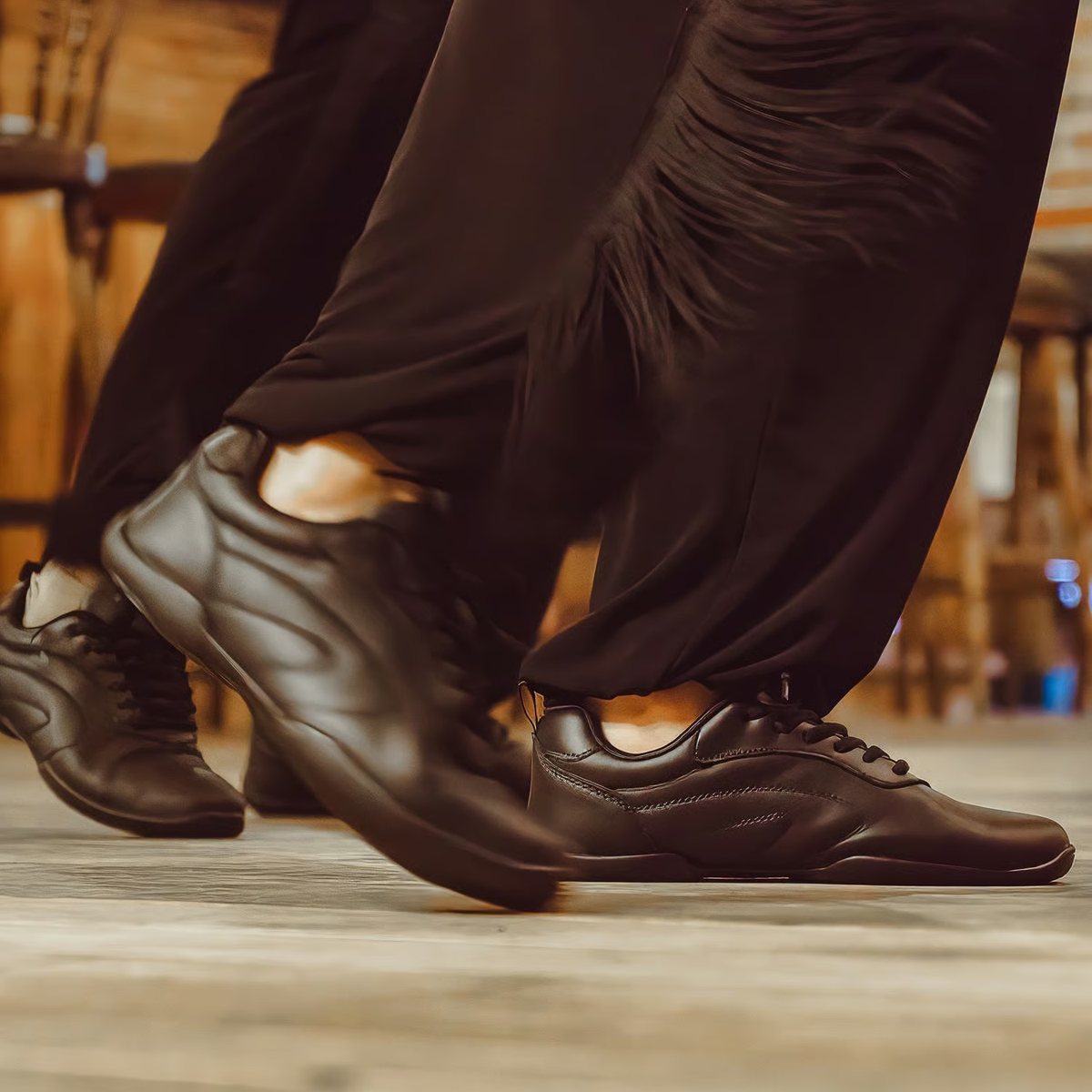
For the newsletter, it was above all a question of availability. If the image did not exist, Max had to use something else.
“If I needed an image for a newsletter that we didn’t have, I’d have to come up with something else. Organising a photoshoot just for my newsletter would have been disproportionate. With AI Studio, I can now fill that gap.”
Max Rumpf, Head of E-commerce, Rumpf
Fibbl’s AI Studio now lets Rumpf create images of shoes it has no shoot photos for.
Alongside photo shoots, not instead of them
AI Studio has not replaced anything at Rumpf. It runs alongside the brand’s normal content production and is used where that production leaves gaps.
“We’re not a huge company that can constantly produce all sorts of image or video content. That’s why we simply lack a lot of images. That’s exactly where AI Studio fills the gap.”
Max Rumpf, Head of E-commerce, Rumpf
AI hero images for email newsletters
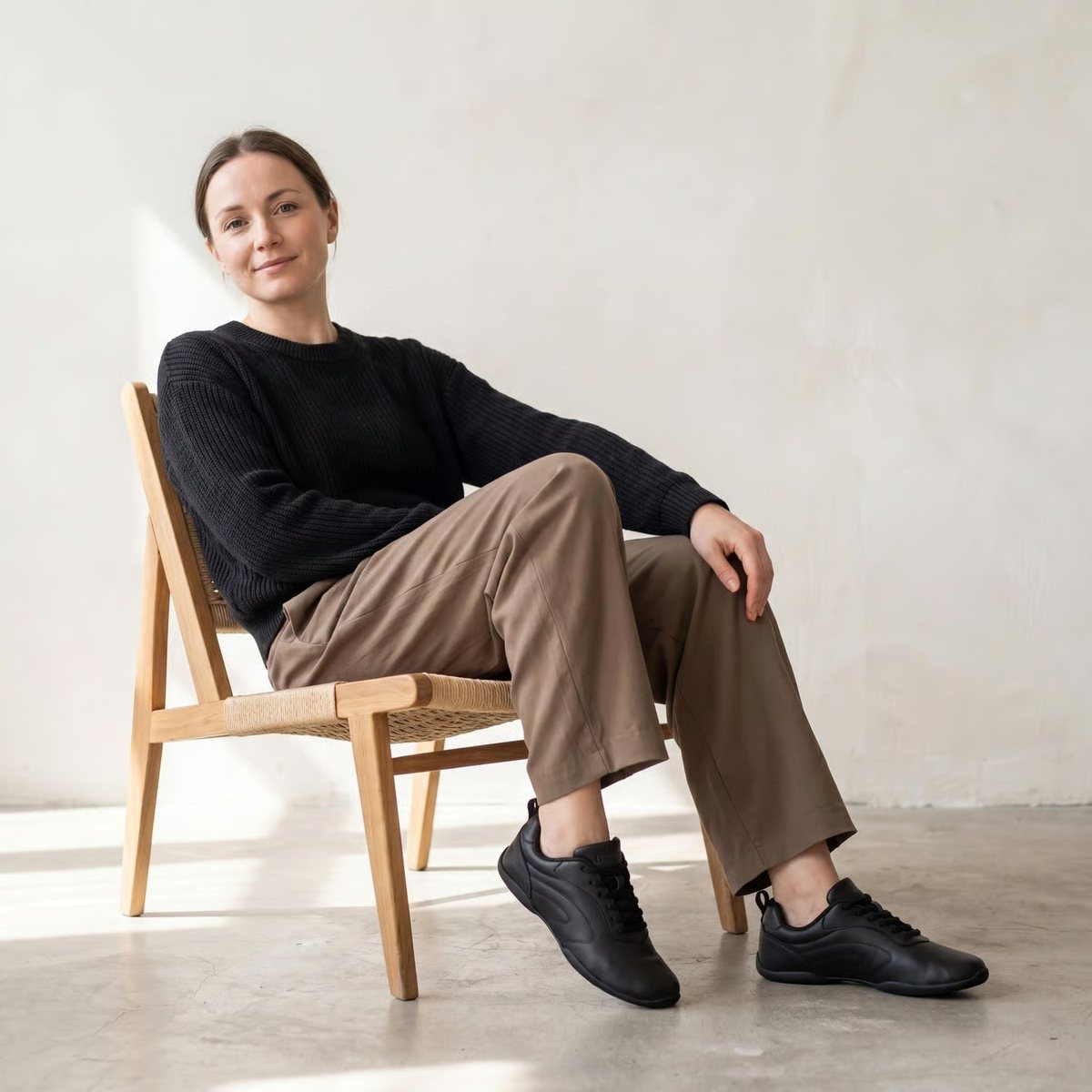
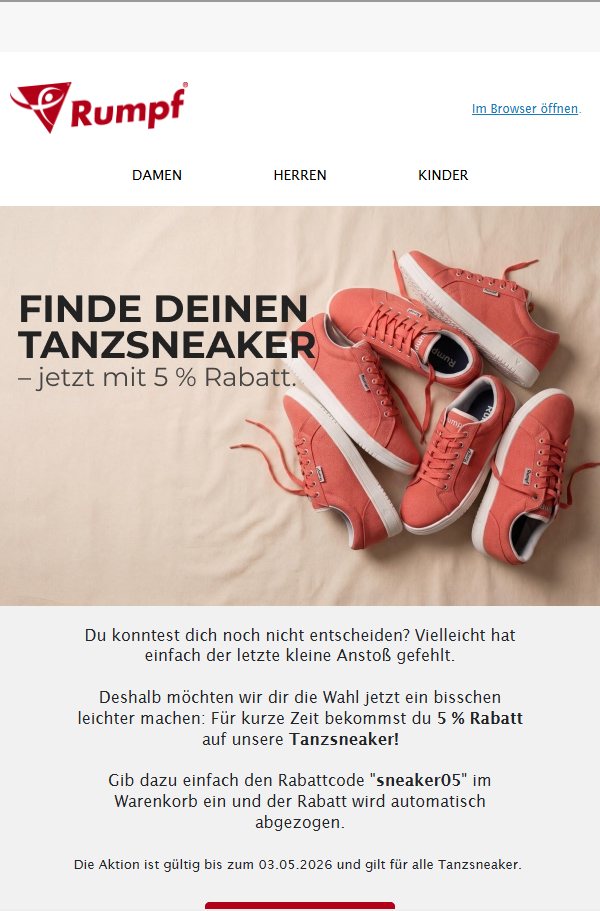
Max uses AI-generated images as hero images in his email newsletters. What he needs there is a strong image of one particular shoe, and the need often comes at short notice.
In a spring 2026 campaign, Rumpf emailed subscribers who were still deciding on a dance sneaker, under the headline “Finde deinen Tanzsneaker” (Find your dance sneaker), with a hero image made in Fibbl’s AI Studio.
From AI Studio to Figma
The workflow is short. Max creates the image in Fibbl’s AI Studio, drags it into Figma, adjusts the size and adds the text. The finished hero goes straight into the newsletter.
“I like to use the images in my newsletters. They’re ideal for that, as I often just need a good hero image of a particular shoe at short notice. With Fibbl, I can easily create the right image. I then drag it into Figma, adjust the size and add some text.”
Max Rumpf, Head of E-commerce, Rumpf
Beyond the newsletter
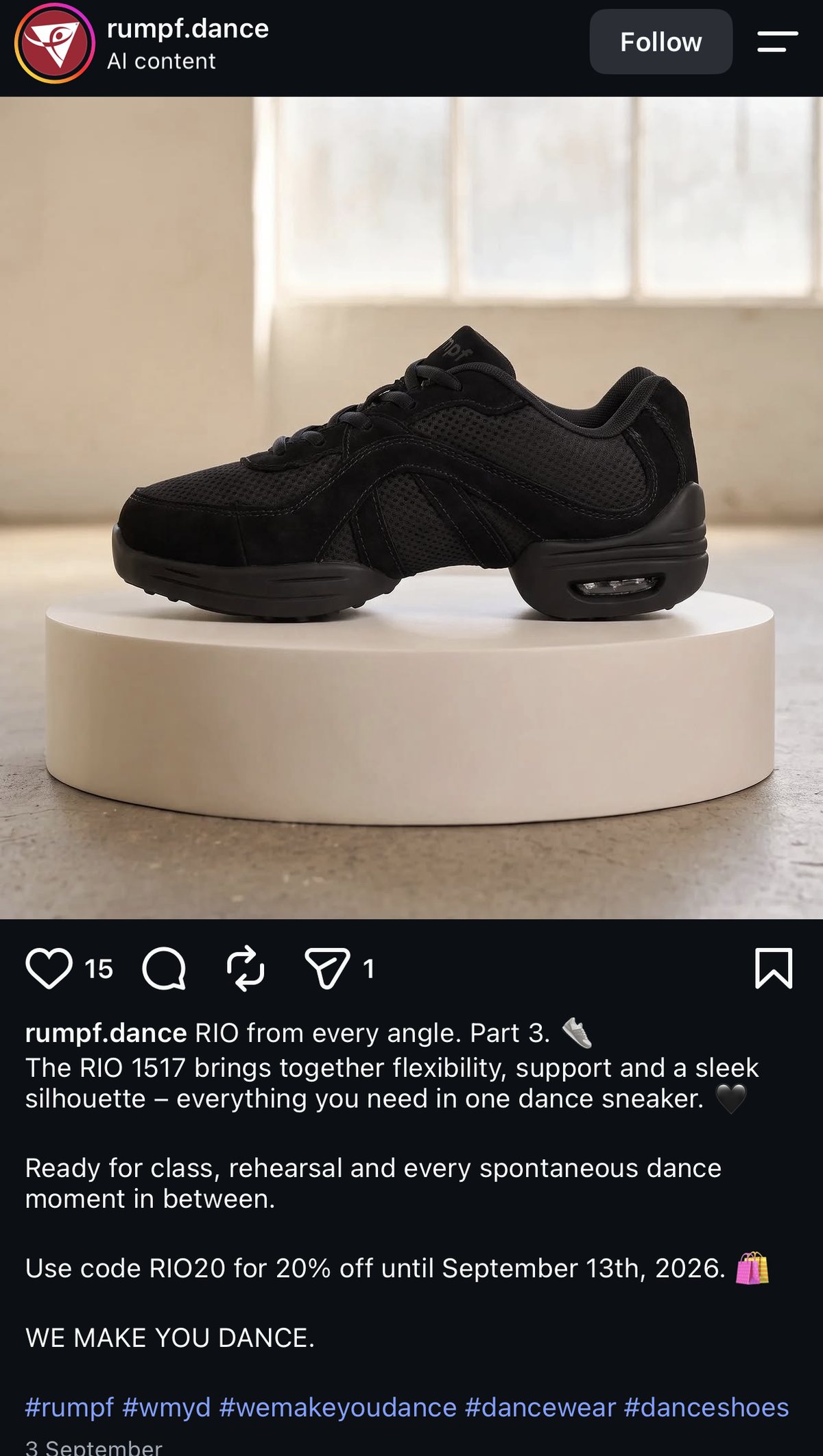
Rumpf has used images from Fibbl’s AI Studio for several Instagram posts. One, posted on 3 September 2026, was part three of a series on the RIO 1517 dance sneaker called “RIO from every angle”.
A series built on angles suits images that start from a 3D model, since every angle of the shoe is available.
Product pages
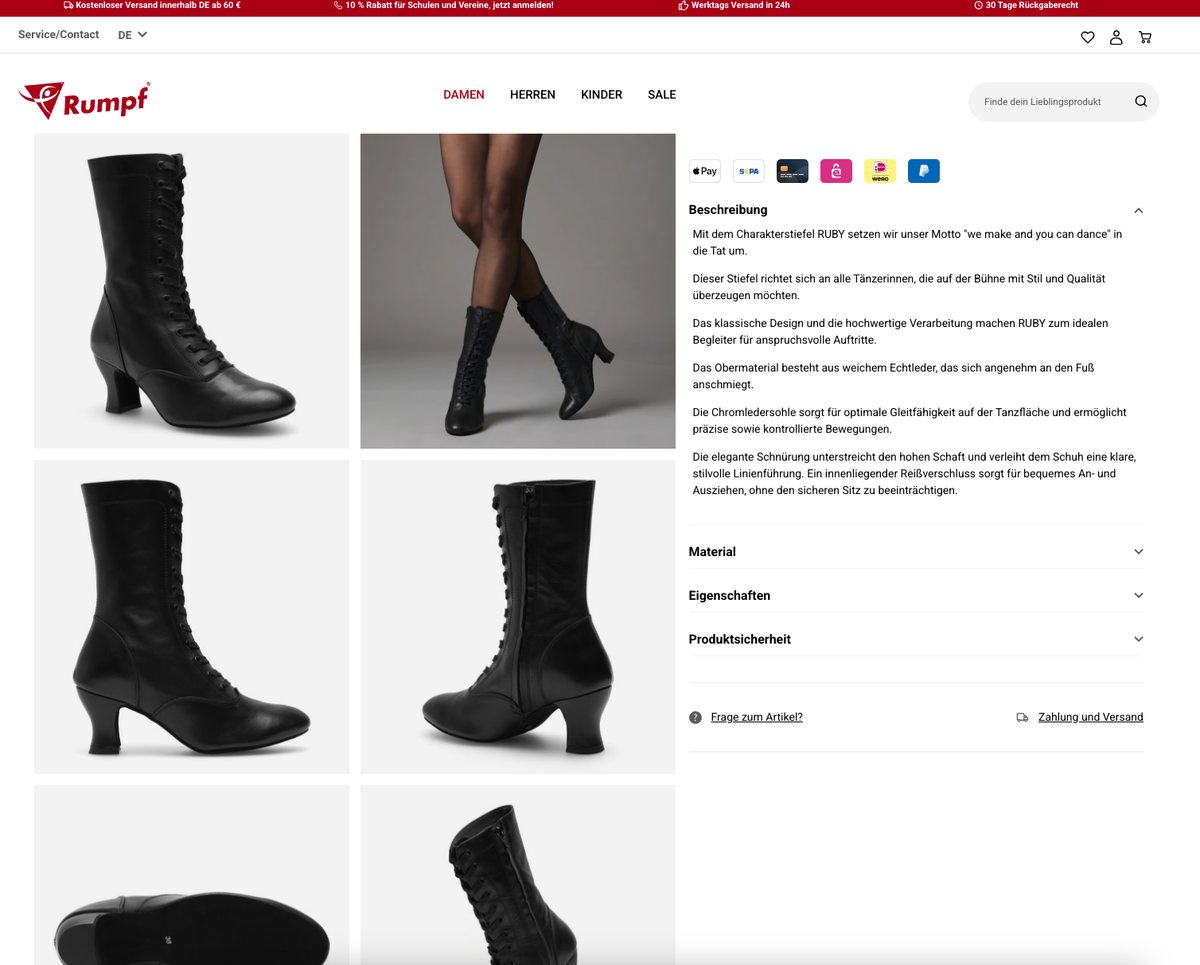
Rumpf has recently started using Fibbl images on its product pages. One example is the RUBY Can Can, a leather character dance boot with a 6.5 cm heel and a chrome leather sole.
SEO content
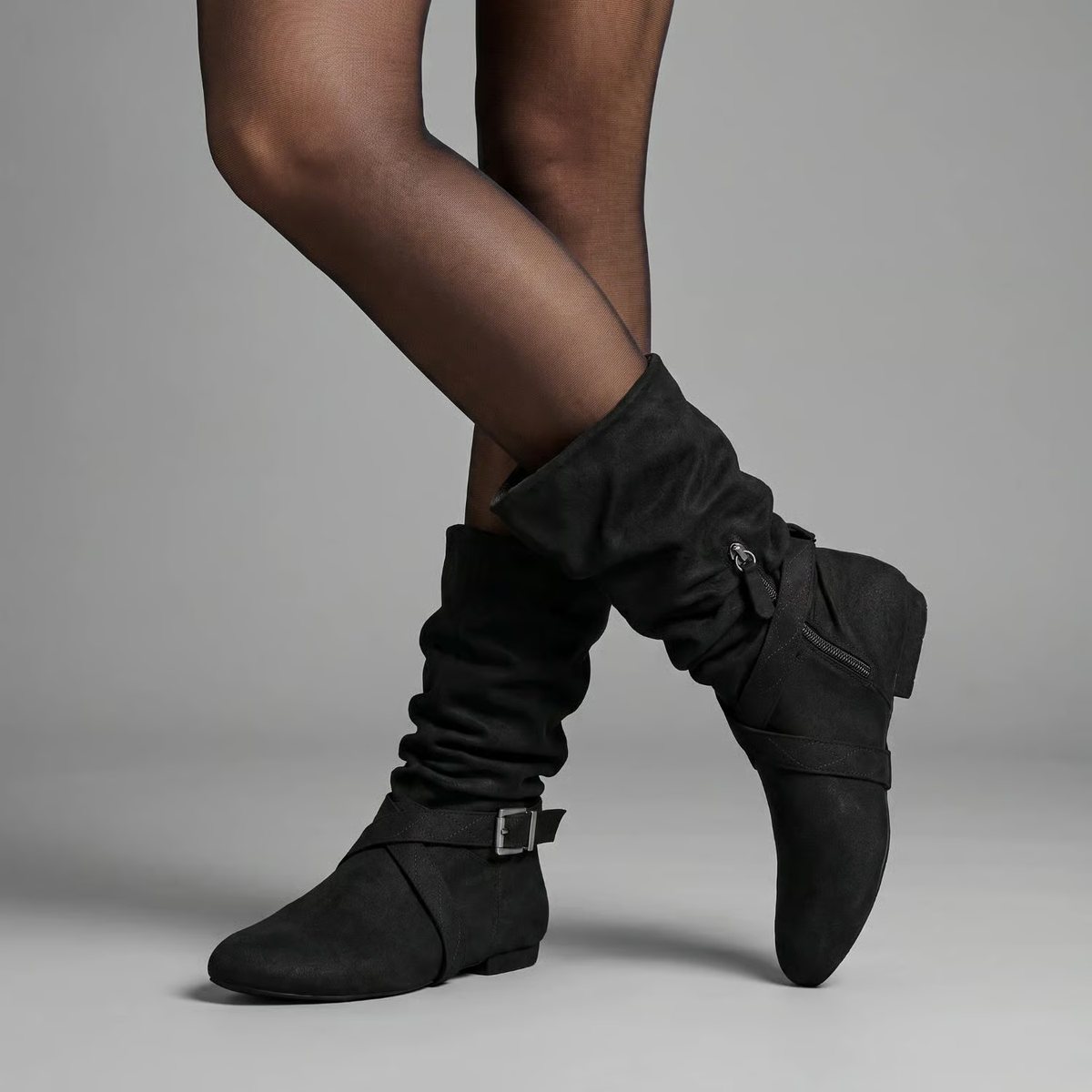
Some of the images in Rumpf’s SEO content also come from Fibbl.
Why this matters beyond Rumpf
1. AI images fill the gaps photo shoots leave
A brand that is not producing image and video content all the time will always be missing some images. Rumpf uses AI Studio exactly there: for a shoe with no shoot photos, or a newsletter that needs an image no shoot was planned for. Its regular content production continues alongside.
The gap is also filled by the person who has it. Max chooses the shoe, generates the image and finishes it in Figma. There is no brief to write and no photo shoot to wait for.
2. The 3D model keeps working
Rumpf’s 3D models were made for the shop, to power the 3D viewer and Virtual Try-On. Through Fibbl’s AI Studio, the same models now also produce AI-generated images for email, social media, product galleries and SEO content.
3. Dancers check the details
A dancer looking at the RUBY checks the heel height, the lacing and the sole. The chrome leather sole is there so the boot glides on the dance floor. An image that changed any of these details would mislead the customer it is meant to convince.
This is why Fibbl’s AI Studio starts each image from the 3D model of the actual shoe, rather than from a text description or a single photo. The shape, materials and colour come from that model.
When Max needs an image of a shoe that Rumpf has no photo of, he no longer has to work around it.
He makes it.
Frequently asked questions
How does Rumpf use AI-generated product images?
Rumpf uses images from Fibbl’s AI Studio wherever it has gaps in its content: as hero images in its email newsletters, in Instagram posts, on product pages and in SEO content. Max Rumpf, Head of E-commerce, generates the images himself, then sizes them and adds text in Figma.
Has AI Studio replaced photo shoots at Rumpf?
No. AI Studio runs alongside Rumpf’s normal content production. Rumpf uses it to create images of shoes it has no shoot photos for, and images a photo shoot could not justify, such as a hero image for a single newsletter.
How does Fibbl’s AI Studio create an image?
The user picks a shoe and describes the setting. AI Studio then generates a lifestyle or studio image around the 3D model of that shoe. Rumpf uses the same 3D models that power the 3D viewer and Virtual Try-On on its site.
Can AI-generated images show the exact shoe?
Fibbl’s AI Studio starts each image from the 3D model of the actual shoe, rather than from a text description or a single photo. The shape, materials and colour come from that model, and the scene is generated around it.