Quick Summary
AR in ecommerce lets shoppers place products in their space or try them on before they buy. Brands use it in four ways: in-space placement, virtual try-on, interactive overlays, and social filters. It lifts conversion and cuts returns. This guide shows how to use AR and how to start.
AR in ecommerce is no longer a novelty. Shoppers expect to see products in their room or on their body. Think about the last expensive thing you bought online. You probably paused. Will it fit? Will it look right in person?
Augmented reality answers that before checkout, not after the box arrives. Done well, AR removes the doubt a photo leaves behind. Done badly, it is a button nobody clicks.
The difference is rarely budget. It comes down to choosing the right kind of AR for your product, then getting people to use it.
What Is Augmented Reality in Ecommerce?
Augmented reality adds digital objects to the real world through a screen. Your phone camera becomes the window.
In ecommerce, that means the product appears in your space or on your body. A sofa in your living room. A shoe on your foot.
It is not a separate world. AR layers the product onto what your camera already sees. Most of it runs in the browser, with no app for your customers to download.
That last part matters. No download means no friction. Shoppers tap a button, and the experience loads.
The point is simple. Shoppers get a truer sense of size, fit, and look before they commit.
Better information leads to better decisions. That shows up as higher conversion and fewer returns.
AR vs VR in Ecommerce: What is the Difference?
The two get confused often. They are not the same thing.
AR |
VR |
|
|---|---|---|
What it does |
Adds digital objects to the real world |
Replaces the world with a digital one |
Hardware |
Works on a normal smartphone |
Usually needs a headset |
Ecommerce use |
Try-on, in-space placement, filters |
Virtual showrooms, still niche |
Reach |
Billions of phones |
Headset owners only |
For most stores, AR is the practical choice. It reaches shoppers on the device they already have.
VR has its place in training and virtual showrooms. But it currently requires shoppers to own a headset. Most do not.
So when people say immersive shopping today, they usually mean AR. That is where the volume is.
The Commercial Augmented Reality Opportunity
Commercial augmented reality is no longer emerging. It is a market with real scale, and the numbers show it.
- PwC forecasts AR and VR to add $1.5 trillion to global GDP by 2030, up from $46.4 billion (PwC, Seeing is Believing)
- AR is set to out-contribute VR, taking the larger share of that uplift (PwC)
- 60% of consumers have used AR or VR, and 58% bought after using AR features (Clutch, 2026)
- Only 35% use it regularly, and 61% access it by smartphone, not a headset (Clutch, 2026)
- 72% say AR ads grab attention better than traditional ads (Snapchat for Business)
- AR gives buyers confidence in a product, which reduces returns (Snapchat for Business)
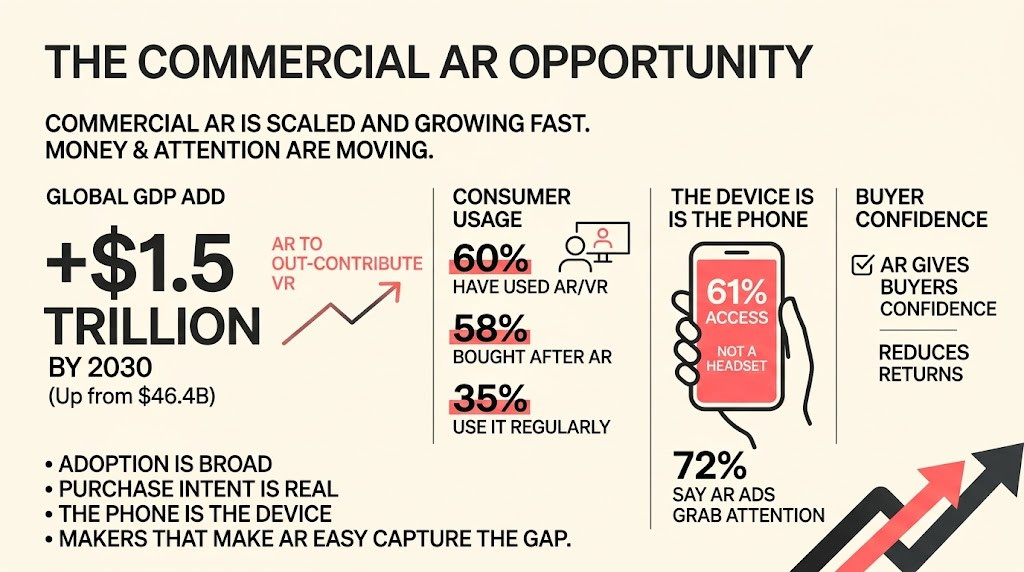
The GDP figure sounds abstract, but the trend beneath it isn't. Money and attention are moving toward AR fast. Read those together, and a pattern emerges. Adoption is broad, purchase intent is real, and the phone is the device.
The gap between trying AR and using it often is the opportunity. Brands that make AR easy capture that gap. Most shoppers have tried AR once. Fewer use it every week. The winners turn a first try into a habit.
The headset is not the story. The phone in your customer's hand is where commercial AR happens.
The Four Ways Ecommerce Brands Use AR
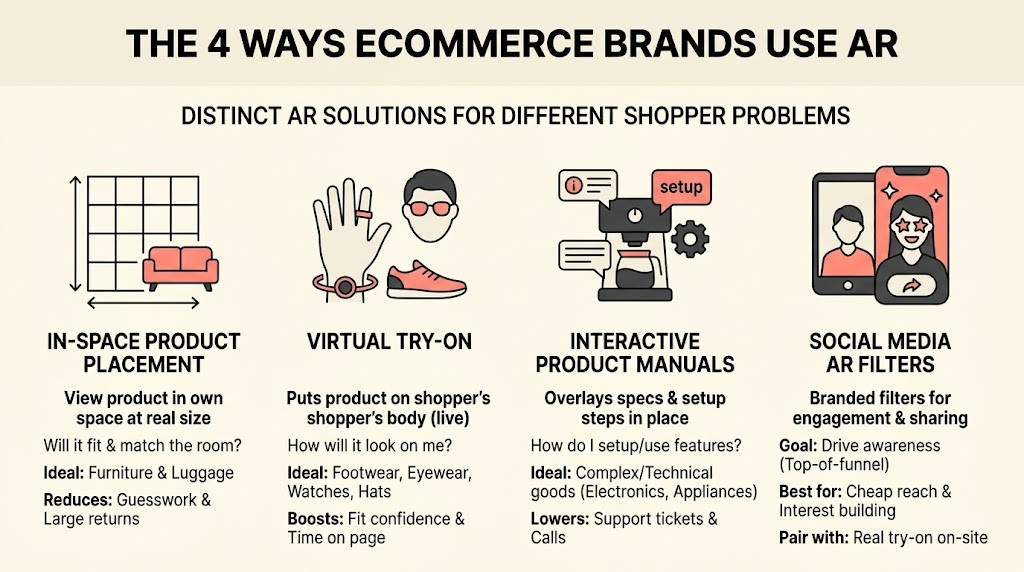
AR is not one feature. It shows up in four distinct ways. Each solves a different shopper problem.
You do not need all four. Start with the one that matches your product and your biggest doubt at checkout.
In-Space Product Placement
This lets shoppers view a product in their own space at real size. They point the camera, and the item appears on the floor or table.
It answers the biggest question for large goods. Will it fit, and will it match the room?
The tech works on mobile in seconds. Shoppers walk around the product as if it were really there.
Furniture and luggage lead here. IKEA Place made the idea mainstream. Samsonite uses it so buyers judge suitcase size before they order.
Size surprises drive returns for big items. Seeing the product to scale removes the guesswork before checkout.
Virtual Try-On
Virtual try-on puts the product on the shopper's body. A shoe, a watch, a pair of glasses, seen live through the camera. For the full mechanics, ROI, and rollout, see our AR shoe try-on guide.
It suits anything worn on the body. Fit and look are hard to judge from a flat photo, and try-on closes that gap.
Footwear, eyewear, watches, and hats are the natural fits. Shoppers see the item on themselves in real time.
It is the closest thing to a fitting room online. That is why try-on rates and time on page tend to jump.
Interactive Product Manuals and Info Overlays
Here, AR overlays information onto the real product. Point the camera and see specs, features, or setup steps in place.
It fits complex or technical goods. Buyers understand the product faster, and support tickets drop.
Think of a shopper unsure how a feature works. An overlay shows it on the product, not buried in a PDF.
This use is less common in fashion. But it is powerful for electronics, appliances, and gear.
It also builds trust after the sale. A clear setup overlay means fewer frustrated returns and calls.
Social Media AR Filters
These are branded filters on Snapchat, Instagram, and TikTok. Shoppers try a look or product, then share it.
This is top-of-funnel work. It drives awareness and lets people experience the brand before they reach your store.
Filters are also cheap reach. A good one spreads on its own as people post it.
The catch is intent. Filters build interest, but the sale still happens back on your product page.
So pair them with a real try-on on-site. The filter earns attention, and the product page closes it.
Why AR Matters for Wearable Brands
If a product is worn on the body, AR is not optional for long. Fit and material decide the sale.
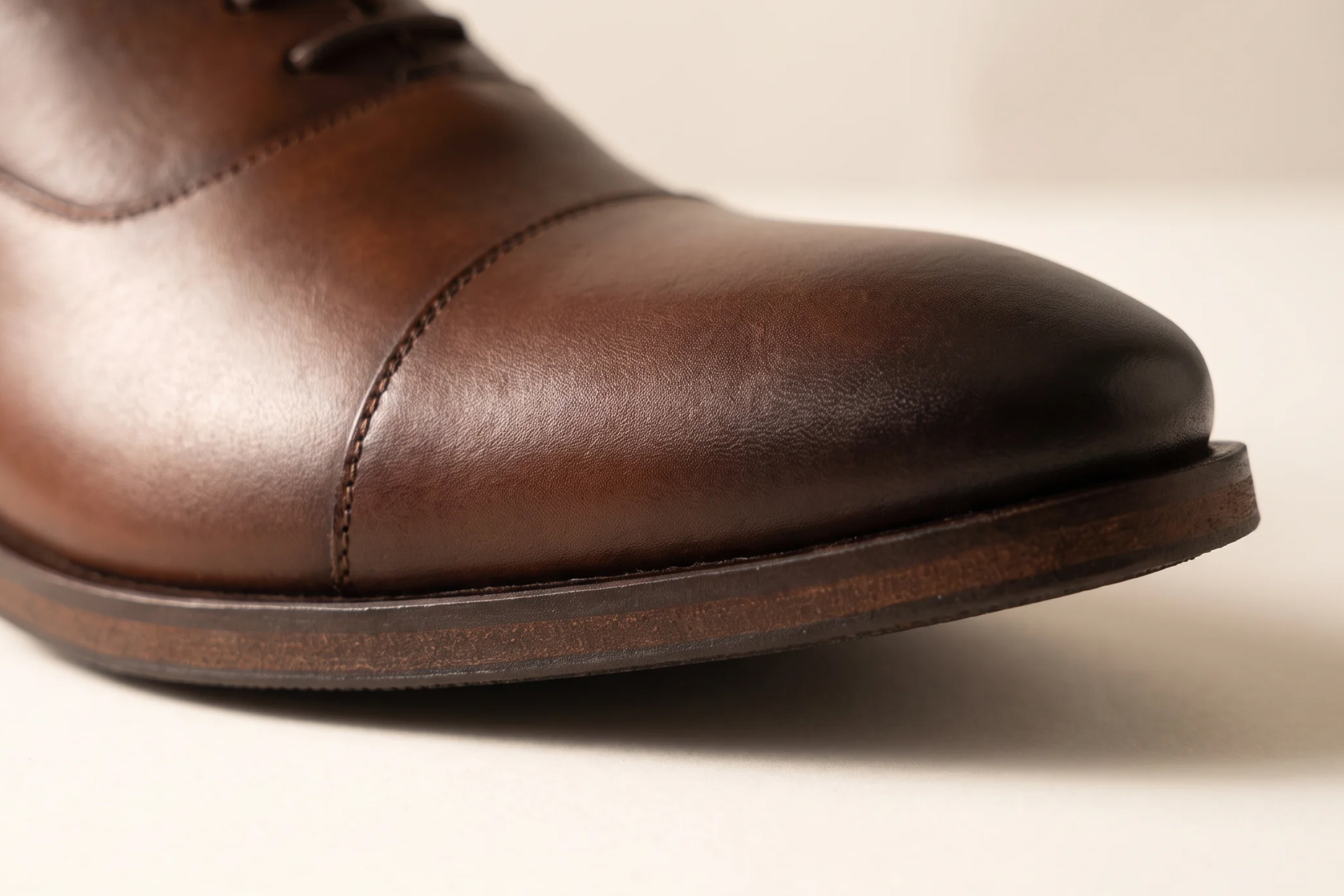
A photo cannot show how a shoe sits or how leather catches the light. Try-on can.
Wearables also have the highest return rates in ecommerce. Wrong fit and wrong look drive most of them.
That is why returns fall when AR is done right. Buyers know what they are getting before it ships.
Wearable brands also carry huge catalogs. AR only pays off if it scales past a few hero products.
A pilot on ten shoes is easy. Two thousand styles is the real test. Most tools stall there.
Materials add another layer. Leather, mesh, and rubber each behave differently, and cheap 3D gets them wrong.
How to Implement AR for Your Ecommerce Store
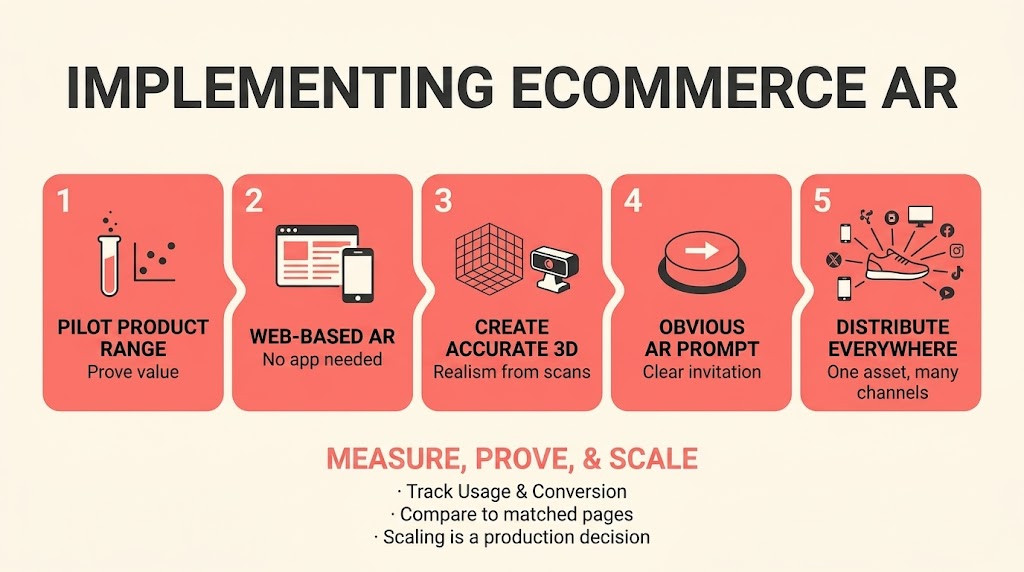
You do not need to build AR from scratch. Most brands follow a simple path. The order matters. Rushing to full rollout before proving value is the most common mistake.
- Start with a pilot: Pick three to five products. Prove the lift before you commit the catalog.
- Choose browser-based AR: WebAR needs no app. That means far more shoppers actually use it.
- Create accurate 3D assets: AR is only as good as the model. Scanned assets beat hand-built ones for realism.
- Make the button obvious: Use a clear, inviting prompt. A vague AR icon gets ignored.
- Distribute everywhere: Put AR on product pages, ads, and social. One asset should work across all of them.
Do not treat AR as a one-page feature. The same 3D asset can power try-on, video, and imagery. That reuse is where the economics work. You pay to create the asset once, then use it many times.
Then measure. Track try-on usage, conversion, and returns against pages without AR. Keep the pilot honest. Compare AR pages to matched pages without it, not to last year's numbers.
Once the lift is clear, scaling is a production question, not a gamble. That is when AR earns its budget.
Real-World Examples: Brands Using AR
The value is already proven across categories. These are not pilots; they are live in real stores:
- Gant lifted conversion 6.3% with 3D and try-on
- Zach Footwear cut returns by 29% using AR try-on
- Nubikk saw purchases rise 52% and time on page climb 80%
- Samsonite and American Tourister use true-to-scale AR for luggage
- Burberry uses true-to-scale 3D to remove size doubt on handbags
- IKEA Place lets shoppers drop furniture into a real room
- Sephora and Warby Parker built try-on into their apps
Notice the spread: footwear, luggage, furniture, beauty. The format changes, but the goal is the same.
Each brand uses AR to answer a doubt before checkout. That is what turns a browser into a buyer.
For more, see Fibbl's roundup of AR ecommerce examples.
How Fibbl Can Help With AR Implementation
Fibbl builds AR for brands that sell products worn or carried on the body.
We scan the real product with proprietary hardware. One accurate 3D asset then powers AR, try-on, a 3D viewer, and video.
The hardware is tuned for tricky surfaces. Leather, mesh, rubber, and textiles come out true to life.
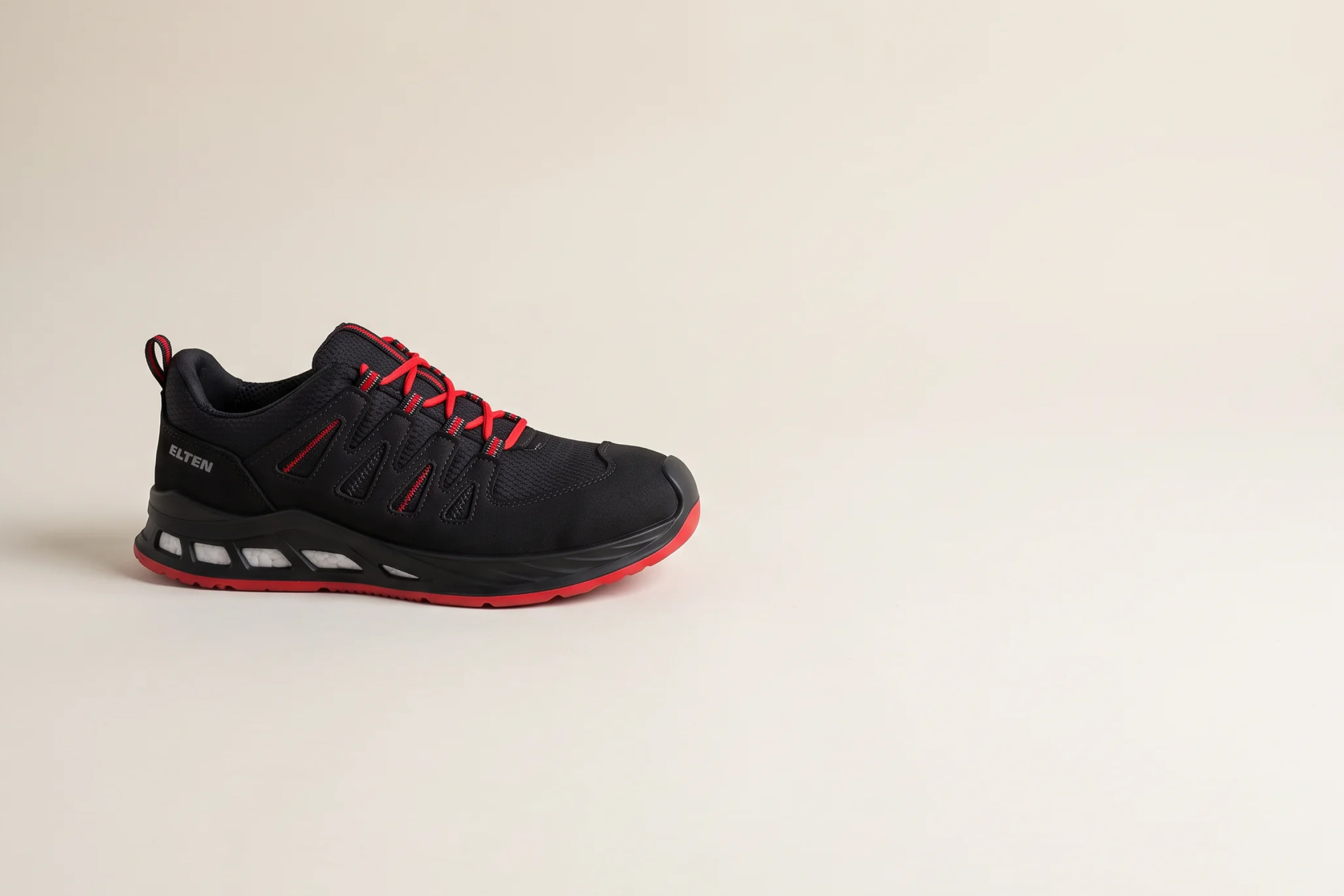
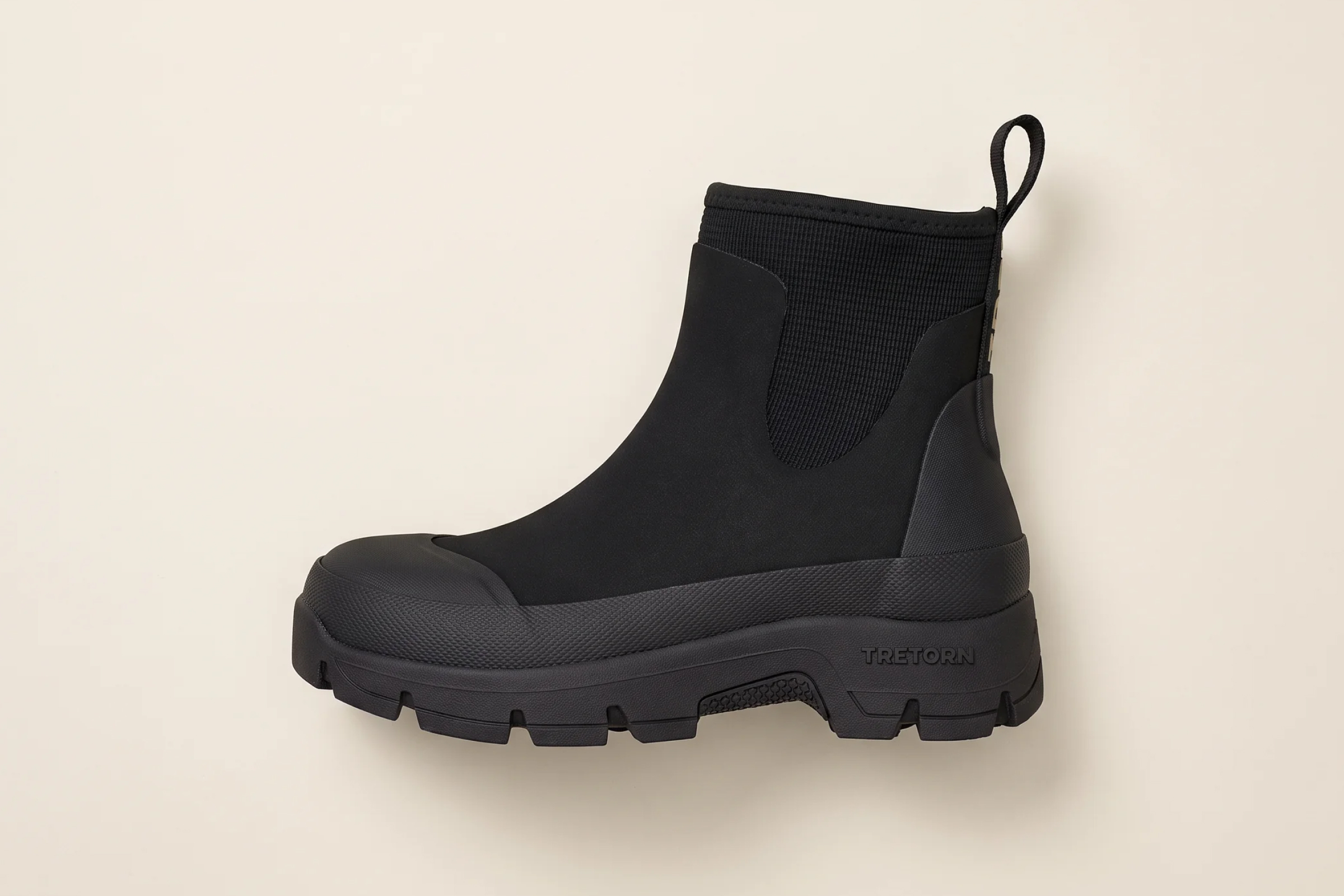
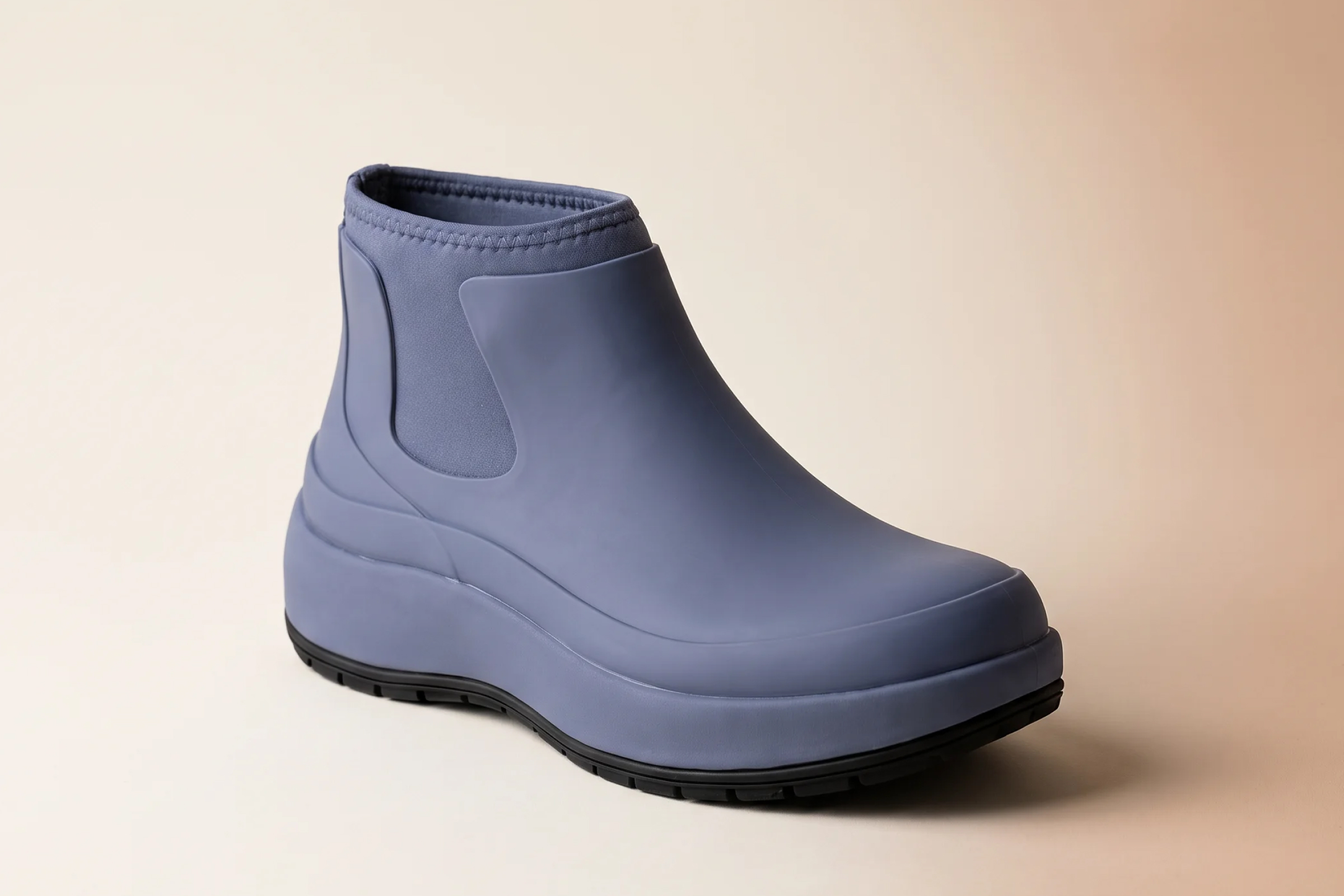
Footwear and bags were the start. Fibbl now covers more of what people wear and carry:
If your product is not on that list, Fibbl still scans it. There is a page for custom and unlisted categories. If it has a business case, Fibbl can capture it.
The quality is the difference. Fibbl scans real products, so the AR looks like the item, not an approximation.
It is also built for scale. This is a catalog pipeline, not a one-off project for a few products.
One integration puts AR everywhere. Your store, ads, and social, all from a single source.
Want to try it? Start with a free product scan, or book a demo.
Frequently Asked Questions
Do shoppers actually use AR, or is it a gimmick?
Yes, shoppers actually use AR. A 2026 survey found 58% of consumers bought after using AR features (Clutch). Fibbl clients see fewer returns and more time on page. It moves real metrics, not vanity ones.
How do we get more shoppers to click the AR button?
Drop the generic AR icon and label. Use a question instead. Gant tested prompts like “Wonder how this looks on you?” A clear invitation beats a vague symbol.
Can we pilot AR on a few products first?
Yes, and you should. Fibbl pilots usually run three to five products over about six weeks. Some are free, and you only cover shipping. Prove the lift, then scale to the catalog.
Does AR work without an app download?
Yes. Most modern AR runs in the browser through WebAR. Shoppers tap a link, and it loads. No app means far more people actually use it.
Which products get the most from AR?
Anything hard to judge from a photo. Products worn on the body, large items, and goods with tricky materials. AR earns its keep with fit and scale.